

Specialist care
Holter and 24-hour blood pressure monitoring in Slavuta
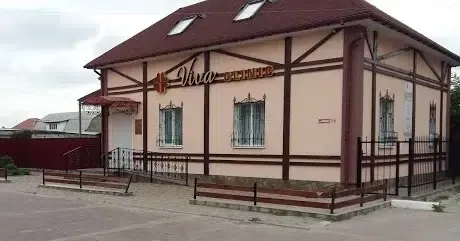
During Holter monitoring, you wear a small device that continuously records your ECG or regularly measures your blood pressure. A Holter ECG and blood pressure monitoring usually last one or two days, or up to seven if needed. At Viva Clinic in Slavuta, both tests are done at the polyclinic at 27a Sobornosti St, and you can book by phone or on Viber.
Paid serviceBy appointment

At a glance
- Where
- 27a Sobornosti St, Slavuta
- Hours
- Mon–Fri 8:00–17:00
- How to book
- phone or Viber
- Payment
- paid
When you may need a Holter ECG or blood pressure monitoring
- Palpitations or skipped beats that come and go
- Dizziness, blackouts or fainting
- Chest pain from time to time that a standard ECG hasn't explained
- Blood pressure that is high at the doctor's office but normal at home, or the other way round
- Home blood pressure readings that vary a lot
- Checking whether your medicines control blood pressure around the clock
- Monitoring treatment for rhythm problems or how a pacemaker works
What Holter monitoring includes
- Holter ECG monitoring for one or two days, or up to seven if needed
- Ambulatory blood pressure monitoring (ABPM) for one or two days, or up to seven if needed
- Fitting the device at the polyclinic and explaining how to keep a diary
- Analysis of the recording together with your diary
- A report for the doctor who ordered the test
What a Holter records and what blood pressure monitoring shows
A Holter ECG is a small device with a few electrodes stuck to your chest. It records every heartbeat, so the doctor can see what your heart rhythm was doing during the day, at night and at the exact moment you felt skipped beats or dizziness. A standard ECG at the polyclinic lasts a few minutes and often misses such episodes. A Holter ECG is usually worn for one or two days, and if your symptoms are rare, the doctor may order a recording of up to seven days.
For ambulatory blood pressure monitoring (ABPM), a cuff connected to the device by a tube goes on your upper arm. Throughout the recording it inflates on its own at set intervals, day and night, and the device stores every reading. The doctor gets your average blood pressure for the full day, and separately for daytime and night-time, and sees whether it drops during sleep and how your medicines work.
The type of recording and its length are decided by the doctor. If you don’t have a referral, start with a Viva Clinic cardiologist or your family doctor. Who each test is for is explained in detail in the article Holter ECG and blood pressure monitoring.
How to prepare and what a day with the device is like
Shower before the Holter is fitted, because you can’t wash while wearing it. Don’t put cream or oil on your chest, so the electrodes stay on better. For blood pressure monitoring, wear a shirt or top with loose sleeves: the cuff usually goes on the arm you use less. Bring your referral, previous ECGs and a list of your medicines. Take your medicines as usual unless the doctor has told you otherwise.
During the recording, go about a normal day: work, walk, climb stairs. There’s no need to lie down all day, because the device should show how your heart and blood pressure behave in your real life. Avoid hard workouts and heavy sweating, unless the doctor asked you to record exercise.
Keep a diary. Write down when you woke up and went to bed, ate, took medicines, walked fast or felt stressed, and separately the time of every symptom. When the cuff starts to inflate, stop, let your arm hang relaxed and don’t talk until the reading is over. It also inflates at night and may wake you briefly.
The device must not get wet, so put off baths, swimming pools and saunas for the whole recording. Don’t remove the electrodes or the cuff. If an electrode comes loose, press it back into place and write down the time in your diary.
If you get severe chest pain or shortness of breath, or you faint, don’t wait for the test to end and call an ambulance on 103.
What happens with the results
Bring the device back to the polyclinic at the agreed time together with your diary. The recording is analyzed, and the doctor compares it with your notes. This shows, for example, whether dizziness coincided with a pause in your heart rhythm or a drop in blood pressure.
You take the report to the doctor who ordered the test, most often a cardiologist. If your blood pressure worries you, it helps to know what blood pressure is considered normal and how to measure it correctly at home.
The Holter is fitted in Slavuta, at the polyclinic at 27a Sobornosti St, where you can also have a heart ultrasound and other tests. Holter monitoring is paid, while a standard ECG is free with a referral if you have a declaration with a Viva Clinic family doctor.
Questions about Holter monitoring
How many days do I need to wear a Holter monitor?
A Holter ECG and blood pressure monitoring usually last one or two days, or up to seven if needed. The exact length is set by the doctor who ordered the test. You return the device to the Viva Clinic polyclinic at 27a Sobornosti St at the agreed time.
Can I shower with a Holter monitor?
No, the device and electrodes must not get wet. Shower before the Holter is fitted and plan your next shower for after it comes off. Put off baths, swimming pools and saunas for the whole recording too. If an electrode gets wet or comes loose, press it back and write down the time in your diary.
What should I write in the Holter diary?
The times you woke up and went to bed, ate, took medicines, climbed stairs or felt stressed. Note every symptom separately: palpitations, pain, dizziness. The doctor will match your notes with the recording and see what your heart or blood pressure was doing at that very minute.
What blood pressure counts as high on 24-hour monitoring?
Hypertension is diagnosed on a 24-hour recording if the average is 130/80 mmHg or higher over the full day, 135/85 or higher during the daytime, or 120/70 or higher at night. These thresholds come from the European Society of Hypertension (ESH). The doctor draws conclusions from the whole recording and your symptoms.
Can I get Holter monitoring for free?
Holter ECG and blood pressure monitoring at Viva Clinic is paid, and you'll be told the price when you book. If you have a declaration with a Viva Clinic family doctor, a standard ECG is free with their referral.
Articles: holter and 24-hour blood pressure monitoring

Holter ECG and 24-hour blood pressure monitoring: what they are and how they work
During Holter monitoring, a small device that you wear continuously records your ECG or regularly measures your blood pressure for 24 hours, or longer if needed. A standard ECG takes a few minutes, while a Holter shows how your heart and blood pressure behave during the day, at night, while walking and while sleeping. Viva Clinic in Slavuta offers both, a Holter ECG and 24-hour blood pressure monitoring, at the polyclinic at 27a Sobornosti St by appointment.
High blood pressure: what to do at home and how to lower it
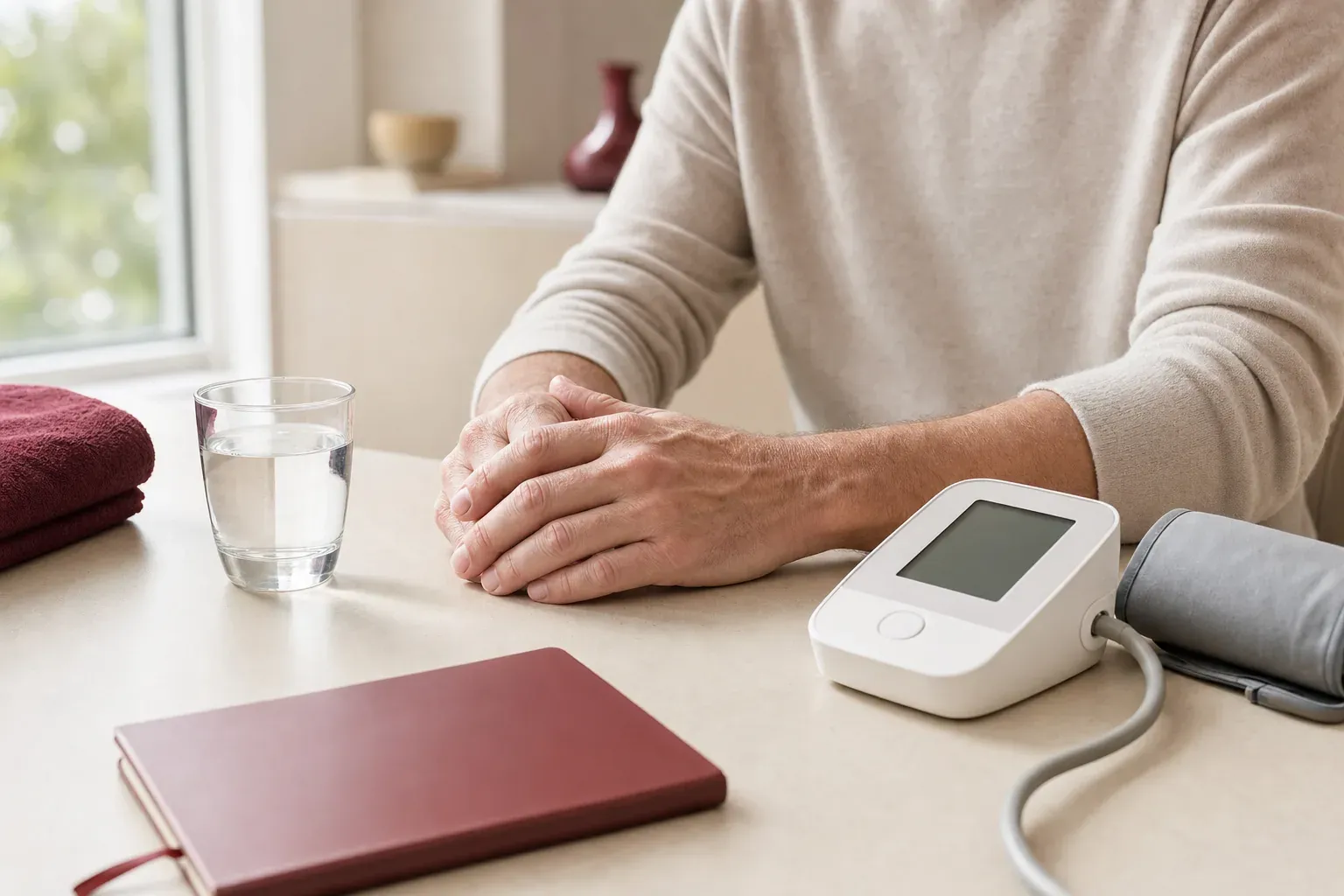
If your monitor shows high blood pressure, sit down, rest quietly for 5 minutes and then measure again. If the numbers don't come down, take only the medicine your doctor has already prescribed for this situation, and contact your doctor the same day. Chest pain, shortness of breath, trouble speaking, weakness in an arm or a sudden severe headache with high blood pressure mean you should call an ambulance on 103 right away.
When to have a breast ultrasound and on which day of your cycle
A routine breast ultrasound is usually done in the first half of your cycle, roughly between days 5 and 12 counting from the start of your period, when your breasts are least swollen. After menopause, any day is fine. If you've noticed a lump or nipple discharge, don't wait for the right day and book an appointment with a mammologist, a breast specialist, straight away.
Laser treatment for varicose veins: preparation, procedure and recovery
Laser treatment for varicose veins, or endovenous laser ablation (EVLA), closes the affected vein from the inside through a small puncture, with no incisions. It is done on an outpatient basis, and a vascular surgeon decides whether it suits you after an exam and a vein ultrasound. After EVLA you usually go home the same day, and the doctor tells you what activity level and compression stockings you need.

What kidney pain feels like and how to tell it from back pain
Kidney pain is felt in the side of your lower back, just under the lowest ribs, usually on one side. It is dull and aching or comes in waves, as with renal colic, hardly changes when you move and often comes with a fever or changes in your urine. Back pain usually gets worse when you bend, twist or sit for a long time and eases when you rest.

Ligament sprain: what to do and when to see a trauma doctor
In a sprain, some of the fibers in a ligament tear, so the joint hurts and swells, a bruise appears and moving it is painful. For the first 48 hours, rest the joint, apply cold through a cloth, wrap it in a moderately firm bandage and keep your leg raised. If you cannot stand on your leg or the joint looks deformed, go to a trauma unit (travmpunkt), where they will take an X-ray straight away. If the pain does not ease within a few days, see a trauma doctor to rule out a fracture or a torn ligament.
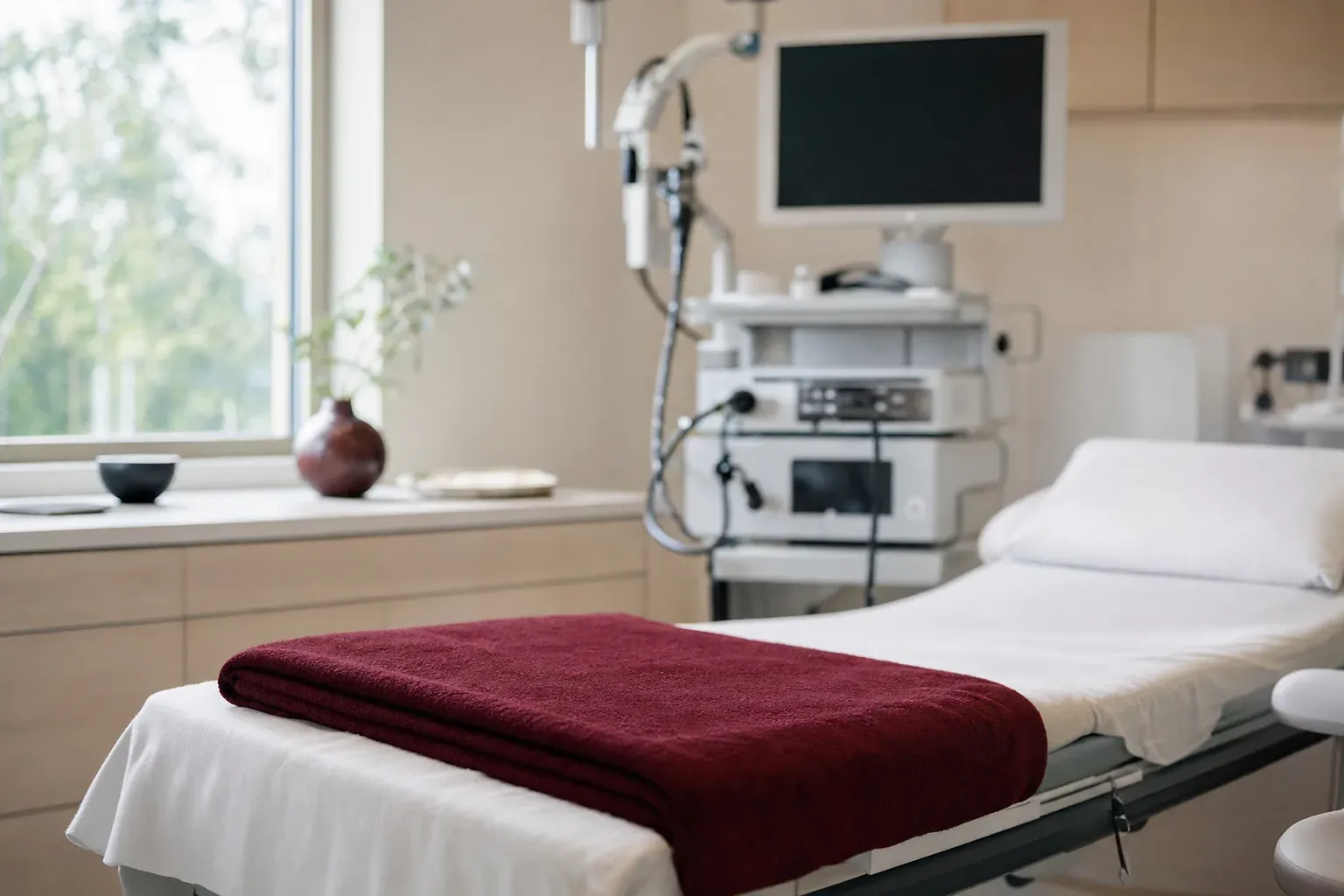
Colonoscopy: what it is, how to prepare and whether it hurts
During a colonoscopy, a doctor examines the inside of the large intestine with a thin, flexible tube that has a camera on the end. So that the doctor can see the whole lining, the bowel is cleared in advance: a few days before, you switch to low-fiber food, and the day before, you drink a bowel prep solution as your doctor instructs. Without anesthesia the test can be unpleasant, so you can have it under anesthesia.

How to prepare for an abdominal ultrasound
Come to an abdominal ultrasound on an empty stomach, usually after 6–8 hours without food, which is why the scan is easiest to schedule in the morning. You can drink a little plain water. If you often get bloated, cut out the foods that make it worse for 1–2 days before the scan.
More in ultrasound and diagnostics
 Abdominal ultrasound
- Kidney and bladder ultrasound
- Thyroid ultrasound
- Breast ultrasound
- Pelvic ultrasound
- Pregnancy ultrasound
- Echocardiography (heart ultrasound)
- Leg vein and artery ultrasound
- Prostate and scrotal ultrasound
- Joint and soft tissue ultrasound
- Neurosonography (infant brain ultrasound)
- ECG
- Spirometry
- Gastroscopy (upper endoscopy)
- Colonoscopy
- Sigmoidoscopy (rectoscopy)
Where to get a Holter monitor in Slavuta
Google rating and reviews
Viva Clinic ratings on Google Maps and recent patient reviews. If you have visited us, please leave a review.
Polyclinic
27a Sobornosti St, Slavuta
4.443 reviews
Message or call us
Our administrators will help you choose a doctor and a convenient time.