High blood pressure: what to do at home and how to lower it
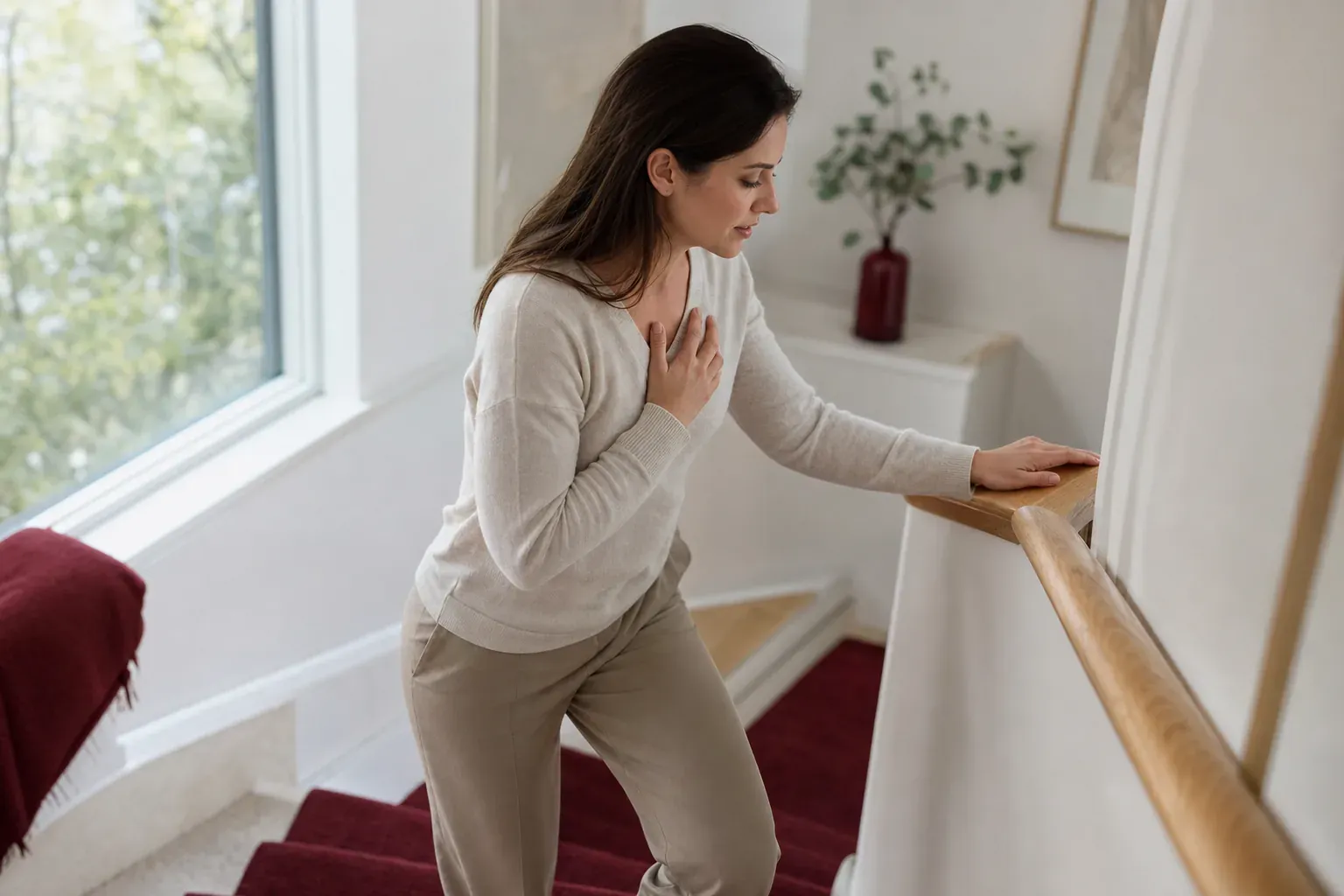
If your monitor shows high blood pressure, sit down, rest quietly for 5 minutes and then measure again. If the numbers don't come down, take only the medicine your doctor has already prescribed for this situation, and contact your doctor the same day. Chest pain, shortness of breath, trouble speaking, weakness in an arm or a sudden severe headache with high blood pressure mean you should call an ambulance on 103 right away.

How to lower blood pressure at home
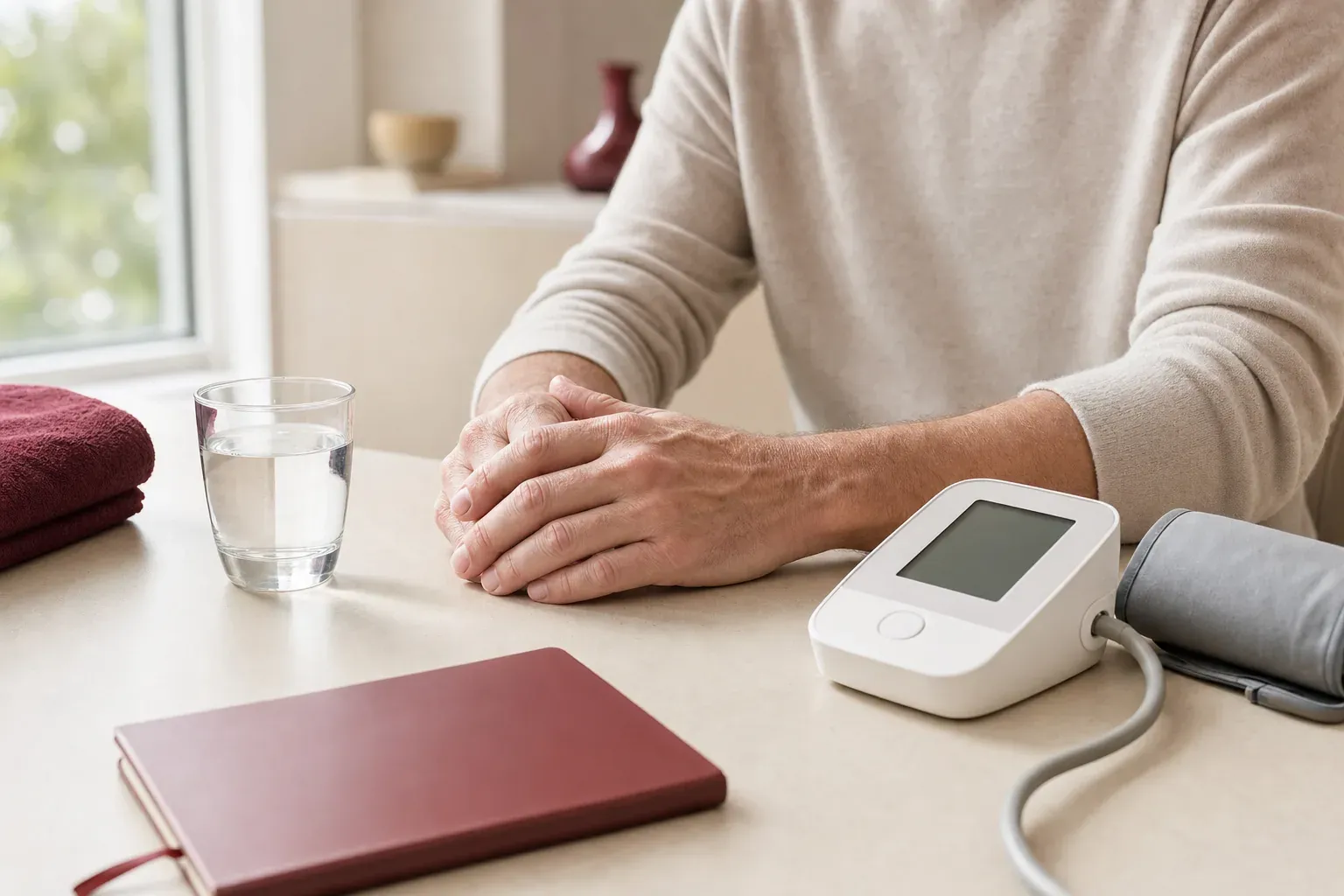
The first reading is often too high. After walking fast, an argument, coffee or a cigarette, blood pressure rises for a while, and worrying about high numbers pushes it up even more. So first:
- sit down, lean against the back of the chair and put your feet on the floor;
- breathe slowly and calmly, don’t walk around the room and don’t measure your blood pressure every minute;
- take the repeat reading correctly, with the cuff on your bare arm and your arm resting on a table at heart level;
- if your doctor has given you a plan for when your blood pressure goes up, follow it.
You can read more about measuring correctly in the article What blood pressure is normal for adults.
If you are being treated for hypertension, check whether you took your medicine today. Don’t double a missed dose and don’t take an extra pill “just in case”. Your doctor or the leaflet that comes with the medicine will tell you what to do about a missed dose.
Don’t try to bring blood pressure down fast. Doctors lower it gradually, because a sharp drop can cause severe dizziness and weakness, and in people with damaged blood vessels it can reduce blood flow to the brain and heart.
If your blood pressure stays high but you have no acute symptoms, call your family doctor or cardiologist the same day. If a repeat reading still shows a top number of 180 mmHg or higher, or a bottom number of 110 or higher, and you can’t reach your doctor, call an ambulance.
When to call an ambulance on 103
Call an ambulance right away if high blood pressure comes with:
- pain, burning or tightness in the chest, or sudden severe back pain;
- shortness of breath or a feeling that you can’t get enough air;
- sudden weakness or numbness in an arm, a leg or one side of the face, or a drooping face;
- trouble speaking, when a person struggles to talk or doesn’t understand what is said to them;
- a sudden severe headache, a sharp drop in vision, confusion or seizures;
- in pregnancy: a headache, flashing lights in front of the eyes or pain under the ribs, or a reading of 160/110 or higher even without these symptoms.
While you wait for the ambulance, sit or half-lie with your head raised, open the front door and get a list of your medicines ready. A person with signs of a stroke shouldn’t be given food, water or pills, because they may have trouble swallowing.
Can I take blood pressure pills a friend recommended?
No. Blood pressure medicines work in different ways, and the doctor chooses them based on your heart, kidneys, blood sugar, other conditions and the medicines you already take. Someone else’s pill or dose can lower your blood pressure too much, slow your pulse or interact badly with your own medicines.
Tinctures, herbs, garlic or compresses don’t replace treatment. Their effect on blood pressure is small or unpredictable, and some herbs raise blood pressure themselves or change how medicines work. While a person tries these remedies, untreated hypertension keeps damaging the heart, blood vessels, kidneys and eyes.
Another common mistake is taking pills only when blood pressure goes up. Medicines for hypertension are usually prescribed every day and for the long term. Normal readings during treatment mean the medicine is working, so you shouldn’t stop taking it on your own.
How to lower blood pressure long term
Steady, normal blood pressure depends on daily habits and on medicine if your doctor has prescribed it. Habits also help people who don’t need medicine yet.
Start with salt. The WHO recommends that adults eat less than 5 g of salt a day, which is just under a teaspoon. That includes the salt already in bread, sausage, cheese, canned food and sauces, so it’s worth reading labels.
Get at least 150 minutes of moderate activity a week, for example 30 minutes of brisk walking five days a week. If you are overweight, even moderate weight loss helps lower blood pressure. Fill your plate with more vegetables, fruit, beans and whole grains.
Alcohol also raises blood pressure, so the less you drink, the better. Quitting smoking is worth it too: together with hypertension, smoking greatly increases the risk of heart attack and stroke. If you snore loudly and your family notices pauses in your breathing during sleep, tell your doctor, because sleep apnea also raises blood pressure.
Some medicines for hypertension are free or partly paid under the Affordable Medicines program. The e-prescription for them can be issued by a family doctor or internist, and since 2026 also by a cardiologist.
To choose treatment, the doctor needs to know how your blood pressure behaves during the day and whether your heart and kidneys have already been affected. A cardiologist at Viva Clinic sees patients in Slavuta at 27a Sobornosti St or 3 Danyla Halytskoho St, and the exact address is confirmed when you book. At the first visit, the doctor examines you and records an ECG, and if needed orders lab tests at Diagnost-Lab, a heart ultrasound or 24-hour blood pressure monitoring. Bring your home blood pressure diary and a list of your medicines. You can book by phone or on Viber.
Questions and answers
Can you always feel high blood pressure?
No. Many people with hypertension feel fine for years and find out by chance: at an appointment, a check-up or the Health Screening 40+. Headaches or ringing in the ears don't happen to everyone. That is why it's worth measuring your blood pressure regularly, even when nothing hurts.
Can I drink coffee if I have high blood pressure?
A moderate amount of coffee is usually allowed, but blood pressure goes up for a while after a cup, so don't drink it in the half hour before a measurement. Your doctor will tell you how much coffee is fine for you, especially if your blood pressure is poorly controlled or you have skipped heartbeats.
How often should blood pressure be measured during treatment?
While the doctor is adjusting your medicines, blood pressure is usually measured every morning and evening and written down in a diary. Once the numbers are stable, you can measure less often, as your doctor advises. Also measure it when you feel worse, and for a week before each doctor's appointment.
Which doctor should I see for high blood pressure?
You can start with a family doctor or an internist. If your blood pressure is hard to bring down, you have heart or kidney disease, or you need more tests, they will refer you to a cardiologist. With a declaration with a Viva Clinic family doctor, blood pressure checks, an ECG and basic lab tests are free for you.