

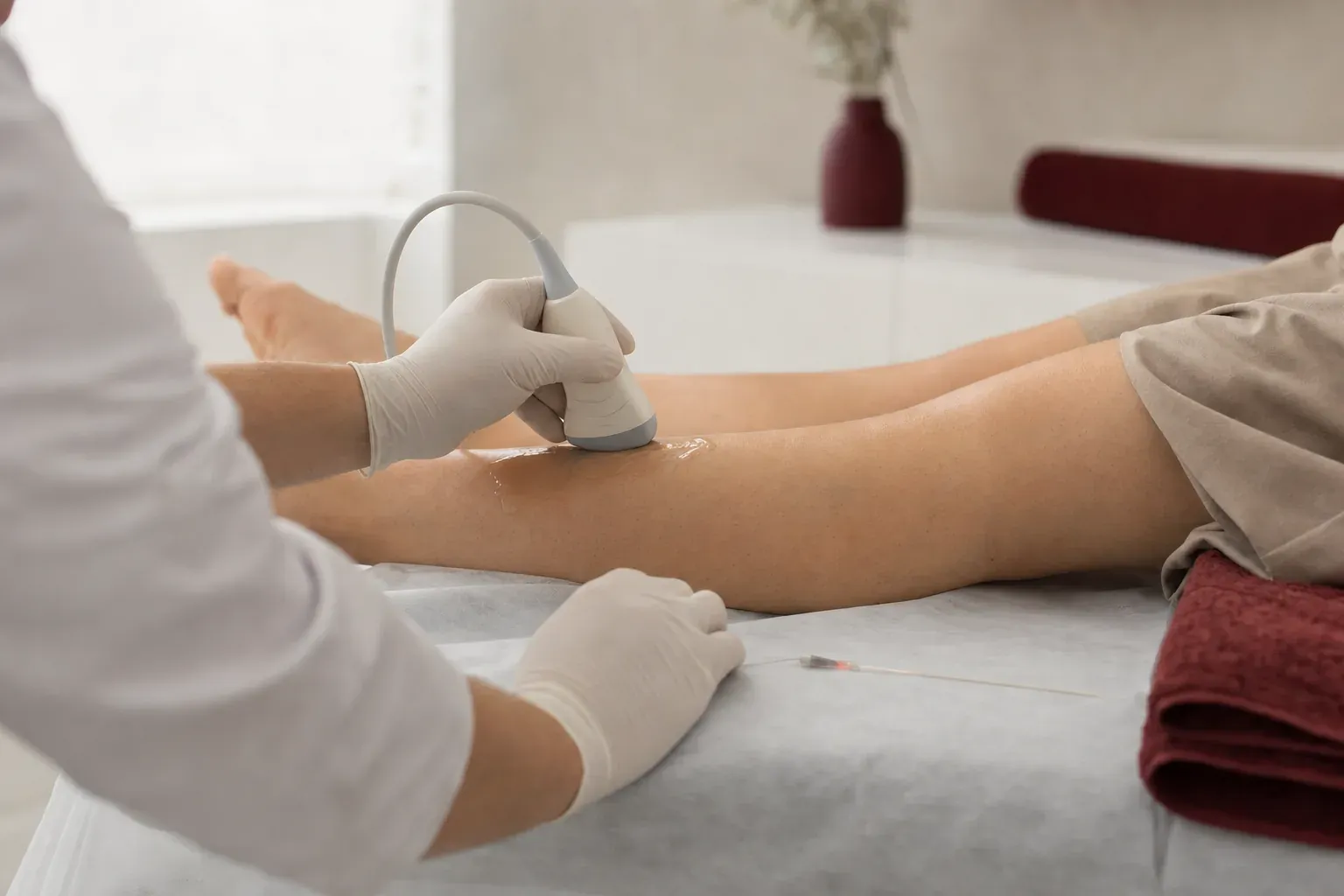
Endovenous laser ablation (EVLA)
Endovenous laser ablation (EVLA) closes a faulty vein from the inside through a small puncture, and you usually go home the same day.
Specialist care
A Viva Clinic vascular surgeon in Slavuta sees patients with heavy or swollen legs, spider veins or enlarged veins. The consultation takes place at Viva Clinic at 27a Sobornosti St or 3 Danyla Halytskoho St (the exact address is confirmed when you book), and varicose vein treatment is outpatient: sclerotherapy, laser or radiofrequency ablation. Visits are by appointment: call us or message us on Viber.
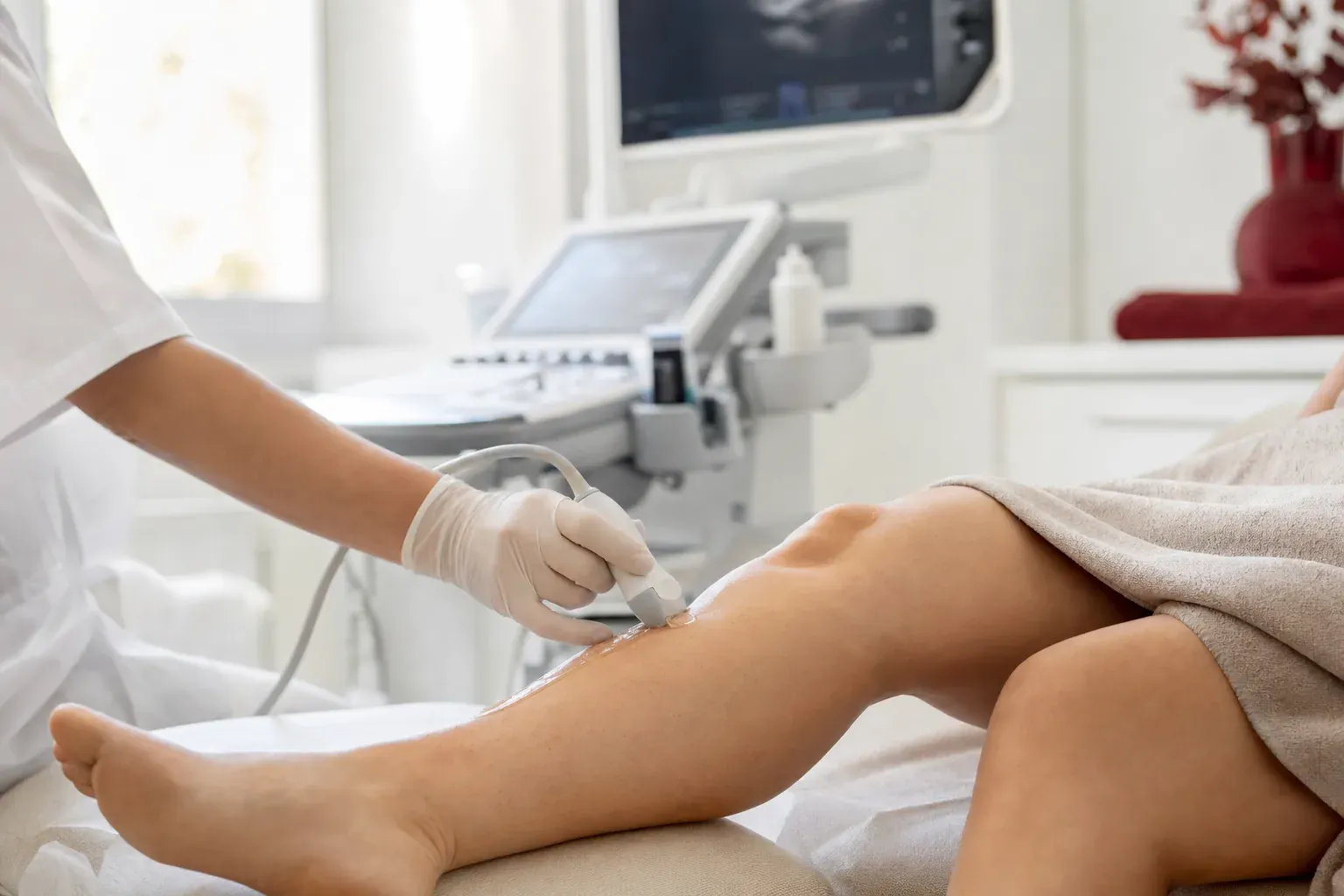
Endovenous laser ablation (EVLA) closes a faulty vein from the inside through a small puncture, and you usually go home the same day.
The doctor asks about your symptoms, lifestyle and whether varicose veins run in your family. Then the doctor examines your legs and does some special tests. To confirm the findings, the doctor performs a vascular ultrasound with color Doppler and, if needed, orders blood and urine tests and an ECG.
An accurate diagnosis is only possible after an exam and tests, so do not treat yourself. Even large veins may not bother you for a long time, and pain often appears only with complications such as thrombosis, phlebitis or sudden bleeding. If you notice changes in your legs, do not put off a checkup.
Besides varicose veins, a vascular surgeon helps with chronic venous insufficiency, thrombophlebitis, lymphedema, Raynaud’s disease and hemangiomas. After the tests, the doctor suggests a treatment plan. Varicose veins are treated at the clinic on an outpatient basis.
Varicose veins most often develop when a hereditary tendency is combined with other factors: an unbalanced diet, unhealthy habits, excess weight, diabetes, or taking hormonal medicines without medical supervision. Veins are also strained by working on your feet or sitting all day, for example in an office, a bank or at a checkout, and by too little movement. People in these groups should see a phlebologist at least once a year, so the doctor can spot changes early or monitor the veins after treatment.
The doctor decides whether you need treatment during the exam: special tests at the consultation, then a vein ultrasound to confirm the diagnosis. Treatment is recommended when varicose veins are caused by faulty vein valves and lead to swelling, pain or cramps. Many patients come because of how their legs look, and treatment can then be done without other symptoms if the ultrasound shows that the vein valves are not working.
The clinic uses minimally invasive methods. In sclerotherapy, a sclerosing medicine is injected into the vein and seals its walls. Endovenous laser ablation (EVLA, also called EVLC) acts on the affected vein from the inside through a small puncture: the vein walls seal together, and over time the body absorbs the vein. Radiofrequency ablation seals the affected vein with a high-frequency probe. Once the vein is closed, blood no longer pools in it, pressure on the walls of the veins under the skin drops, and blood flows through the healthy veins.
Laser treatment does not suit every vein, so the doctor decides after a vein ultrasound. If this method is not right for you, the doctor will explain other options. After treatment, you will get advice on activity and compression stockings and come back for a follow-up visit.
No. You can have varicose veins examined and treated in Slavuta, at Viva Clinic. Patients come to us from Netishyn, Shepetivka, Khmelnytskyi, the Khmelnytskyi and Rivne regions and from all over Ukraine. The vascular surgeon sees patients by appointment, with no waiting in line. Lab tests are done at our own Diagnost-Lab laboratory at 32 Sobornosti St. If you have signed a declaration with a Viva Clinic family doctor, basic lab tests and an ECG are free for you. A consultation with a vascular surgeon is paid.
When your legs feel heavy even after a short walk, you notice spider veins or enlarged veins under the skin, the skin on your legs changes color or your toes darken. Book a visit too if lumps or venous ulcers appear on your legs. Even large veins may not hurt for a long time, so do not wait for pain; see a Viva Clinic vascular surgeon in Slavuta.
Spider veins on the skin, leg cramps, changes in skin color and heavy legs at the end of the working day. Pain often comes later, together with complications such as thrombosis, phlebitis or sudden bleeding. Do not treat yourself: an accurate diagnosis is only possible after an exam by a phlebologist, lab tests and a color Doppler ultrasound.
Yes. Many patients come for cosmetic reasons. The doctor will examine your legs, check the veins with a color Doppler ultrasound and explain what can be done in your case. If you have had a vein ultrasound before, bring the report.
An exam by the doctor, a vascular ultrasound with color Doppler and blood tests: complete blood count, metabolic panel, lipid panel and coagulation panel. A urine test and ECG are added if needed. You can have all of this at Viva Clinic in Slavuta, without traveling to Khmelnytskyi.
At least once a year. That way, the doctor can spot varicose veins early if they start to develop, or keep an eye on your veins after treatment. This matters most if varicose veins run in your family, you stand or sit a lot at work, you are not very active, you smoke, or you have chronic venous insufficiency.
On an outpatient basis, with minimally invasive methods: sclerotherapy, endovenous laser ablation (EVLA, also called EVLC) or radiofrequency ablation. In sclerotherapy, a sclerosing medicine is injected into the vein; a laser seals the affected vein from the inside through a small puncture; a radiofrequency probe seals it too. The doctor chooses the method after an exam, special tests and a vein ultrasound.
No. The doctor decides whether EVLA suits you after an exam and a vein ultrasound. If the vein is very twisted or lies too close to the skin, laser treatment may not be suitable, and the doctor will discuss other treatment options with you.
Usually yes. After surgery, doctors recommend wearing compression stockings when your veins are under more strain, for example during pregnancy or long hours on your feet, and taking courses of conservative treatment. The doctor will advise what suits you at the follow-up visit.
Cut down on what strains your veins: heavy physical work, long hours on your feet, excess weight, inactivity, smoking, and the habit of squatting or sitting with your legs crossed. Get treatment for heart and vascular conditions and for problems with the joints and lymph vessels of the legs. After treatment, follow the doctor’s advice on compression stockings and come back for follow-up visits.
Call us or message us on Viber or Telegram, and the administrator will find a time that suits you. Visits are by appointment at 27a Sobornosti St or 3 Danyla Halytskoho St; the exact address is confirmed when you book. You can have varicose veins examined and treated in Slavuta, so there is no need to look for a vascular surgeon in Khmelnytskyi.
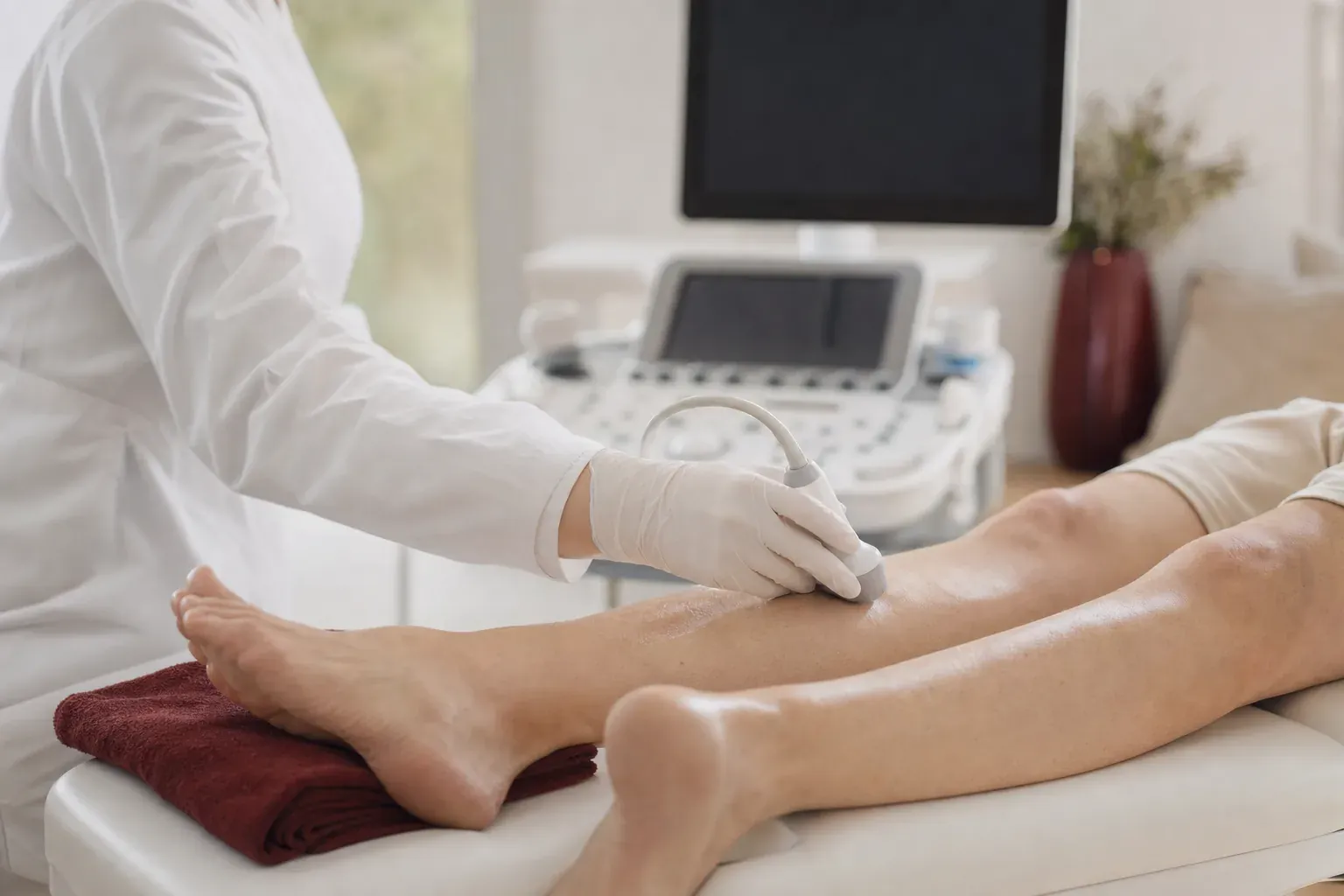
Varicose veins are enlarged leg veins that develop when the valves inside them weaken and blood pools. The first signs are usually heavy, swollen legs in the evening, spider veins and night cramps, and later twisted veins become visible under the skin. Treatment starts with a vein ultrasound, and based on the results a vascular surgeon chooses compression, a minimally invasive procedure or surgery.
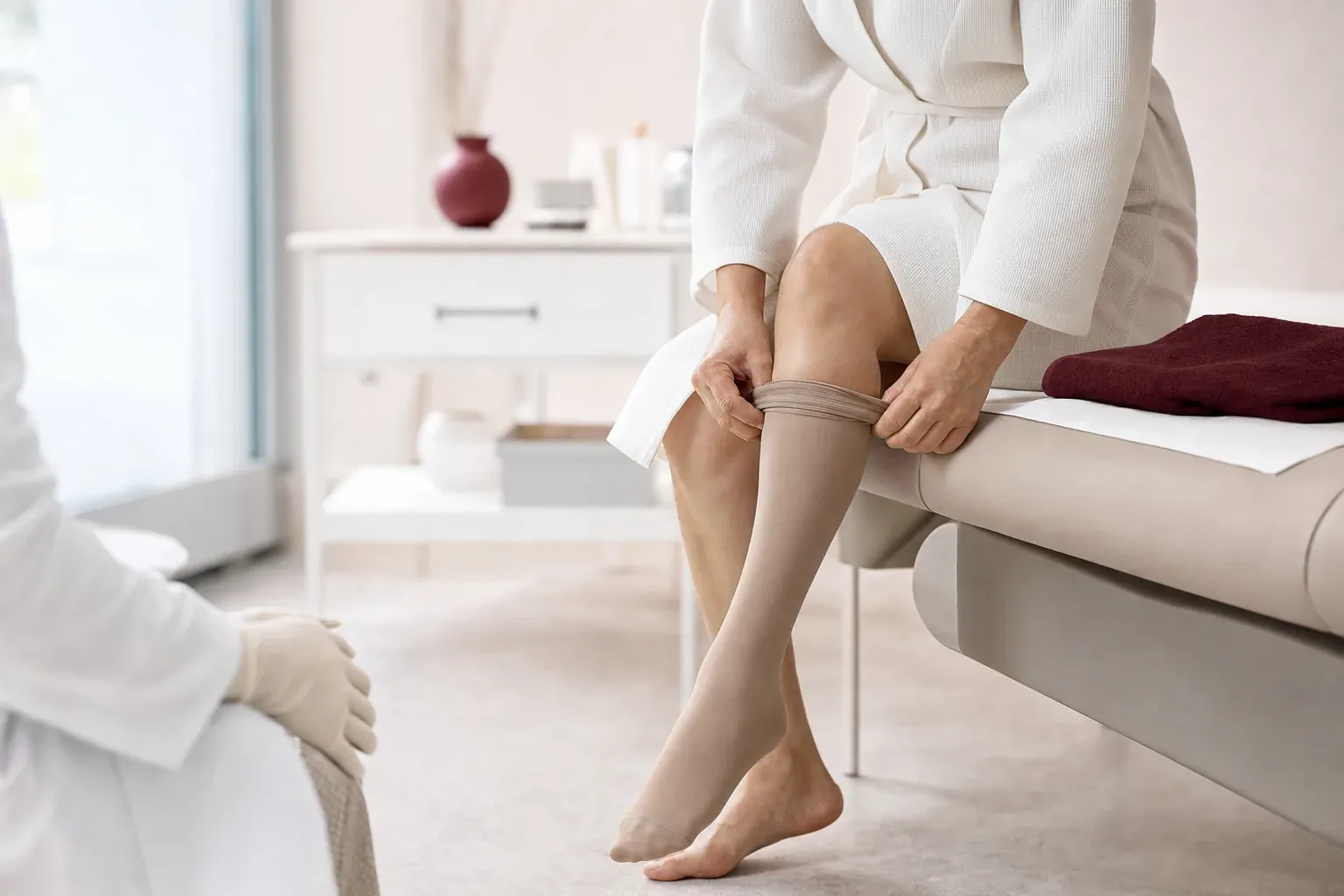
Laser treatment for varicose veins, or endovenous laser ablation (EVLA), closes the affected vein from the inside through a small puncture, with no incisions. It is done on an outpatient basis, and a vascular surgeon decides whether it suits you after an exam and a vein ultrasound. After EVLA you usually go home the same day, and the doctor tells you what activity level and compression stockings you need.
The exact address is confirmed when you book.
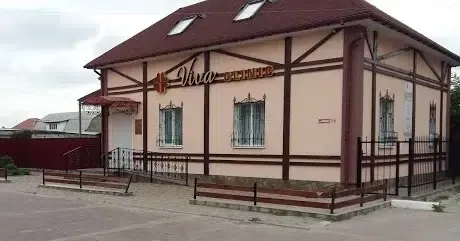
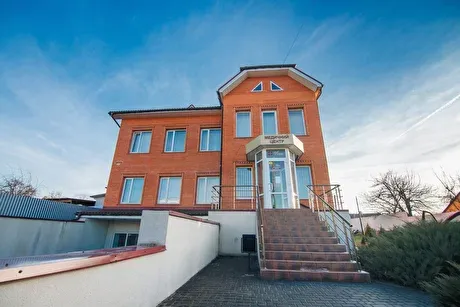
3 Danyla Halytskoho St, Slavuta, Khmelnytskyi Oblast
Mon–Fri 8:00–17:00
Open in Google MapsViva Clinic ratings on Google Maps and recent patient reviews. If you have visited us, please leave a review.
27a Sobornosti St, Slavuta
4.443 reviews
3 Danyla Halytskoho St, Slavuta
4.515 reviews
Our administrators will help you choose a doctor and a convenient time.


