
When to have a breast ultrasound and on which day of your cycle
A routine breast ultrasound is usually done in the first half of your cycle, roughly between days 5 and 12 counting from the start of your period, when your breasts are least swollen. After menopause, any day is fine. If you've noticed a lump or nipple discharge, don't wait for the right day and book an appointment with a mammologist, a breast specialist, straight away.
Published Updated 4 min read
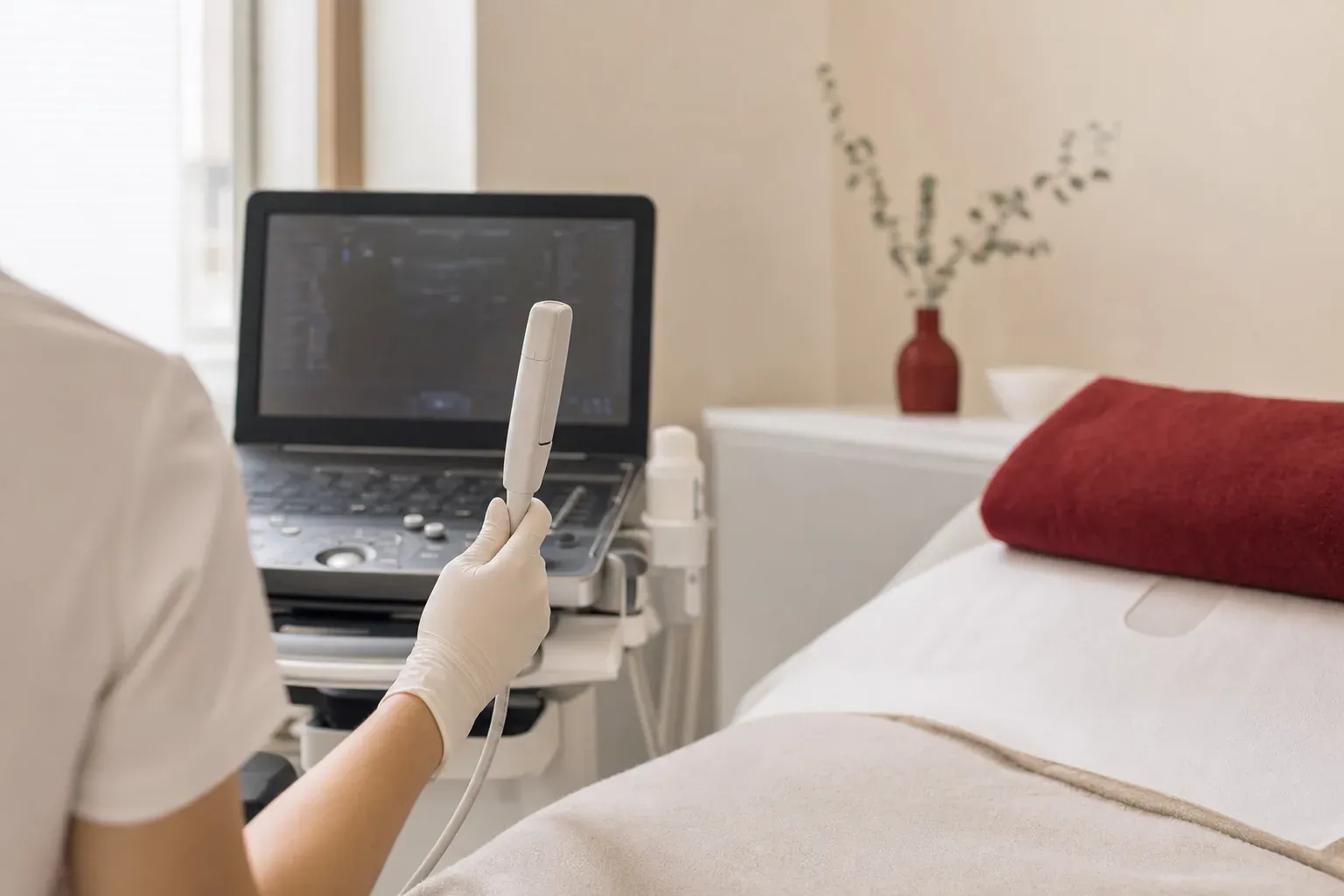
How a breast ultrasound differs from a mammogram
A breast ultrasound uses sound waves and no radiation, so it can be done at any age and during pregnancy and breastfeeding. It is good at telling a fluid-filled cyst from a solid lump, and the doctor checks the lymph nodes in your armpits at the same time.
A mammogram is a low-dose X-ray of the breasts. It shows tiny calcium deposits (microcalcifications), which are sometimes an early sign of cancer and are harder to see on ultrasound. During the X-ray, each breast is pressed between two plates for a few seconds, which can be uncomfortable.
Younger women have dense breast tissue. On a mammogram it looks white and can hide changes, so ultrasound is used more often at that age. With age, the breasts contain more fatty tissue, and a mammogram shows more.
Both methods show whether there are changes in the breast, but they can’t always tell what a lump is. If it needs a closer look, the doctor may order a fine-needle aspiration or biopsy, in which a thin needle is used to take cells or tissue for testing.
Mammogram or ultrasound: which to choose
Your doctor chooses the method based on your age, symptoms and family history. As a rough guide:
- under 40, an ultrasound is usually done first;
- over 40, the doctor may recommend a mammogram, and from 50 to 69 one is advised every two years even without symptoms; an ultrasound is added when the tissue is dense or a finding needs clarifying;
- during pregnancy and breastfeeding, the breasts are examined with ultrasound;
- if your mother or sister has had breast cancer, the doctor may suggest starting check-ups earlier and having them more often.
Which day of the cycle to have a breast ultrasound
Before a period, hormones make the breasts swell, and the tissue becomes denser and more tender. After your period the swelling goes down, the structure of the breast is easier to see on ultrasound, and the probe feels more comfortable.
Count the days from the first day of your period. If your cycle is irregular or you take hormonal contraceptives, choose the days right after your bleeding ends, or ask about a suitable day when you book. During pregnancy and breastfeeding, the ultrasound is done whenever your doctor orders it.
These timings apply only to routine exams. Book an appointment with a mammologist within the next few days, without waiting for the right day of your cycle, if you notice a new lump, nipple discharge (especially with blood), a nipple or skin that is pulled in, a change in the shape of the breast or a lump in your armpit. If your breast turns red, hot and painful and you have a fever, see a doctor the same day.
How to prepare for a breast ultrasound and how often to have one
No special preparation is needed, and you can eat and drink before the scan. Wear clothes that make it easy to undress to the waist. Bring reports from previous ultrasounds or mammograms and remember the date your last period started, as the doctor will ask about it.
Your usual cream or deodorant won’t interfere with an ultrasound. Before a mammogram, on the other hand, they are not applied, because particles on the skin can show up on the X-ray. Tell the doctor if you take hormonal medicines or are breastfeeding, as this affects how the tissue looks.
During the scan, you lie on your back with one arm behind your head. The doctor applies gel and examines each breast and armpit in turn.
How often to have an ultrasound is decided by a mammologist or gynecologist based on your age, family history and previous results. If cysts or other changes have been found, the doctor will tell you when to have a follow-up scan. Between visits, check your breasts yourself once a month so you notice anything new in time.
Where to get a breast ultrasound in Slavuta
At Viva Clinic in Slavuta, breast ultrasounds are done at the polyclinic at 27a Sobornosti St. You can book by phone or on Viber; all scans are by appointment, with no waiting in line. The ultrasound is paid. You don’t need to travel to Khmelnytskyi or Kyiv for it.
It’s best to discuss the result with a mammologist. Mammologist appointments at Viva Clinic take place at 27a Sobornosti St or 3 Danyla Halytskoho St; the exact address is confirmed when you book. The doctor will examine your breasts, compare the report with previous tests and tell you whether you need monitoring or other tests. If the ultrasound shows fibrocystic changes, also read what fibrocystic breast changes are and how they are monitored.
Questions and answers
Does a breast ultrasound hurt?
No, a breast ultrasound is painless. The gel may feel cool, and the pressure of the probe can be unpleasant over a tender spot. Tell the doctor if anything hurts, and they will be gentler. Afterwards the gel is wiped off, and you can go straight back to your day.
Can I have a breast ultrasound during my period?
Yes, if something is worrying you and it shouldn't wait. A routine exam is better moved to the days after your period: in the first days of bleeding the breasts may still be swollen and tender, which makes the tissue harder to assess.
What if the ultrasound finds a cyst?
Show the report to a mammologist. Simple cysts are benign and most often only need monitoring. If a cyst is large, painful or looks unusual, the doctor will decide whether you need aspiration or other tests and tell you when to repeat the ultrasound.
Do I need a referral for a breast ultrasound?
No. People come for an ultrasound at Viva Clinic either with a doctor's referral or for a preventive check. If you have a referral or reports from previous tests, bring them so the doctor can compare the results.