




Specialist care
ENT Doctor in Slavuta
A Viva Clinic ENT doctor in Slavuta sees adults and children with ear or throat pain, a runny nose that will not go away, hearing loss or snoring. The exam takes place at Viva Clinic at 27a Sobornosti St or 3 Danyla Halytskoho St (the exact address is confirmed when you book), with an endoscope if needed. Visits are by appointment: call us or message us on Viber.
Paid serviceBy appointment

At a glance
- Where
- 27a Sobornosti St or 3 Danyla Halytskoho St, Slavuta
- Hours
- Mon–Fri 8:00–17:00
- How to book
- phone or Viber
- Payment
- paid
When to see an ENT doctor
- Ear pain or discharge from the ear: blood, pus or clear fluid
- Sudden hearing loss, or ringing in the ears or head
- A blocked or runny nose lasting more than two weeks that does not improve with treatment
- Frequent nosebleeds not linked to blood pressure
- A feeling of pressure under the eyes and above the eyebrows, especially when you bend your head
- A very sore throat, white coating on the tonsils, or difficulty opening the mouth
- Snoring or constant mouth breathing, especially in a child
- Hoarseness for no obvious reason
- A suspected foreign object in the ear, nose or throat
What an ENT doctor visit includes
- ENT consultation for adults and children
- Ear, nose and throat exam
- Endoscopic exam of the ear, nose and throat
- Treatment of ear infections (otitis), Eustachian tube inflammation, sinusitis and maxillary sinusitis
- Treatment of tonsillitis, pharyngitis and laryngitis
- Help with adenoids, adenoiditis and a chronic runny nose
- Ultrasound and lab tests at the Diagnost-Lab laboratory, if needed
- Referral for a CT or MRI, if needed
What happens at an ENT appointment
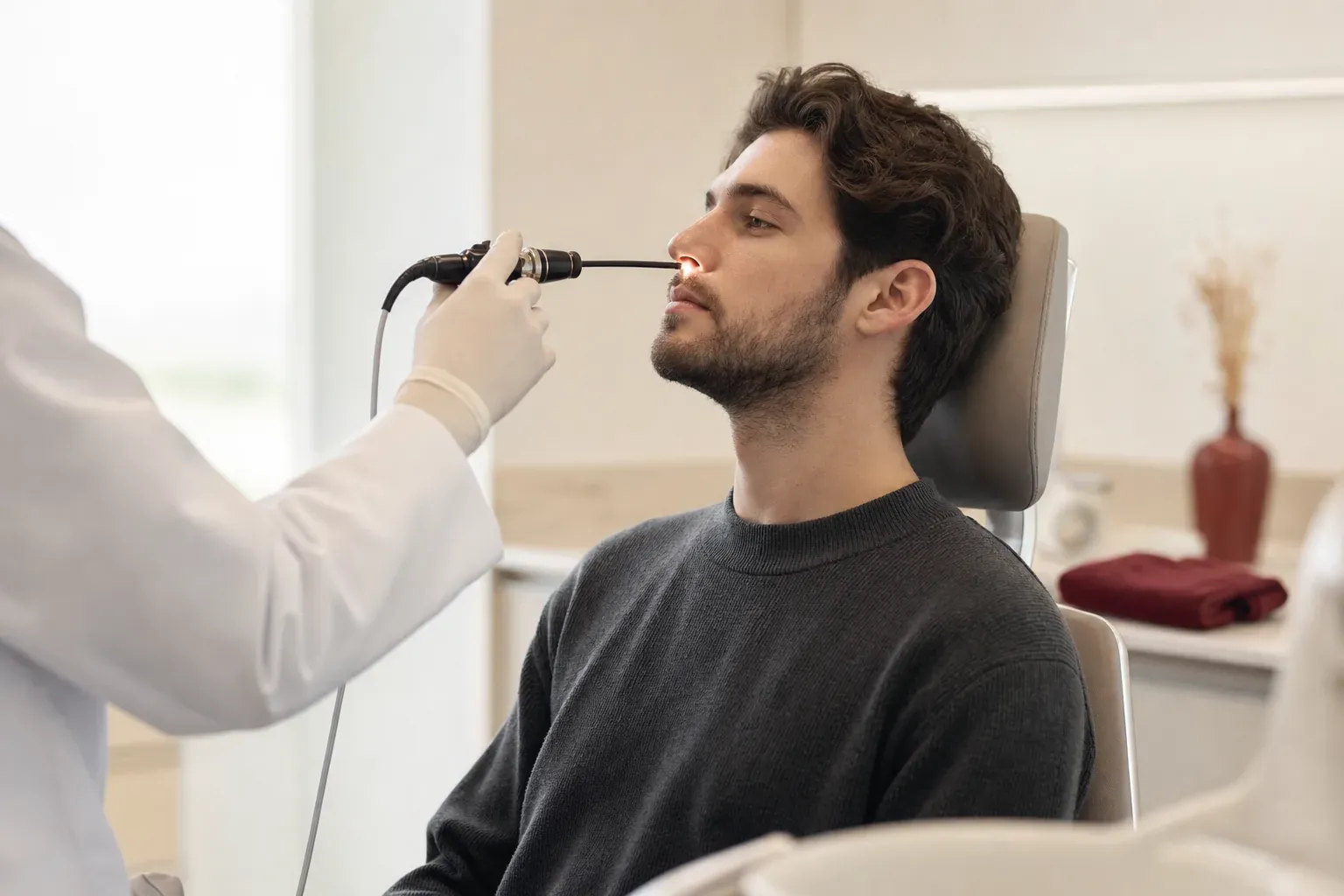
The doctor asks about your symptoms, past illnesses and the medicines you take. If you are allergic to any medicines, say so at the start, because the doctor may use numbing medicine during the exam. Then the doctor examines your ears, nose and throat. For a closer look, an endoscope is used, a thin tube with a camera that shows the inside of the nose and the area behind it. If needed, the doctor takes a tiny tissue sample during the endoscopy for laboratory testing.
Next, the doctor explains what is going on and, if needed, orders an ultrasound, lab tests, a hearing test (audiometry) or other tests. For a CT or MRI, the doctor will give you a referral. Treatment is chosen for both acute and chronic conditions, including when symptoms keep coming back.
You can have the consultation, endoscopic exam and ultrasound at Viva Clinic, and lab tests at the Diagnost-Lab laboratory at 32 Sobornosti St. So you don’t need to travel to Kyiv, Lviv or Khmelnytskyi to see an ENT doctor. If you have signed a declaration with a Viva Clinic family doctor, basic lab tests and an ECG are free for you. A consultation with an ENT doctor is paid.
Why adults see an ENT doctor
Most often for ear infections, sinusitis, tonsillitis, pharyngitis, laryngitis or a runny nose that will not go away. Maxillary sinusitis usually starts with a runny nose, followed by a feeling of pressure under the eyes and above the eyebrows that gets worse when you bend your head, often with a fever. Another reason is polyps and other growths on the lining of the nose. People also come with hearing loss, ringing or a blocked feeling in the ear, including from Eustachian tube inflammation, frequent nosebleeds, or snoring that disturbs sleep.
Laryngitis most often develops during a viral infection and is dangerous because the larynx can narrow to the point of suffocation. If breathing becomes difficult or noisy, call an ambulance on 103.
When to bring your child to an ENT doctor
Children most often see an ENT doctor because of enlarged adenoids. The child finds it hard to breathe through the nose, snores at night and often has a runny nose, a cough and ear infections. Because of the snoring, the child does not sleep well, so they become tired and cranky during the day, and their schoolwork suffers. Bring your child in too if they catch colds more than 8–10 times a year or often have tonsillitis.
If you notice pauses in your child’s breathing during sleep, do not put off the visit.
Questions about seeing an ENT doctor
When do I need to see an ENT doctor urgently?
When you have a nosebleed, ear pain or blood, pus or clear fluid coming from the ear, sudden hearing loss, a sore throat so bad that it is hard to open your mouth, or you suspect a foreign object in the nose, ear or throat. Do not delay either if a runny nose lasts more than two weeks despite treatment or your voice turns hoarse for no obvious reason. If a foreign object is making it hard to breathe, call an ambulance on 103.
Should I see an ENT doctor or a general practitioner for a cold?
For an ordinary cold, a general practitioner or family doctor is enough. See an ENT doctor if your ear hurts, a runny nose lasts more than two weeks, your hearing suddenly gets worse, or your throat hurts so much that it is hard to open your mouth.
Does the ENT doctor see children?
Yes, the Viva Clinic ENT doctor sees both adults and children. Bring your child in if they often have a stuffy nose, ear infections or tonsillitis, ear pain or worse hearing, breathe through the mouth, snore, or catch colds more than 8–10 times a year. Pauses in breathing during sleep can be a sign of enlarged adenoids, so do not put off the visit if you notice them.
How do I prepare for an ENT appointment?
Do not rinse your nose or use nasal drops before the visit, even if you have a runny nose. Do not eat right before the appointment, because a throat exam can trigger the gag reflex. Make a list of the medicines you have taken for any reason over the past few months.
Does the ENT doctor use numbing medicine during the exam?
Yes, if needed the doctor uses a local anesthetic or other medicines. So at the start of the appointment, be sure to mention any drug allergies and name the medicines that caused them.
What tests does an ENT doctor order?
Most often an endoscopic exam: using a thin tube with a camera, the doctor looks inside the nose and the area behind it and, if needed, takes a tiny tissue sample for laboratory testing. The ENT doctor may also order an ultrasound, a hearing test (audiometry), a CT or an MRI. The endoscopic exam and ultrasound are available at Viva Clinic in Slavuta, and the doctor will refer you for a CT or MRI.
What conditions does an ENT doctor treat?
Ear infections, Eustachian tube inflammation, maxillary and other sinusitis, rhinitis, enlarged adenoids and adenoiditis, tonsillitis, pharyngitis, laryngitis and hearing loss. An ENT doctor also deals with polyps and other growths on the lining of the nose. At Viva Clinic, treatment is chosen for both acute and chronic conditions, including when symptoms keep coming back.
Why is laryngitis dangerous?
Because the larynx can narrow, and in severe cases this leads to suffocation. Laryngitis most often develops during a viral infection. If breathing becomes difficult or noisy, call an ambulance on 103, and if your voice is hoarse for no obvious reason, book a visit with a Viva Clinic ENT doctor.
Do I need to go to Khmelnytskyi to see an ENT doctor?
No, the ENT doctor sees patients in Slavuta. At Viva Clinic you can have a consultation, an endoscopic ENT exam and an ultrasound, and get lab tests at the Diagnost-Lab laboratory. Patients come to us from Netishyn, Shepetivka, Khmelnytskyi, the Khmelnytskyi and Rivne regions and from all over Ukraine.
Articles: ent (otolaryngology)

Ear infections: symptoms, treatment and what not to do at home
Otitis is inflammation of the ear. Otitis externa affects the skin of the ear canal, while otitis media develops behind the eardrum and most often starts after a cold. If your ear hurts, your hearing drops or fluid is coming out of your ear, see an ENT doctor and don't put anything in the ear before the exam.
Sinusitis: symptoms, treatment and when you need an ENT doctor
Maxillary sinusitis is inflammation of the maxillary sinus, the air space in the cheekbone under each eye. It most often starts with a cold and clears up along with it. If a blocked nose, pain under the eyes and thick discharge last longer than 10 days, get worse after improving, or come with a high fever from the start, see an ENT doctor.

Cough in children: what to do and when to see a doctor
Most coughs in children come with a cold and usually clear up on their own within 3 to 4 weeks. Drinks, fresh humid air and rinsing the nose help, and the only cough medicine to give is one your pediatrician has recommended, at the dose for your child's age from the leaflet. If your child is struggling to breathe or breathing noisily, their lips turn blue, or they have choked on something and are struggling to breathe, call an ambulance on 103.

Fever in children: when to bring it down and when to call a doctor
Doctors usually call it a fever when a child's temperature is 38 °C (100.4 °F) or higher. Bring it down if the fever is making your child feel unwell, and only with a fever medicine your pediatrician has recommended, at the dose for your child's age given in the leaflet. Call an ambulance on 103 straight away if a baby under 3 months has a fever, or if your child has a rash that does not fade when pressed, struggles to breathe, is very drowsy or has a seizure.
Other doctors and tests at Viva Clinic
Where to see an ENT doctor in Slavuta
The exact address is confirmed when you book.
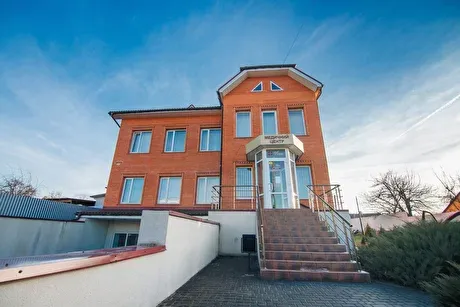
Day hospital
3 Danyla Halytskoho St, Slavuta, Khmelnytskyi Oblast
Mon–Fri 8:00–17:00
Open in Google MapsGoogle rating and reviews
Viva Clinic ratings on Google Maps and recent patient reviews. If you have visited us, please leave a review.
Polyclinic
27a Sobornosti St, Slavuta
4.443 reviews
Day hospital
3 Danyla Halytskoho St, Slavuta
4.515 reviews
Message or call us
Our administrators will help you choose a doctor and a convenient time.