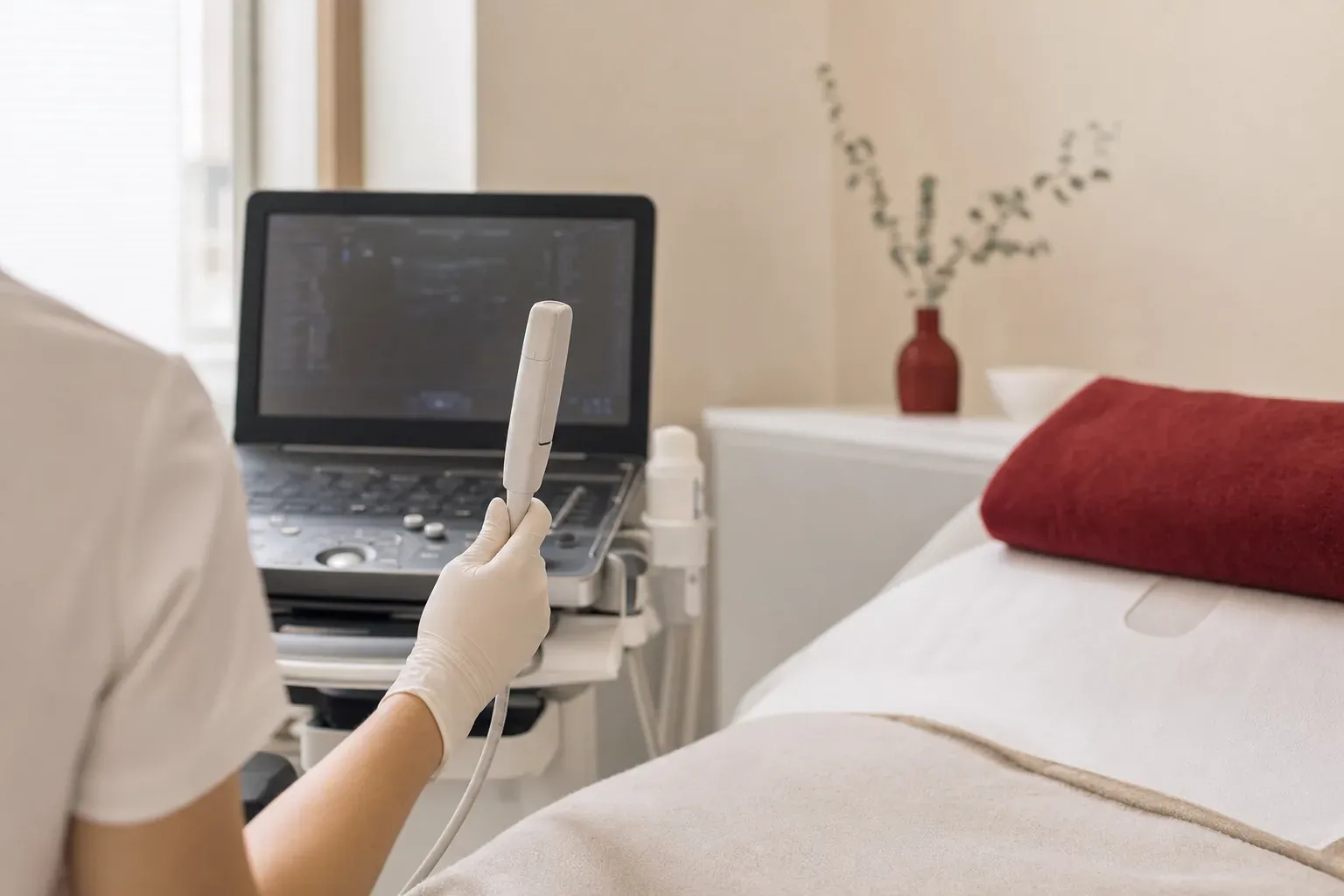
How to prepare for an abdominal ultrasound
Come to an abdominal ultrasound on an empty stomach, usually after 6–8 hours without food, which is why the scan is easiest to schedule in the morning. You can drink a little plain water. If you often get bloated, cut out the foods that make it worse for 1–2 days before the scan.
Published Updated 4 min read

Why an abdominal ultrasound is done on an empty stomach
During this scan, the doctor examines your liver, gallbladder, pancreas and spleen. The ultrasound shows the size and structure of these organs, gallstones, cysts and other growths. After a meal, the gallbladder contracts and squeezes out bile, which makes its walls and contents hard to assess. Food and gas in the stomach and bowel block ultrasound waves and hide the pancreas from the probe.
The simplest option is to book a morning slot and skip breakfast. If your scan is in the afternoon, you can have a light breakfast early in the morning so that 6–8 hours pass before the scan. Preparation for children is explained separately when you book, since it’s harder for them to go without food. If you did eat, tell the doctor before the scan: some organs may not be clearly visible, and the scan sometimes has to be repeated on another day.
Drinking water before an abdominal ultrasound
A few sips of plain still water won’t affect the scan, and you can use them to take your medicines. Leave other drinks until afterwards. Coffee, milk, juice and sweet tea can make the gallbladder contract, and fizzy drinks add gas to the bowel. Chewing gum and smoking before the scan are best avoided too, because they make you swallow air.
You usually don’t need to skip the medicines you take regularly, such as blood pressure tablets, unless your doctor has said otherwise. If you have diabetes, ask your doctor in advance how to manage your medicines and meals on the day of the scan so that your blood sugar doesn’t drop too low.
A different rule applies if a bladder ultrasound has been booked along with your abdomen. The bladder is examined when it’s full, so you’ll need to drink water beforehand and not go to the toilet. You’ll be told how much to drink and when as you book.
What to eat 1–2 days before the scan if you get bloated
If you often have gas, limit the foods that make your stomach bloat for a day or two before the scan:
- beans, peas and other legumes;
- cabbage;
- dark rye bread and fresh pastries;
- large amounts of raw vegetables and fruit;
- milk and fizzy drinks.
Good options are porridge cooked in water, boiled lean meat or fish, eggs and hard cheese. Have a light dinner and don’t eat late. If your doctor has recommended a remedy for bloating, take it as they explained.
How to prepare for kidney, bladder and pelvic ultrasounds
- On its own, a kidney ultrasound usually doesn’t require fasting. If your bladder is examined along with your kidneys, come with a full bladder.
- Bladder and prostate scans through the abdomen are done with a full bladder.
- For women, a pelvic ultrasound through the abdomen also needs a full bladder. A transvaginal ultrasound, on the other hand, is done with an empty bladder, and the gynecologist usually schedules it for a particular day of your cycle.
- You don’t need to fast for a breast ultrasound, but it is planned for certain days of your cycle. Read more in when to have a breast ultrasound.
What happens during an abdominal ultrasound and what to bring
You lie on your back on a couch, and the doctor puts gel on your abdomen and moves a probe over it. You may be asked to turn on your side or take a deep breath and hold it so the doctor can see an organ better. The scan is painless, although the pressure of the probe can feel unpleasant over a sore spot. Ultrasound doesn’t use X-rays, so it’s suitable for pregnant women and children too.
Bring your referral if you have one, reports from previous ultrasounds and your test results, so the doctor can compare and see whether anything has changed. Show the ultrasound report to the doctor who referred you: they make the diagnosis, taking into account both your symptoms and your other tests.
The Viva Clinic polyclinic in Slavuta, at 27a Sobornosti St, offers ultrasound of the abdomen, kidneys and bladder as well as other ultrasound scans. You can book by phone or on Viber. All scans are by appointment, so you won’t have to wait in line.
Don’t wait for a planned ultrasound if you have sudden, severe abdominal pain or pain that keeps getting worse, a fever, vomiting that won’t stop, yellowing of the skin or eyes, black stools or blood in your vomit. In that case, call an ambulance (103) or see a doctor the same day.
Questions and answers
Do I need a referral for an abdominal ultrasound?
No. People come for an ultrasound at Viva Clinic either with a doctor's referral or for a preventive check. The scan is paid, as it isn't part of primary care. If you have a referral, bring it along with the reports from any previous ultrasounds.
Can I have an abdominal ultrasound during my period?
Yes. Your period doesn't affect an ultrasound of the liver, gallbladder, pancreas or spleen. If you're also having a pelvic ultrasound the same day, ask when you book whether that day of your cycle suits it.
How long does an abdominal ultrasound take?
Usually up to half an hour. It depends on how many organs need to be examined and whether your kidneys or bladder have been added to the scan. Afterwards the gel is wiped off, and you can eat and go back to your day straight away.
Can I brush my teeth before an ultrasound?
Yes, you can brush your teeth, just try not to swallow the water or toothpaste. Don't have hard candy or other sweets before the scan, as they also break the fast. If your mouth feels dry, take a few sips of water.