Holter ECG and 24-hour blood pressure monitoring: what they are and how they work
During Holter monitoring, a small device that you wear continuously records your ECG or regularly measures your blood pressure for 24 hours, or longer if needed. A standard ECG takes a few minutes, while a Holter shows how your heart and blood pressure behave during the day, at night, while walking and while sleeping. Viva Clinic in Slavuta offers both, a Holter ECG and 24-hour blood pressure monitoring, at the polyclinic at 27a Sobornosti St by appointment.


How a Holter differs from a standard ECG
A standard ECG is recorded in the office while you lie on a couch, and it shows only a short stretch of your heart’s activity. Skipped beats or bouts of palpitations that happen once a day or at night may not show up on such a recording. A Holter ECG records your heart continuously, so the doctor sees every heartbeat over the day and can match it with what you felt.
24-hour blood pressure monitoring works differently. A cuff on your upper arm inflates by itself at set intervals day and night, and the device stores all the readings. The doctor sees your average blood pressure during the day and at night, whether it drops while you sleep and how it changes after you take your medicines.
Both devices are small and are usually worn on a belt or in a pouch. For an ECG recording, a few electrodes with thin wires are stuck to your chest; for blood pressure, you wear a cuff connected to the device by a tube.
A standard ECG is still the first step. At Viva Clinic, the cardiologist records one at your first visit and orders a Holter when a short recording isn’t enough to explain your symptoms.
Who needs a Holter ECG or 24-hour blood pressure monitoring
A Holter ECG is used when a symptom comes and goes and needs to be “caught”:
- palpitations, skipped beats or a feeling that your heart stops for a moment;
- dizziness, your vision going dark, fainting or nearly fainting;
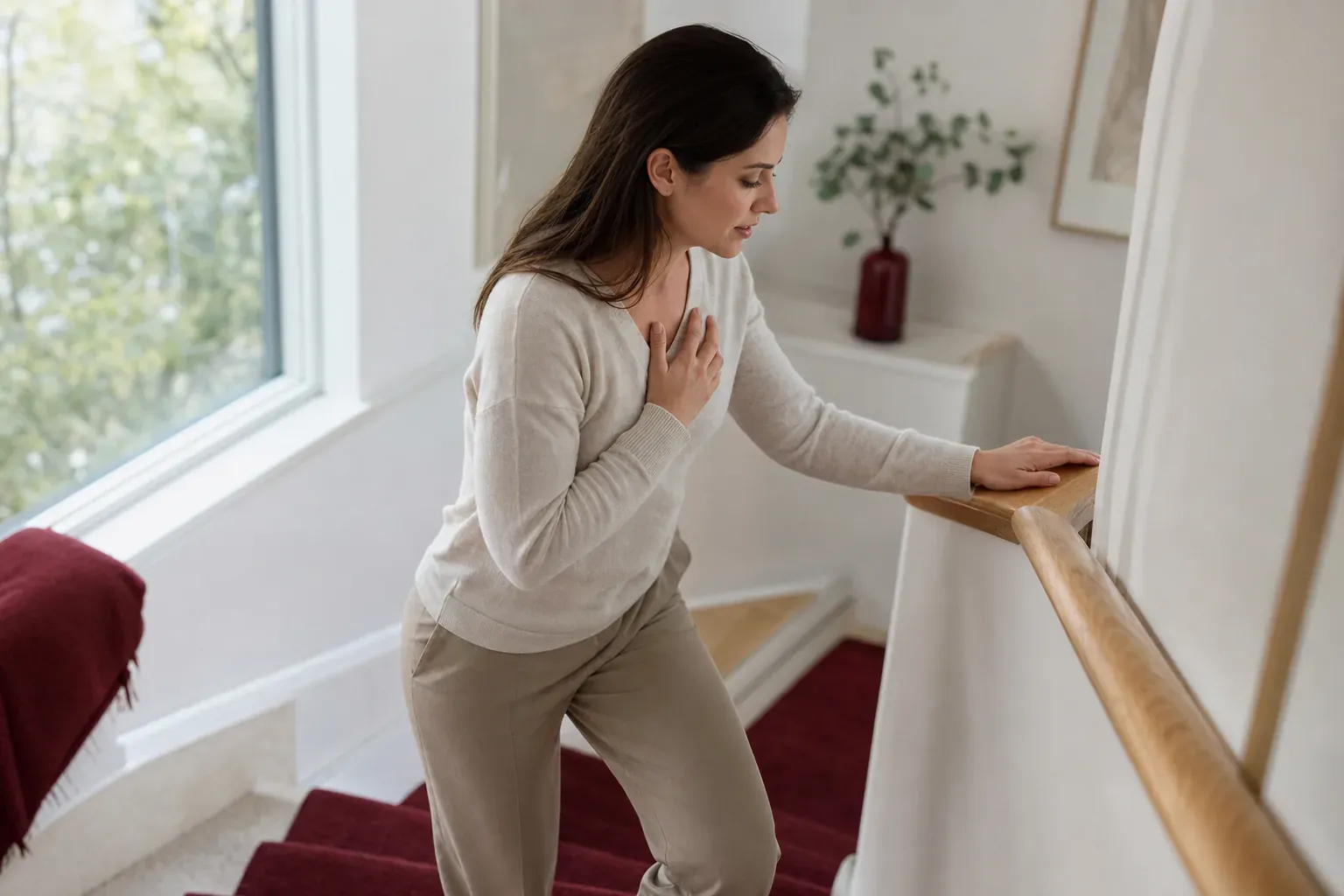
- chest pain or discomfort that comes from time to time;
- checking treatment for rhythm problems or how a pacemaker works.
24-hour blood pressure monitoring helps when:
- your blood pressure is high in the office but normal at home, or the other way round;
- your home readings vary a lot;
- the doctor needs to check whether your medicines control your blood pressure around the clock;
- you have bouts of weakness or dizziness and the doctor suspects that your blood pressure is dropping.
Your doctor decides which type you need and how long to wear the device. A recording usually lasts one or two days, or up to seven if needed.
How to prepare for a Holter
- Take a shower before the device is fitted, because you can’t wash while wearing it.
- Don’t put cream or oil on your chest, so the electrodes stick better. Men may have small areas of chest hair shaved for the electrodes.
- Wear comfortable clothes, and for blood pressure monitoring choose a shirt or top with loose sleeves.
- Bring your referral, previous ECGs and a list of your medicines. Take your medicines as usual unless your doctor tells you otherwise.
What a day with the device is like
Go about your normal day: work, walk and climb stairs if that’s what you usually do. There’s no need to lie down all day, because the recording should show how your heart and blood pressure behave in your real life.
Keep a diary and write down the time when you:
- woke up and went to bed;
- ate and took your medicines;
- walked, climbed stairs or felt stressed;
- felt palpitations, pain, dizziness or any other symptom.
When the cuff starts to inflate, stop, relax your arm, keep it still and don’t talk until the reading is finished.
The device must not get wet, so don’t shower or take a bath, and don’t go to a pool or sauna. Don’t remove the electrodes or the cuff, and don’t disconnect the wires. If an electrode comes loose, press it back into place and write down the time in your diary.
If you have severe chest pain or shortness of breath, or you faint during the recording, don’t wait for the test to end: call an ambulance on 103.
What happens with the results
When the recording time is over, bring the device back to the polyclinic at the agreed time, together with your diary. The recording is analyzed, and the doctor compares it with your notes, which shows whether, for example, a dizzy spell matches a pause in the heart rhythm or a drop in blood pressure.
Occasional extra heartbeats (ectopic beats) happen in healthy people too. The doctor looks at how many there are, what type they are and whether they are linked to your symptoms. In the blood pressure recording, the doctor looks at the average values for the day and the night. Normally blood pressure drops at night, and if it doesn’t, the doctor takes this into account when choosing treatment.
You take the report to the doctor who ordered the test, most often a cardiologist.
At Viva Clinic, a Holter ECG and 24-hour blood pressure monitoring are done at the polyclinic at 27a Sobornosti St, so there’s no need to travel to Kyiv, Lviv or Khmelnytskyi. The test is paid. If you have signed a declaration with a Viva Clinic family doctor (in Ukraine, a patient’s registration with a primary care doctor), a standard ECG is free for you. You can book by phone or on Viber.
Questions and answers
Can you sleep with a Holter monitor?
Yes, and the doctor needs the night-time recording too. Sleep in your usual position, but try not to lie on the device itself or pull on the wires. During 24-hour blood pressure monitoring, the cuff inflates at night as well, so it may wake you briefly.
Can you work while wearing a Holter monitor?
Yes. The point of a Holter is to record an ordinary day, so you can work, walk around town and do housework. Just avoid hard workouts and heavy sweating unless your doctor has asked to record exercise, because sweat makes the electrodes come off.
Does fitting a Holter monitor hurt?
No. The electrodes are stuck to the skin of your chest like plasters, and the blood pressure cuff goes on your upper arm. It can be a little uncomfortable when the cuff squeezes your arm tightly during a reading, or when the electrodes are removed at the end.
Do you need a referral for a Holter monitor?
Usually a doctor orders a Holter and decides which type of recording you need and how long to wear the device. If you don't have a referral, start with a cardiologist or family doctor. At Viva Clinic, the cardiologist sees patients at the same clinic, so you can have the test without traveling to another city.