Colonoscopy: what it is, how to prepare and whether it hurts
During a colonoscopy, a doctor examines the inside of the large intestine with a thin, flexible tube that has a camera on the end. So that the doctor can see the whole lining, the bowel is cleared in advance: a few days before, you switch to low-fiber food, and the day before, you drink a bowel prep solution as your doctor instructs. Without anesthesia the test can be unpleasant, so you can have it under anesthesia.
Published Updated 5 min read
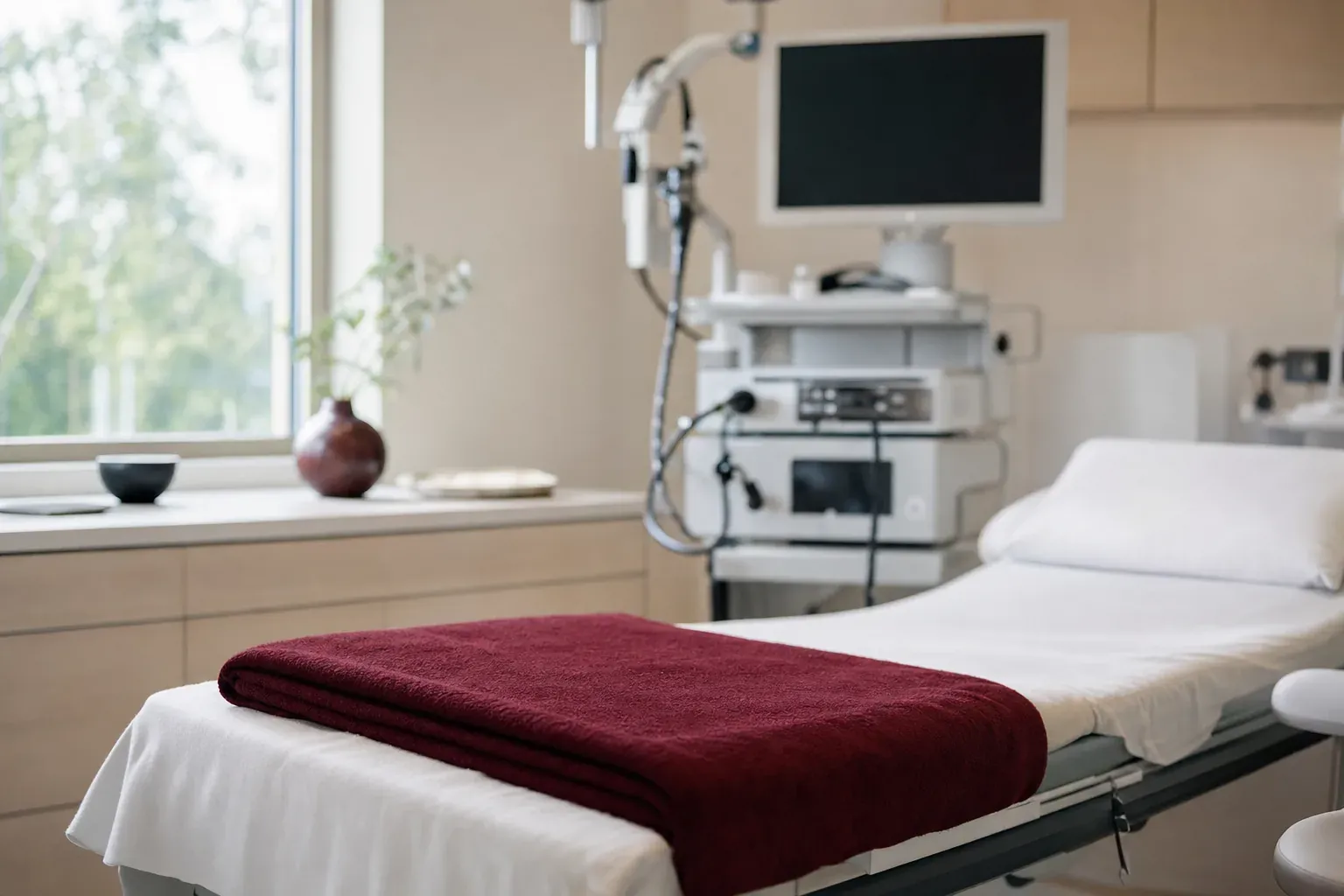
A colonoscopy lets the doctor see polyps, inflammation, ulcers and tumors in the large intestine, and take a biopsy, which is a tiny piece of tissue for testing. Many of these changes do not show up on an X-ray or ultrasound.
Who needs a colonoscopy
A doctor refers you for a colonoscopy if you have symptoms such as:
- blood or mucus in your stool;
- a change in your usual bowel habits that lasts for several weeks;
- abdominal pain with no clear cause;
- anemia or weight loss that has no explanation;
- a positive stool test for hidden blood.
Colonoscopy is also done without symptoms, to find polyps and colon cancer early. Doctors usually recommend starting this kind of check at 45 to 50. If a parent, brother or sister has had bowel cancer or polyps, checks start earlier. Repeat colonoscopies are also used to monitor the bowel after polyp removal or in chronic inflammatory bowel disease. Your doctor decides when and how often.
How to prepare for a colonoscopy
The cleaner the bowel, the more the doctor can see. You will get a prep plan when you book, and in general it looks like this.
Two to three days before the colonoscopy, switch to low-fiber food. You can eat boiled meat and fish, eggs, white rice, potatoes without skin, white bread and low-fat dairy products without additives. Avoid raw vegetables and fruit, berries, leafy greens, beans, nuts, seeds, whole grain porridge and bran bread.
The day before, at the time given in your plan, you switch to clear liquids: water, clear broth, tea without milk and juice without pulp. You take the bowel prep solution as your doctor instructs. It is often split into two doses, the first in the evening and the second on the morning of the test. Many people find the solution easier to drink chilled and in small sips. The bowel is ready when the fluid that comes out is pale and clear. If it is not, tell the doctor before the test.
If you take medicines regularly, especially blood thinners, iron supplements or diabetes medicines, tell the doctor in advance. Some of them are adjusted for a short time, but only the doctor decides that. If your colonoscopy is under anesthesia, arrange for someone to take you home, as you must not drive that day.
Does a colonoscopy hurt
Without anesthesia, a colonoscopy can be uncomfortable. The doctor puts a little air into the bowel to open up the folds, and at the bends of the bowel you may feel bloating, pressure or cramping. Sometimes this hurts. If you feel uncomfortable, tell the doctor. Under anesthesia, you sleep and feel nothing.
At Viva Clinic, you can have a colonoscopy under anesthesia. The doctor decides after a consultation whether this option suits you. Anesthesia is recommended, for example, if you find it hard to face the test.
What happens during the test and afterwards
You lie on your left side. The doctor gently inserts the colonoscope through the anus and slowly examines the whole large intestine. If the doctor sees an area that needs a closer look, they take a biopsy. The test itself usually takes 20 to 40 minutes, and after anesthesia you need some time to wake up and rest.
For a few hours after a colonoscopy you may feel bloated and hear your stomach rumble as the air leaves the bowel. You can usually eat the same day, starting with light food. The doctor tells you what they saw right after the test, and the biopsy result will be ready later.
See a doctor urgently or call an ambulance on 103 if, after a colonoscopy, you have severe abdominal pain that is getting worse, a fever, heavy bleeding from the rectum or vomiting.
How to get a free colonoscopy in Slavuta
At Viva Clinic, a colonoscopy is free with an electronic referral from your family doctor, because the clinic has a contract with the National Health Service of Ukraine (NSZU) for it. If NSZU covers the test, the anesthesia is free for you too. The referral is issued by the family doctor you have signed a declaration with. With a referral from a specialist doctor, a colonoscopy is free if you are 45 or older or in a risk group, and the anesthesia is free in that case too. NSZU covers a diagnostic colonoscopy with no interventions once every two years, or once a year if you are in a risk group. To see what else is free, read what a family doctor declaration covers.
You can book by phone or on Viber, and the administrator will explain how to prepare. If you need a consultation before the test, make an appointment with a Viva Clinic gastroenterologist, who will go over your symptoms and tell you which test you need.
Questions and answers
Can I have a colonoscopy without preparing?
No. If stool remains in the bowel, the doctor cannot see part of the lining and may miss a polyp, and the test will have to be repeated. That is why you follow the diet and bowel prep fully, even if it is unpleasant. If you struggle with the prep solution, call the clinic for advice.
Can I drink water before a colonoscopy?
Yes, you can usually drink clear water the day before and on the day of the test, as your prep plan allows. Before a colonoscopy under anesthesia, you stop drinking a few hours before the procedure. The administrator will tell you the exact time when you book.
How often should I have a colonoscopy?
It depends on the result and your risk. If the bowel is healthy and there is no family risk, doctors usually recommend the next check in about 10 years. If polyps were found or a relative has had bowel cancer, the interval may be shorter, and the doctor sets it.
Do I need a colonoscopy if I have hemorrhoids?
Sometimes, yes. Blood from hemorrhoids looks the same as blood from a polyp or tumor, so the doctor may recommend a colonoscopy to rule out other causes. This applies especially to older people and to those whose relatives have had bowel cancer.