


Nataliia Ivashchuk
Physician of the highest category: internist, hematologist, endocrinologist, rheumatologist, cardiologist
A Viva Clinic family doctor in Slavuta and a physician of the highest category. She looks after her own patients under declarations. She consults on blood pressure and heart health, the thyroid, blood sugar and lab results.
Articles by this author

Anemia: symptoms, causes and what to do
Anemia means your blood has too little hemoglobin: for adults, the WHO uses a cutoff of 120 g/L for women and 130 g/L for men. It most often shows up as tiredness, shortness of breath on exertion, a racing heart and pale skin. Iron deficiency is the most common cause, but iron supplements should only be taken on a doctor's advice, once tests have confirmed that this is the cause.

Gout: symptoms of an attack and what to do
Gout is joint inflammation caused by uric acid crystals, which form in a joint when blood uric acid stays too high for a long time. An attack starts suddenly, often at night: the joint, most often at the base of the big toe, becomes very painful, red and swollen. Rest your foot, apply something cold and see a doctor; if you have a fever, get seen the same day, because a joint infection can look the same.

Joint pain: causes and which doctor to see
Joints most often hurt because of osteoarthritis, overuse or an injury, and less often because of inflammation, that is, arthritis. A joint that swells without an injury, morning stiffness lasting over half an hour and pain that doesn't ease with rest point to inflammation: with these signs, see a rheumatologist. After an injury, see an orthopedic and trauma doctor; if you're not sure where to start, book a family doctor or internist.
High or low platelet count: causes and what to do
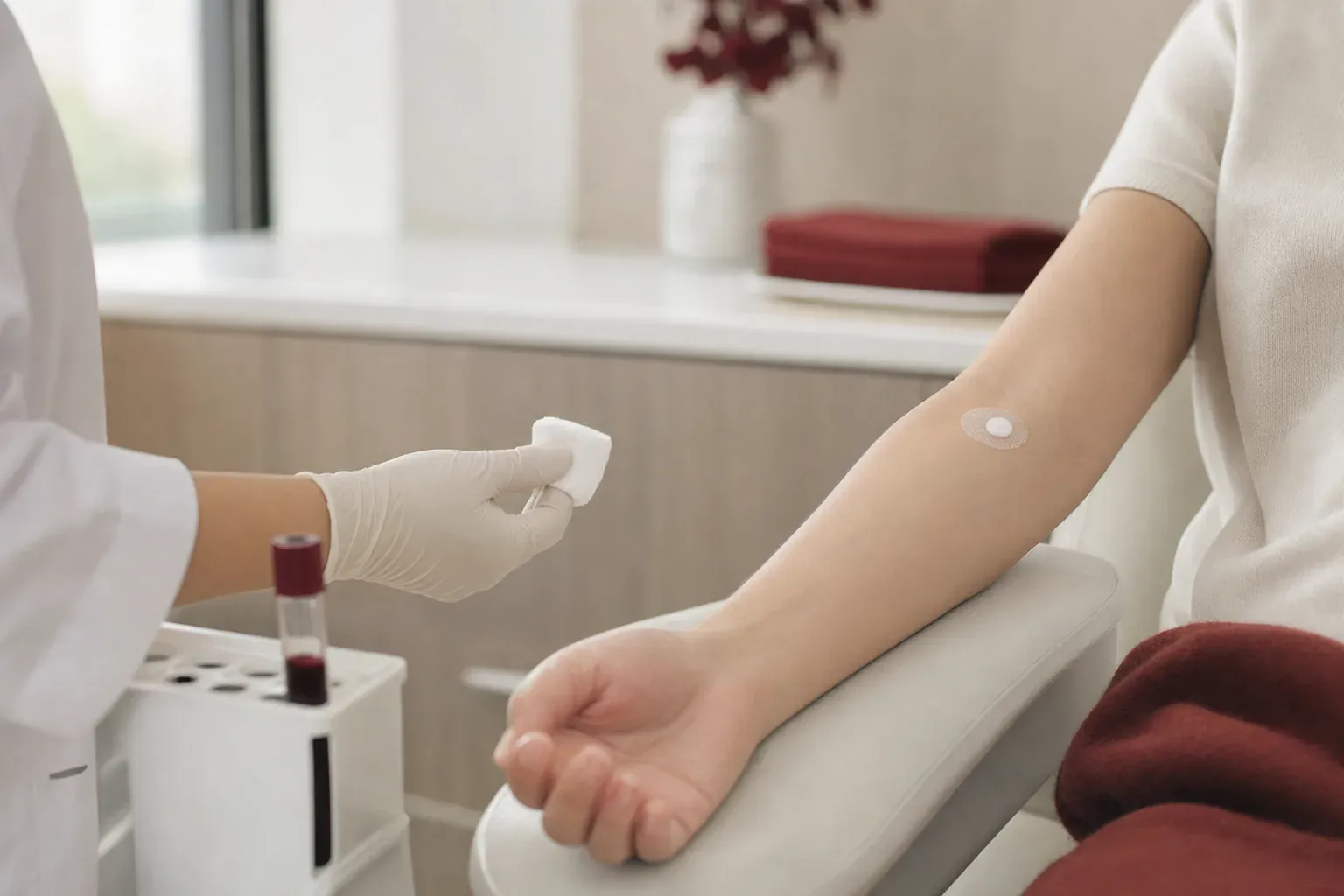
Platelets help stop bleeding, and adults usually have 150 to 400 ×10⁹/L, although the range printed on your report varies from lab to lab. Most changes are temporary: platelets rise after an infection or inflammation and with iron deficiency, and fall after viral infections or because of certain medicines or alcohol. Your doctor will interpret your result together with the other values on the test.

High white blood cell count: causes and what to do
White blood cells most often rise because of an infection or inflammation, but also after stress or hard exercise, during pregnancy and in smokers. For adults, doctors go by a range of roughly 4–10 ×10⁹/L, with an upper limit of 11 in some labs, so check the range on your report. For a small rise without symptoms, the doctor often suggests a repeat test, and if your count stays high with no clear cause, it's worth showing your results to a hematologist.

Low blood pressure: what to do and how to raise it
Low blood pressure usually means a reading under 90/60 mmHg. If you feel well, these numbers don't need treatment: in many young, slim people this is normal. If low blood pressure comes with dizziness, weakness or fainting, sit or lie down and raise your legs, then see a doctor to find out the cause.

Health Screening 40+ results: how to read your lipid profile and HbA1c
Doctors usually consider a glycated hemoglobin (HbA1c) under 5.7% normal and call 5.7% to 6.4% prediabetes, while 6.5% or higher may mean diabetes, which is confirmed with a repeat test. There's no single normal value for a lipid profile: your doctor sets cholesterol targets based on your risk of heart disease. Discuss any result outside the normal range with your family doctor or internist.

Constant fatigue and weakness: what to do
Constant fatigue is most often caused by lack of sleep, overwork and stress, but sometimes it's a symptom of anemia, thyroid disease, high blood sugar or depression. If you've had no energy for several weeks even though you get enough sleep, see an internist. Testing usually starts with a complete blood count, ferritin, TSH and glucose.

Thyroid gland: symptoms, tests and when to have an ultrasound
The thyroid gland sits at the front of the neck, under the Adam's apple, and makes hormones that control metabolism, heart rate and body temperature. When it is underactive, people feel cold, tire quickly and gain weight; when it is overactive, they have a racing heart, sweating, weight loss and shaking hands. Testing usually starts with a TSH blood test, and the doctor adds free T4, antibodies or an ultrasound if needed.

High blood pressure: what to do at home and how to lower it
If your monitor shows high blood pressure, sit down, rest quietly for 5 minutes and then measure again. If the numbers don't come down, take only the medicine your doctor has already prescribed for this situation, and contact your doctor the same day. Chest pain, shortness of breath, trouble speaking, weakness in an arm or a sudden severe headache with high blood pressure mean you should call an ambulance on 103 right away.

Health Screening 40+: what's included and where to get it in Slavuta
Health Screening 40+ includes blood pressure and pulse measurement, weight, height and waist measurement, a questionnaire about your lifestyle and symptoms, a health risk assessment and at least two blood tests: a lipid profile and glycated hemoglobin (HbA1c). It's free for Ukrainian citizens aged 40 and over, who apply for the funds in the Diia app or at an administrative services center (TsNAP). At Viva Clinic in Slavuta, it's done at 3 Danyla Halytskoho St, usually in one visit, and you book through the online form on the website.

How to get electronic sick leave
Electronic sick leave is opened by the doctor treating you, most often your family doctor. After an exam or consultation, they issue a medical report on temporary incapacity in the national eHealth system, and the Pension Fund of Ukraine uses it to automatically create a sick leave certificate your employer can see. You don't need to bring any paperwork to work.

What is an internist and what do they treat?
An internist treats adults with general health complaints such as a fever, cough, high blood pressure, weakness or stomach pain. They manage long-term conditions, explain test results and refer you to a specialist when one is needed. If you're an adult and not sure which doctor to see, start with an internist.

Holter ECG and 24-hour blood pressure monitoring: what they are and how they work
During Holter monitoring, a small device that you wear continuously records your ECG or regularly measures your blood pressure for 24 hours, or longer if needed. A standard ECG takes a few minutes, while a Holter shows how your heart and blood pressure behave during the day, at night, while walking and while sleeping. Viva Clinic in Slavuta offers both, a Holter ECG and 24-hour blood pressure monitoring, at the polyclinic at 27a Sobornosti St by appointment.

High blood sugar: normal levels, causes and what to do
Doctors usually consider a fasting glucose under 5.6 mmol/L in blood taken from a vein to be normal. Diabetes is diagnosed when repeated tests show 7.0 mmol/L or higher, or glycated hemoglobin (HbA1c) is 6.5% or higher, and the values in between are called prediabetes. A doctor makes the diagnosis based on several tests, so if your result is high, repeat the test and book an appointment.

What blood pressure is normal for adults
Doctors consider a blood pressure of about 120/80 mmHg normal for an adult. Hypertension is diagnosed when repeated readings in the doctor's office are 140/90 or higher, or home readings are 135/85 or higher. These limits are the same for adults of any age, and if you need treatment, your doctor sets your personal target.

How to choose a family doctor
Choose a doctor at a clinic that has a contract with the National Health Service of Ukraine (NSZU), and go there with your passport, taxpayer ID number and mobile phone. At reception, your details go into the electronic system, you confirm your number with an SMS code and sign two copies of the declaration.

What a family doctor declaration covers
A declaration entitles you to free care from your family doctor: checkups and treatment, lab tests and an ECG on referral, vaccinations, prescriptions, referrals to other doctors and sick leave. The state pays for all of it through the National Health Service of Ukraine (NSZU) under the Program of Medical Guarantees.

What does a family doctor do?
A family doctor treats and monitors adults and children, gives vaccinations, orders lab tests, prescribes medicines, issues sick leave and refers you to specialists when needed. They are the first doctor you turn to with any health question, and their care is free for patients with a declaration.
Message or call us
Our administrators will help you choose a doctor and a convenient time.