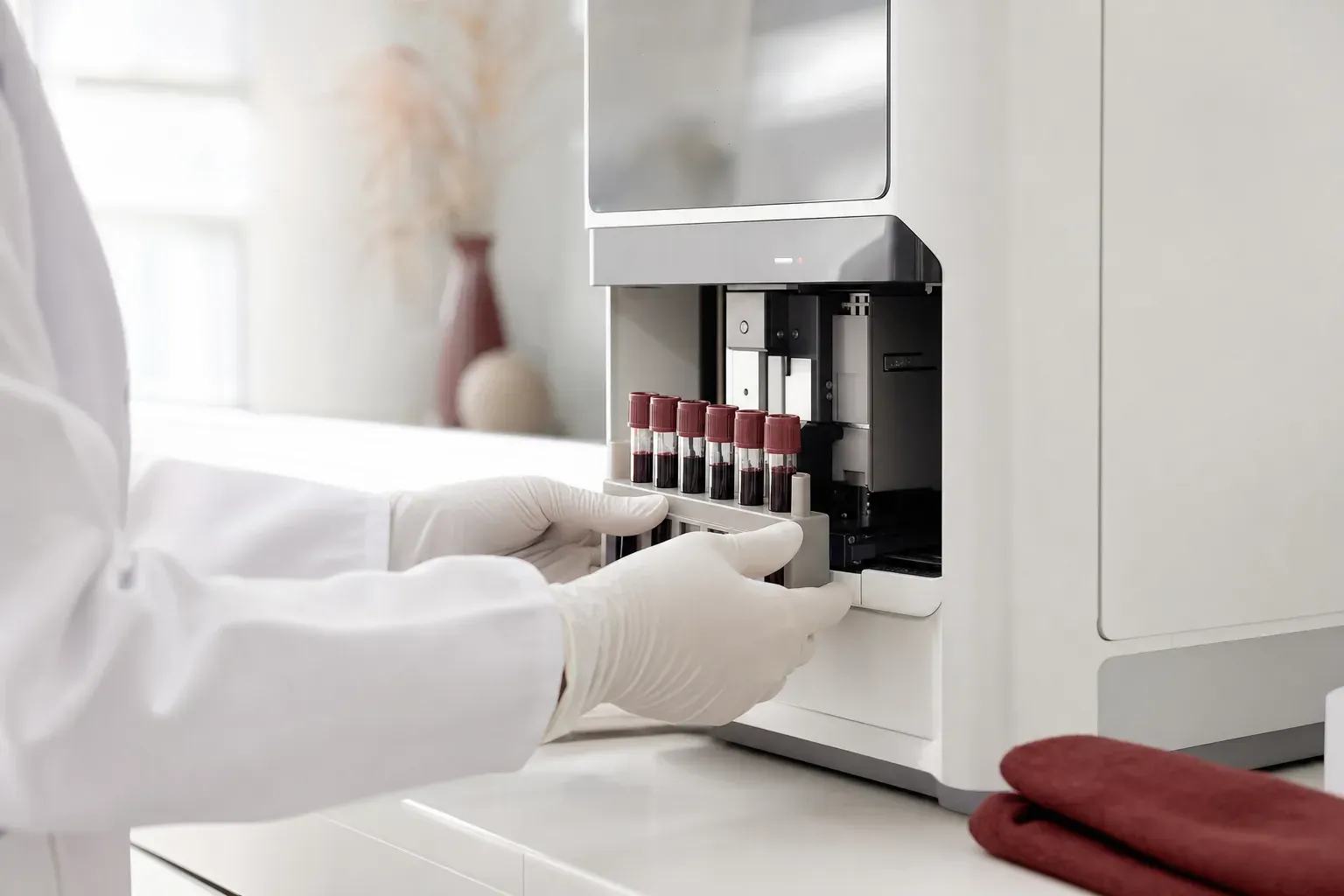
Health Screening 40+ results: how to read your lipid profile and HbA1c
Doctors usually consider a glycated hemoglobin (HbA1c) under 5.7% normal and call 5.7% to 6.4% prediabetes, while 6.5% or higher may mean diabetes, which is confirmed with a repeat test. There's no single normal value for a lipid profile: your doctor sets cholesterol targets based on your risk of heart disease. Discuss any result outside the normal range with your family doctor or internist.


During Health Screening 40+, your blood pressure, heart rate, weight, height and waist size are measured, and you have at least two blood tests: a lipid profile and glycated hemoglobin. Kidney function tests are added if there are medical reasons. How to get the screening is described in Health Screening 40+: what’s included and where to get it in Slavuta, and you can book on the Viva Clinic Health Screening 40+ page.
How to read a lipid profile
A lipid profile measures several types of fat in your blood. Each value on the results sheet usually comes with the lab’s reference range, but your doctor may set a stricter personal target. Commonly used reference values for people who are not at high risk are:
- total cholesterol: a level up to 5 mmol/L is often used as a guide
- LDL (low-density lipoprotein), or “bad” cholesterol, which builds up in artery walls: the target for a person at low risk is usually under 3.0 mmol/L
- HDL (high-density lipoprotein), or “good” cholesterol: a level under 1.0 mmol/L in men and under 1.2 mmol/L in women is considered a sign of higher risk
- triglycerides: up to 1.7 mmol/L if the blood was taken fasting and up to 2.0 mmol/L if it was taken after a meal; they rise noticeably after fatty food and alcohol
For people with diabetes, heart disease or several risk factors, the doctor sets a stricter LDL target. They interpret the lipid profile together with your age, blood pressure, smoking, blood sugar and family history. So the same cholesterol level can be acceptable for one person while another already needs treatment.
What is a normal HbA1c
Glycated hemoglobin (HbA1c) shows what share of the hemoglobin in your red blood cells has bound to glucose. It reflects your average blood sugar over the past 2–3 months, so the result hardly depends on what you had for breakfast on the day of the test.
Commonly used reference values for adults:
- under 5.7% is usually considered normal
- 5.7% to 6.4% indicates prediabetes, a higher risk of diabetes
- 6.5% or higher may mean diabetes
Diabetes isn’t diagnosed from a single test. If there are no clear symptoms, the doctor will ask you to repeat the HbA1c test or have a fasting glucose test. The result can be inaccurate with anemia, after bleeding or a blood transfusion, during pregnancy or with kidney disease, so tell your doctor about any of these.
Not everyone with prediabetes goes on to develop diabetes. At this stage, changes in diet, activity and weight can noticeably lower the risk.
What blood pressure, weight and waist size mean
A single blood pressure reading isn’t a diagnosis: nerves, coffee or hurrying to the doctor’s office can push it up. Doctors usually speak of hypertension when blood pressure is repeatedly 140/90 mmHg or more. If your blood pressure was high at the screening, measure it at home for 7 days in a row, morning and evening, and write down the readings for your doctor. The threshold is lower for home readings: an average of 135/85 mmHg or more is considered high.
Body mass index (BMI) is your weight in kilograms divided by your height in meters squared. A BMI of 18.5 to 24.9 is considered normal, 25 to 29.9 overweight, and 30 or more obese. A waist size of 94 cm or more in men and 80 cm or more in women points to excess belly fat and a higher risk of diabetes and heart disease.
What to do if a result is out of range
A result outside the normal range doesn’t necessarily mean you’re ill. The point of screening is to catch changes early, when they’re easiest to control.
- Book an appointment with a family doctor or internist and bring your results. The doctor will look at them together, taking into account your age, family history and any conditions you have.
- Repeat the test if the doctor advises it. If you have a declaration (registration) with a Viva Clinic family doctor, glucose and total cholesterol tests are free with their referral. A full lipid profile and an HbA1c test are available for a fee at Diagnost-Lab.
- If needed, the doctor will refer you to a cardiologist or endocrinologist. At Viva Clinic, they see patients in Slavuta at 27a Sobornosti St or 3 Danyla Halytskoho St (the address is confirmed when you book). The consultation is paid, and you can book by phone or on Viber.
Your lifestyle affects all of these numbers:
- quitting smoking greatly lowers the risk of heart and blood vessel disease
- get at least 150 minutes of moderate activity a week, for example brisk walking for half an hour five days a week
- eat less salt, sausage and ready-made sauces, and more vegetables, beans, whole grains and fish
- cut down on alcohol and sugary drinks
Medicines to lower blood pressure, cholesterol or blood sugar are prescribed by a doctor. Some of them are available free or with a co-payment under the Affordable Medicines program with an e-prescription from your family doctor.
When to see a doctor urgently
Call an ambulance on 103 if your blood pressure rises sharply and you develop chest pain, shortness of breath, a severe headache, numbness in an arm or leg, or problems with speech or vision.
See a doctor the same day if you’re very thirsty, urinating often, losing weight for no reason or feeling very weak. These can be signs of high blood sugar.
Questions and answers
Do I need to lower my cholesterol if I feel fine?
It depends on your overall risk, which your doctor assesses. High cholesterol causes no symptoms for years but gradually damages blood vessels. For some people, changing their diet and moving more is enough, and for others the doctor prescribes medication.
Is an HbA1c of 6% diabetes?
No. By commonly used reference values, 6% falls in the prediabetes range, meaning a higher risk of diabetes. It's a reason to discuss the result with your family doctor, change your diet and activity, and repeat the test when they advise. Diabetes isn't diagnosed from a single test.
Can my blood pressure be high only at the doctor's office?
Yes. Many people's blood pressure rises because they're nervous at the appointment, and doctors call this white coat hypertension. That's why hypertension is diagnosed from repeated readings, including home measurements. Record your readings for a few days and show them to your doctor.