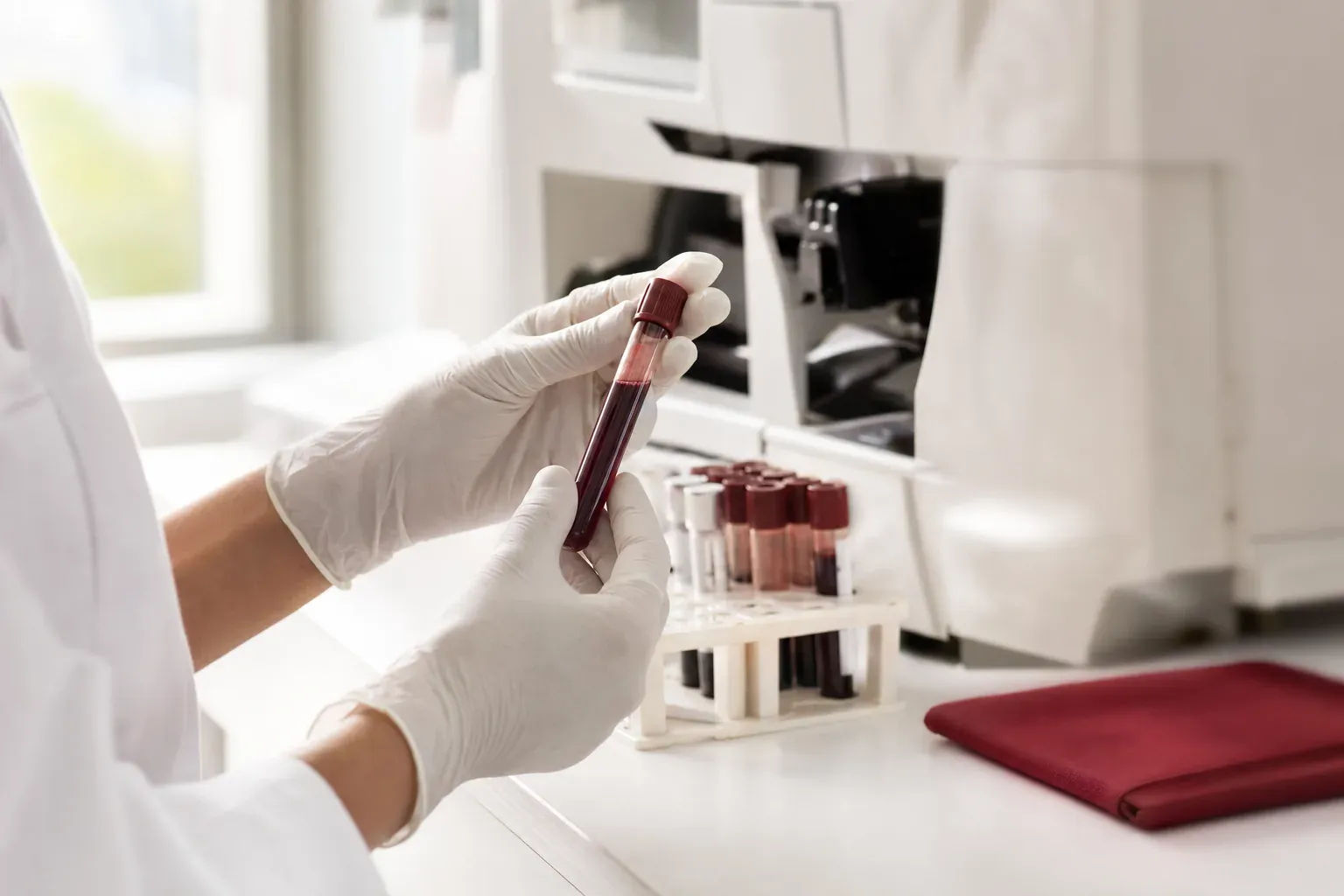
What a complete blood count shows and how to prepare for it
A complete blood count (CBC) shows the number of red and white blood cells and platelets and the amount of hemoglobin in your blood, and the erythrocyte sedimentation rate (ESR) is often measured with it. From the results, a doctor can spot anemia, signs of inflammation and other changes and decide whether you need more tests. The test is done in the morning, usually on an empty stomach.

Published Updated 5 min read
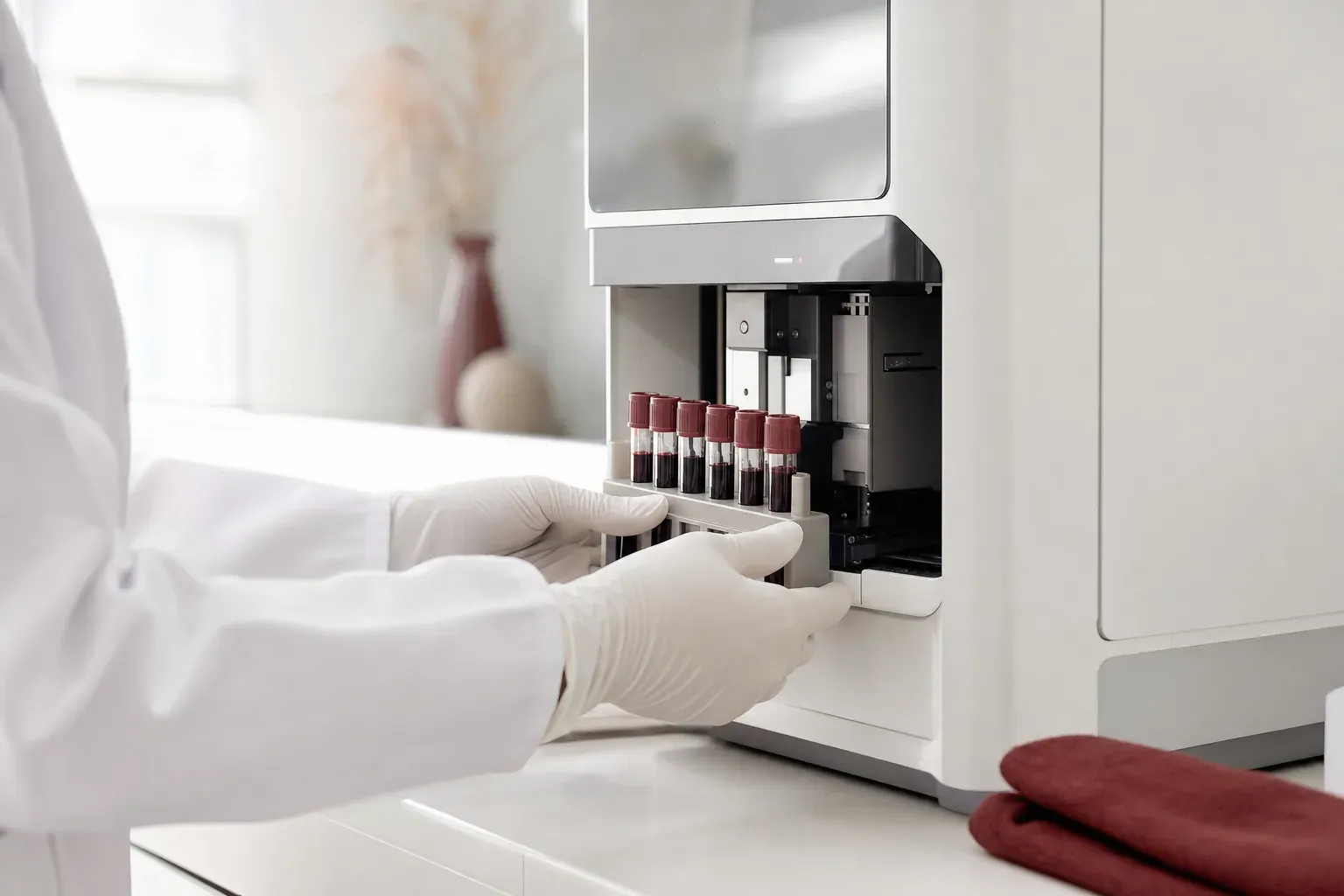
What a complete blood count shows
The test looks at three kinds of blood cells. On the report, values are often labeled with the abbreviations the analyzer prints: RBC, HGB, WBC, PLT and others.
- Red blood cells (RBC) carry oxygen using hemoglobin (HGB), a protein inside them. Low hemoglobin most often means anemia. Hematocrit (HCT) shows what share of your blood is made up of red cells, and the MCV, MCH and MCHC indices describe their size and hemoglobin content. Small red cells are common with iron deficiency, and large ones with a lack of vitamin B12 or folic acid.
- White blood cells (WBC) protect the body from infection. The differential shows what share each type makes up: neutrophils, lymphocytes, monocytes, eosinophils and basophils. Neutrophils often rise with bacterial infections, lymphocytes with viral ones, and eosinophils with allergies and parasitic worm infections.
- Platelets (PLT) help blood clot. If you have too few, bruises and bleeding happen more easily. High platelets can occur, for example, with inflammation or iron deficiency.
ESR, the erythrocyte sedimentation rate, often appears on a separate line. It rises with inflammation, during pregnancy, with anemia and with age, so a high ESR doesn’t point to a diagnosis on its own.
How to read a complete blood count
A value slightly outside the reference range doesn’t automatically mean you are ill. Reference ranges are based on tests from healthy people, and some healthy people have values slightly outside them too. Everyday things also play a part: how much water you’ve had, exercise, smoking, a recent cold, your period or pregnancy.
Your doctor interprets the results. They look at all the values together, compare them with your previous tests, your symptoms and the medicines you take, and order a repeat test or other tests if needed. It’s better not to compare results from different labs directly, because analyzers and reference ranges vary.
As a rough guide, the World Health Organization defines anemia as hemoglobin under 130 g/L in men and under 120 g/L in women, with a lower threshold during pregnancy. If your hemoglobin is low and your red cells are small, the doctor will usually check your iron stores first and order a ferritin test. Ferritin can be low even with normal hemoglobin, so it may be ordered if you feel tired or are losing hair. For a small change without symptoms, the doctor often suggests simply repeating the test after a while. If the changes persist or several values are off at once, your internist may refer you to a hematologist.
Children have different reference ranges that change with age, so a child’s results can’t be compared with adult norms.
See a doctor the same day if, along with changes in your results, you have a high temperature that won’t go away, bruises or tiny pinpoint bleeds on your skin for no reason, nose or gum bleeding that is hard to stop, or sudden severe weakness. Call an ambulance (103) for heavy bleeding, chest pain, shortness of breath at rest or loss of consciousness.
How to prepare for a complete blood count
The test is done in the morning, usually on an empty stomach. For most blood tests, Diagnost-Lab recommends 12 hours without food; water is fine. If going without food for long is hard for you, for example because of diabetes, or the test is for a young child, ask how to prepare when you book.
The day before, avoid alcohol, fatty food and workouts, and don’t smoke in the morning. Sit and rest for 10–15 minutes before the blood draw. If you also have an X-ray or physical therapy that day, give blood first. Tell your doctor or the lab staff about any medicines you take, as some of them affect the results.
Where to get tested in Slavuta and when it’s free
You can have a complete blood count at Viva Clinic’s Diagnost-Lab laboratory at 32 Sobornosti St, 4th floor. The lab tests adults and children, and if it’s hard for you to come in, blood can be taken at your home. Book by calling the lab or messaging it on Viber.
If you have signed a declaration with a Viva Clinic family doctor (in Ukraine, this is how you register with a primary care doctor), a complete blood count with differential is free when that doctor orders it. It is part of the primary care package paid for by the National Health Service of Ukraine (NSZU). Without a declaration, you can have the test for a fee.
When your result is ready, you’ll get a Viber message. You can pick up the paper copy at the lab. If a Viva Clinic doctor is treating you, they receive the results directly, so there’s nothing to forward. Adults take their results to an internist or family doctor, and children’s results go to a pediatrician.
Questions and answers
Can I have a blood count during my period?
Yes, if the test is needed now. For a routine test, it's better to wait until your period is over, since bleeding can lower hemoglobin slightly and ESR may be higher on those days. Tell your doctor which day of your cycle the blood was taken so they can allow for it.
How often should I have a complete blood count?
There's no single schedule for everyone. Adults without symptoms usually have one as part of a preventive check-up with a family doctor or internist. If you're being treated or have a chronic condition, your doctor will tell you how often to check your results.
Does a cold affect a complete blood count?
Yes. During an infection, white blood cells and the differential change and ESR rises, and after recovery ESR returns to its usual level more slowly than other values. So it's best to have a routine test once you've recovered, unless your doctor says otherwise.