Eye pressure: what raises it and how it is checked
Eye pressure, or intraocular pressure, is the pressure of the fluid inside the eye. It rises when fluid drains out of the eye more slowly than it is produced, and over the years it can damage the optic nerve, which leads to glaucoma. Eye pressure usually isn't measured at home: an ophthalmologist checks it, and the measurement is painless and takes a few minutes.
Published Updated 5 min read
What eye pressure is and what raises it
Clear fluid is produced inside the eye all the time. It nourishes the lens and the cornea and then drains out through a drainage system in the angle between the cornea and the iris. As long as production and drainage are balanced, the pressure stays stable.
In most people, eye pressure is roughly 10–21 mmHg when measured with a Goldmann or non-contact tonometer. The Maklakov tonometer, still widely used in Ukraine, gives somewhat higher readings, and up to about 25 mmHg is considered normal for it. The figure also depends on the thickness of the cornea, so an ophthalmologist assesses what is normal for each person.
Most often, drainage gets worse gradually with age, as the eye’s drainage system changes. It can also be disrupted by eye injuries and inflammation, long-term use of steroid medicines (corticosteroids) and a narrow angle through which the fluid drains. A narrow angle is more common in people who are farsighted.
Some medicines, including certain cold, allergy and depression medications, can trigger a sharp rise in pressure in people with a narrow angle. If the leaflet for a medicine includes a warning about glaucoma, talk to a doctor before taking it.
Why high eye pressure is dangerous
Slightly raised pressure doesn’t necessarily mean disease, and sometimes an ophthalmologist only monitors it. The danger comes when pressure stays high for years and gradually damages the optic nerve: this is how glaucoma develops.
Its most common form doesn’t hurt at all. First, patches of side vision are lost, and the person doesn’t notice, because the other eye and the brain fill in the gaps. By the time vision gets noticeably worse, some nerve fibers are already lost, and they can’t be restored. Treatment with drops, laser or surgery helps preserve the vision that remains, so it’s best to find glaucoma as early as possible.
How eye pressure is measured
A home blood pressure monitor measures pressure in the blood vessels of the arm, so it’s no use for the eyes. Pressing on the eyelid with your fingers gives only a very rough idea, even in the hands of an experienced doctor. You can’t tell by how your eyes feel either: raised eye pressure usually causes no symptoms, and a heavy feeling in the eyes more often comes from tiredness or lack of sleep.
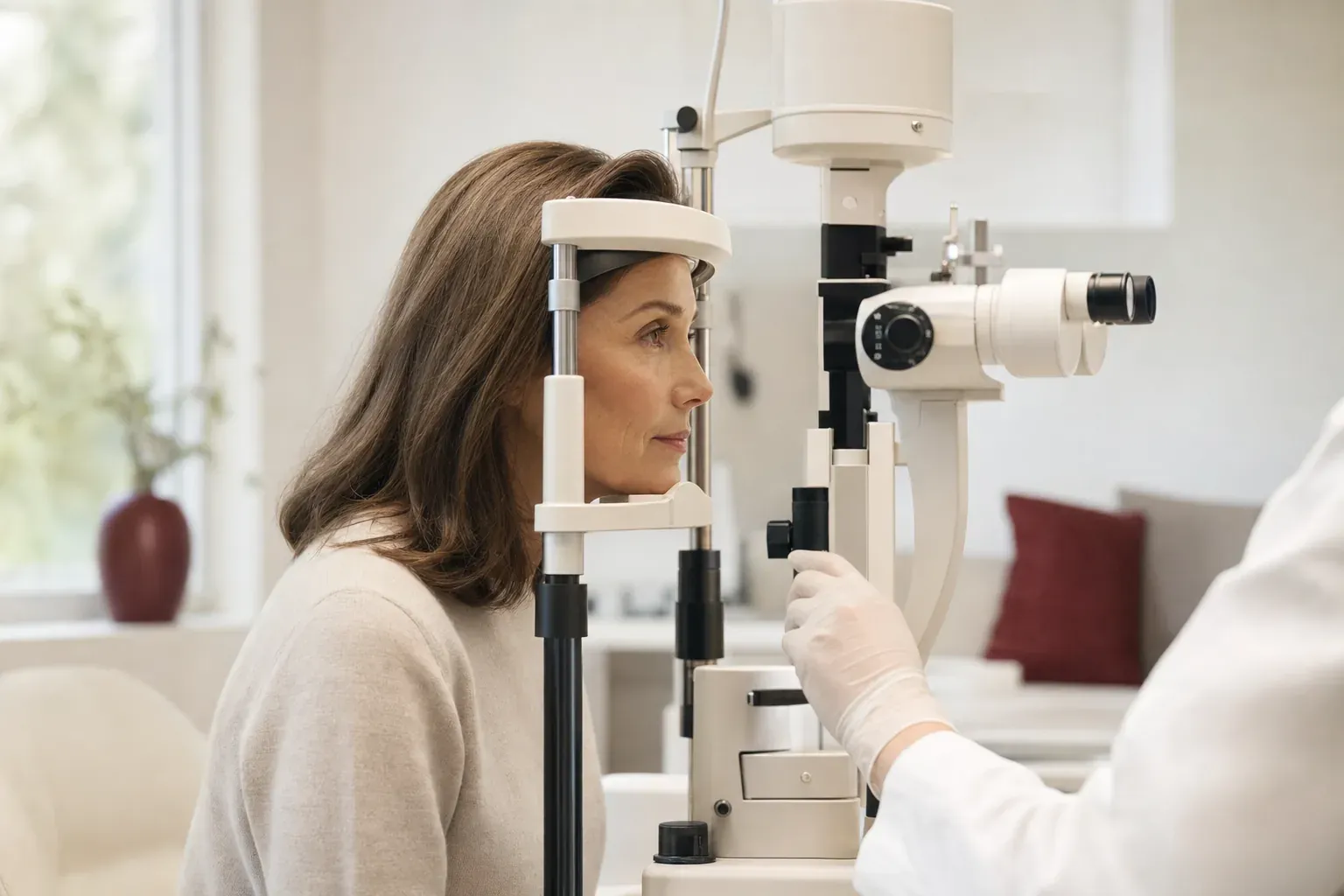
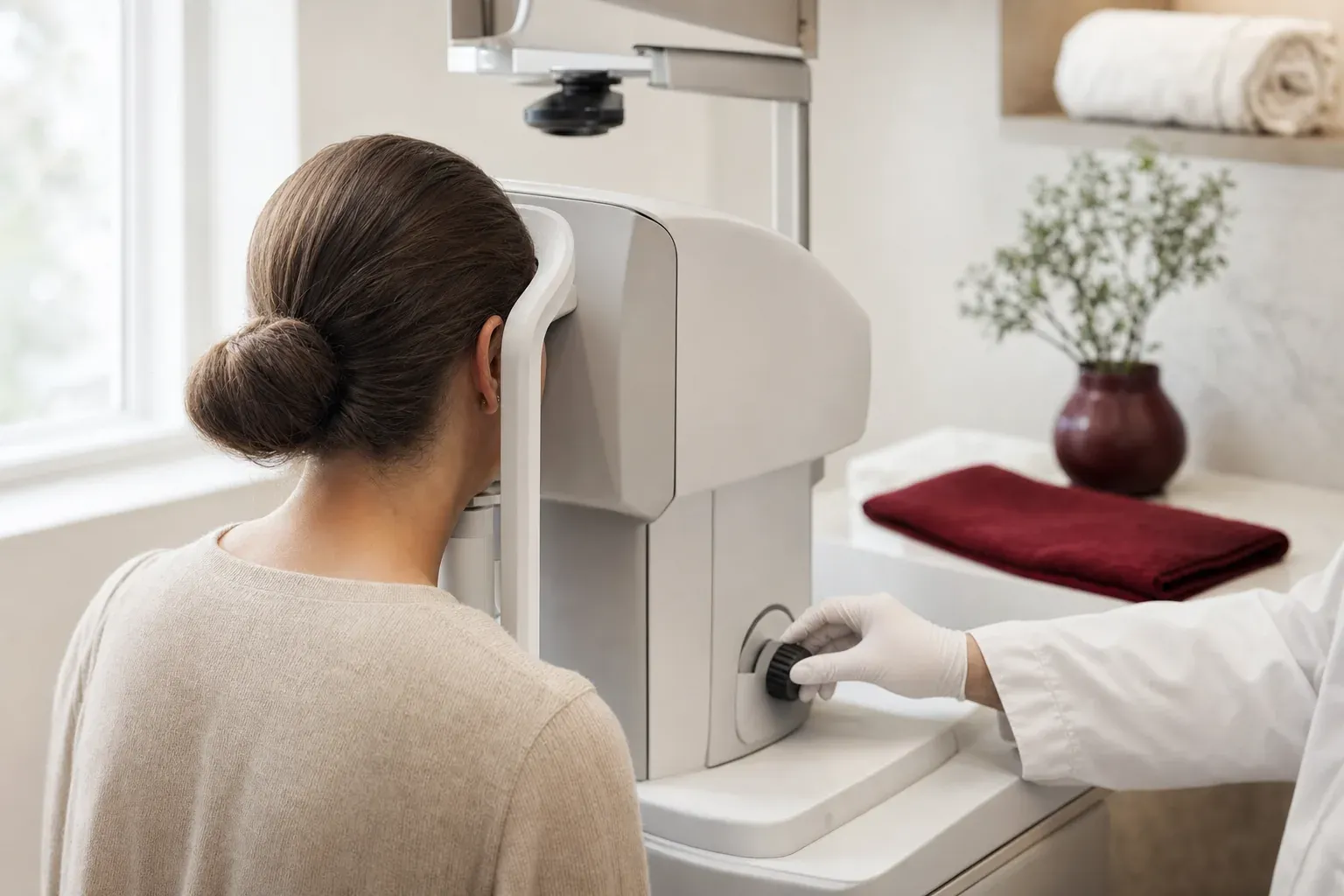
At an ophthalmologist’s, pressure is measured with a special device called a tonometer. There are two kinds of methods:
- non-contact: you rest your chin on a support, look at a point of light, and the device sends a short puff of air at your eye;
- contact: numbing drops are usually put in first, and a sensor touches the surface of the eye for a moment; don’t rub your eye until the drops wear off.
Both methods are painless. The doctor compares the result with earlier measurements, so bring reports from previous exams. If you wear contact lenses, ask when booking whether to come without them. Tell the doctor which medicines you take, especially steroids.
At Viva Clinic in Slavuta, eye pressure is measured in the same place where the ophthalmologist sees patients: at 27a Sobornosti St or 3 Danyla Halytskoho St, and the exact address is confirmed when you book. You can book an eye exam with an eye pressure check by phone or on Viber.
Who should have their eye pressure checked regularly
If you have no complaints, pressure is measured during a routine eye exam. Regular checks on a schedule your doctor sets are a good idea if:
- you are over 40;
- your parents, brothers or sisters have glaucoma;
- you have diabetes;
- you have high myopia;
- you use corticosteroids for a long time, whether as drops, tablets, inhalers or creams around the eyes.
People who are already being treated for glaucoma have their pressure measured at every follow-up visit to check that the drops are working. For patients with diabetes or high blood pressure, the family doctor or internist usually advises when to see an ophthalmologist. To learn how often to have routine eye exams and what else is checked, read Ophthalmologist or oculist: what this eye doctor treats.
Signs of an acute glaucoma attack: when to get help urgently
An acute glaucoma attack happens when fluid drainage is suddenly blocked and the pressure rises sharply within a few hours. It is less common than the slow form and happens more often in older people who are farsighted, often in the evening, in the dark or after drops that dilate the pupil.
Signs of an attack:
- severe eye pain that spreads to the head on the same side;
- a red eye;
- blurred vision and rainbow-colored halos around lamps or streetlights;
- nausea, sometimes vomiting.
Because of the nausea and headache, an attack is sometimes mistaken for food poisoning, a migraine or a hypertensive crisis. Don’t wait for it to pass: without help, vision can be damaged within a few hours. Call an ambulance (103) or go to an ophthalmologist for emergency care right away.
Questions and answers
Can you have glaucoma with normal eye pressure?
Yes, it happens. In some people, the optic nerve gets damaged even when the pressure is within the normal range. That's why an ophthalmologist examines the optic nerve at the back of the eye as well as measuring the pressure, and orders extra tests, such as a visual field test, if needed.
Is eye pressure linked to blood pressure?
They are different measurements, and high blood pressure doesn't mean your eye pressure is high too. However, high blood pressure affects the blood vessels of the retina, so people who have it are advised to see an ophthalmologist regularly. A family doctor, internist or cardiologist manages blood pressure itself.
Can you lower eye pressure without medicine?
Not on your own. If your pressure is high, the ophthalmologist decides whether monitoring is enough or whether you need drops, laser treatment or surgery. Eye exercises and vitamins are no substitute for treatment. Prescribed drops are used every day, even when nothing bothers you.