Ophthalmologist or oculist: what this eye doctor treats
An oculist and an ophthalmologist are the same doctor. In Ukraine, people say okulist (oculist) in everyday speech, while the official name of the specialty is ophthalmology. This doctor checks your vision and eye pressure and diagnoses and treats diseases of the eyes and eyelids.
Published Updated 5 min read
Oculist, ophthalmologist, optometrist: who’s who
When you book an appointment, you can ask for an okulist, and the administrator will know which doctor you mean. Medical documents and the sign on the office door will say “ophthalmologist”.
People more often confuse an ophthalmologist with an optometrist. In Ukraine, optometrists mostly work in optical shops, where they check visual acuity and fit glasses and contact lenses. They are not medical doctors and don’t treat eye diseases. If an optometrist notices anything suspicious during a check, they will advise you to see an ophthalmologist. An ophthalmologist is a medical doctor who makes a diagnosis and prescribes treatment.
What an ophthalmologist treats
Most often, people see an ophthalmologist about:
- nearsightedness, farsightedness, astigmatism and the age-related decline in close-up vision that most people develop after 40;
- red, watery or burning eyes, a gritty feeling, conjunctivitis;
- styes and other eyelid inflammation;
- high eye pressure and glaucoma;
- clouding of the lens, known as cataract;
- changes in the retina caused by diabetes or high blood pressure;
- eye injuries and foreign objects in the eye.
Some of these conditions are treated with drops or glasses, some only need monitoring, and some, such as cataracts, require surgery.
What happens during an eye exam
A full eye exam involves several steps:
- The doctor asks about your symptoms, glasses or lenses, chronic conditions and whether anyone in your family has glaucoma. Also mention how you use your eyes day to day: how many hours you spend at a screen and whether you drive.
- They check your visual acuity: you read letters on a chart with each eye in turn.
- They measure your intraocular pressure.
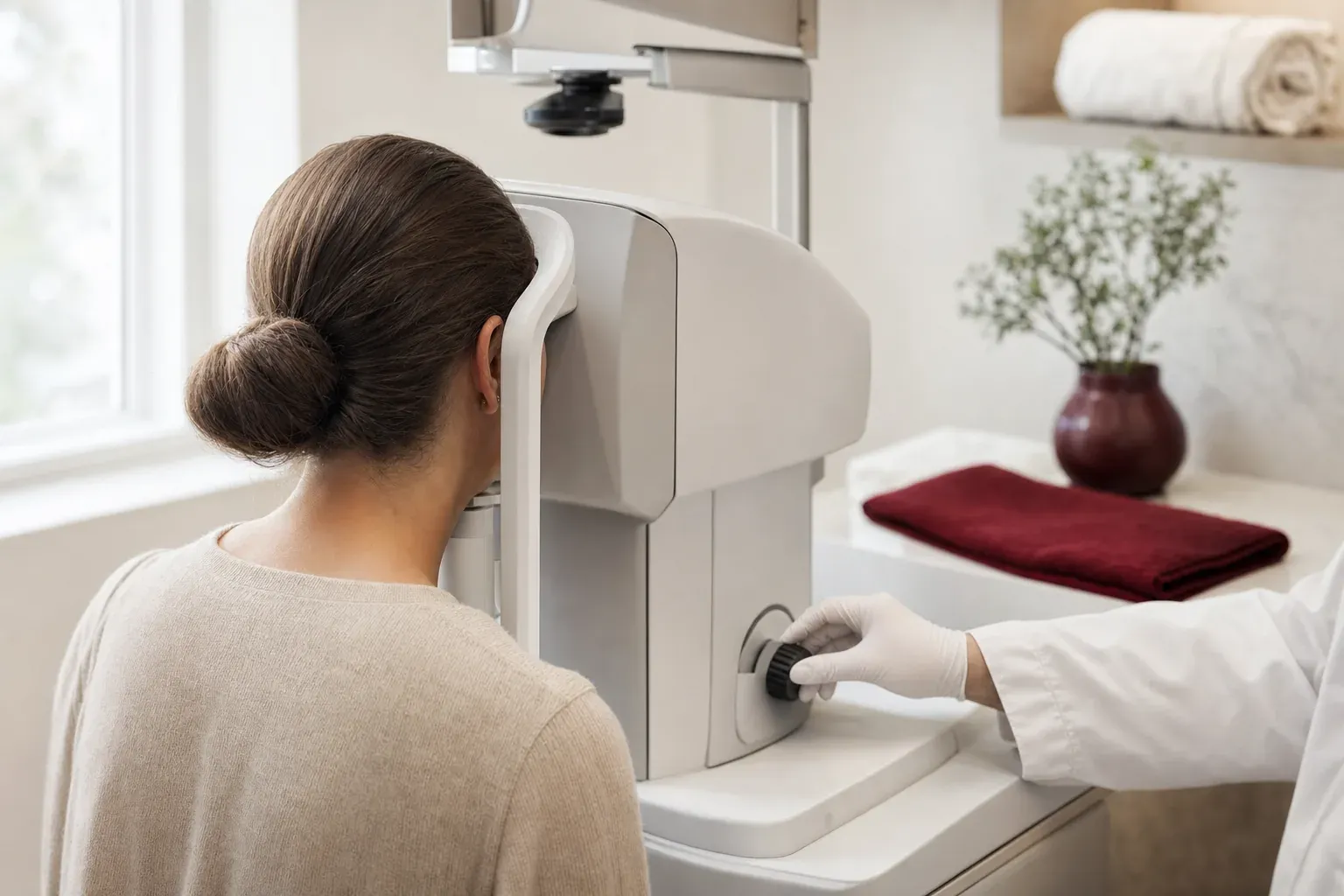
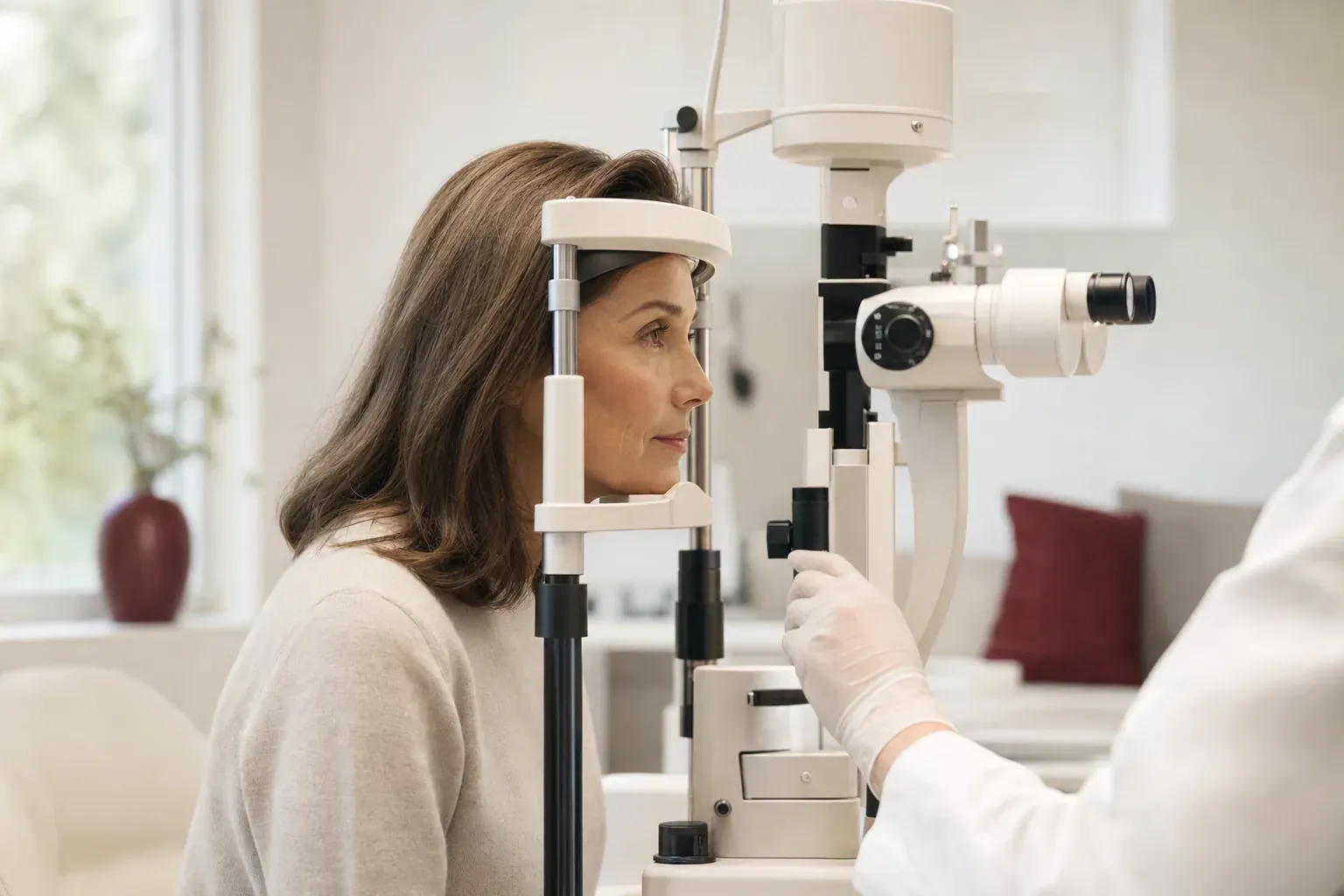
- They examine the front of the eye and the fundus, meaning the retina and the optic nerve.
To examine the fundus, the doctor sometimes puts in drops that dilate the pupil. For a few hours afterwards, things look slightly blurry and bright light is dazzling, so it’s best not to drive during that time. Bring the glasses or lenses you use and any reports from previous eye exams. If you wear contact lenses, ask when booking whether to come without them.
At Viva Clinic in Slavuta, the ophthalmologist sees patients at 27a Sobornosti St or 3 Danyla Halytskoho St, and the exact address is confirmed when you book. The clinic also prescribes glasses, corrects vision problems with a therapeutic laser and performs cataract surgery. If tests are needed, you can have them at the clinic’s own laboratory, Diagnost-Lab. Eye pressure is measured in the same place where the doctor sees patients, so you don’t need to go anywhere else for it. To find out why it’s checked even when nothing hurts, read Eye pressure: how to check it and what raises it. You can book an ophthalmologist consultation at Viva Clinic by phone or on Viber.
How often adults and children should have their eyes checked
Viva Clinic doctors advise seeing an ophthalmologist every six months, even if your eyesight doesn’t bother you. After 40, regular exams with an eye pressure check matter even more, because glaucoma becomes more common with age and causes no symptoms for a long time.
People who should have regular checkups on a schedule set by their doctor include those:
- with diabetes, who are usually advised to have the fundus checked every year, even if their vision hasn’t changed;
- with high blood pressure;
- whose parents, brothers or sisters have glaucoma;
- with high myopia;
- who take steroid medicines (corticosteroids) for a long time.
If you have diabetes or high blood pressure, your family doctor or endocrinologist will tell you when to see an ophthalmologist.
Children have their vision checked during routine checkups with a pediatrician or family doctor. Take a child to an ophthalmologist sooner if they squint, lean close to a book or phone, have an eye that turns in or out, rub their eyes often or complain of headaches after school.
When you need to see an eye doctor urgently
Don’t wait for a routine appointment, and get emergency care right away if:
- your vision suddenly gets worse or disappears in one or both eyes;
- you see flashes of light, many new floaters or a dark curtain over your vision, which can be the start of retinal detachment;
- your eye is very painful and red, you see rainbow-colored halos around lights, and you have a headache and nausea, which may be an acute glaucoma attack;
- you suddenly start seeing double;
- you have injured your eye: a blow, a cut, or a foreign object that won’t wash out.
If a chemical gets into your eye, rinse it right away with plenty of clean water for at least 15 minutes and then go to a doctor immediately. Don’t rub the eye, and don’t try to remove anything stuck in it yourself.
Call an ambulance (103) if you suddenly lose vision along with numbness or weakness in an arm or leg, a drooping face or slurred speech. These can be signs of a stroke.
Questions and answers
Are computers and phones bad for your eyes?
A screen doesn't damage the eyes by itself, but long hours of close-up work make them tired and dry because you blink less. Breaks help: every 20 minutes, look at something far away for about 20 seconds. If tiredness, dryness or blurred vision doesn't go away, see an ophthalmologist.
Can I wear ready-made glasses from a pharmacy?
Sometimes, for reading, but it's better after an eye exam. Ready-made glasses have lenses of the same strength for both eyes and don't correct astigmatism, so they can cause eye strain and headaches. Worsening vision can also hide a disease that only an eye exam will find.
Can I use eye drops without a prescription?
Drops with an antibiotic or a steroid should only be used if an ophthalmologist prescribes them. Steroid drops used for a long time can raise eye pressure, and an antibiotic won't help redness caused by a virus or an allergy. If dryness or redness lasts several days, it's better to see a doctor.