Which facial cleansing is best for your skin
The best facial cleansing depends on your skin: manual cleansing is usually recommended for oily skin with clogged pores and blackheads, and gentler ultrasonic or non-traumatic cleansing for sensitive, thin skin. Hydropeeling also suits dehydrated skin. Viva Clinic in Slavuta offers all four types, and your cosmetologist decides which one suits you after examining your skin.

Published Updated 4 min read
What a facial cleansing is and when you need one
A facial cleansing is a procedure in which a cosmetologist clears clogged pores. Sebum, dust, makeup residue and dead skin cells gradually build up in the pores and over time turn into blackheads, also called open comedones. Washing and home products remove dirt from the surface of the skin, while dense plugs in the pores usually stay where they are.
Oily skin prone to breakouts needs professional cleansing the most. It’s also done for enlarged pores, a dull complexion and uneven texture. Together with the right home care, cleansing helps keep your skin clear for longer.
Types of facial cleansing
Viva Clinic offers four types of cleansing. They differ in how deeply they clean and in how your skin looks right after the procedure.
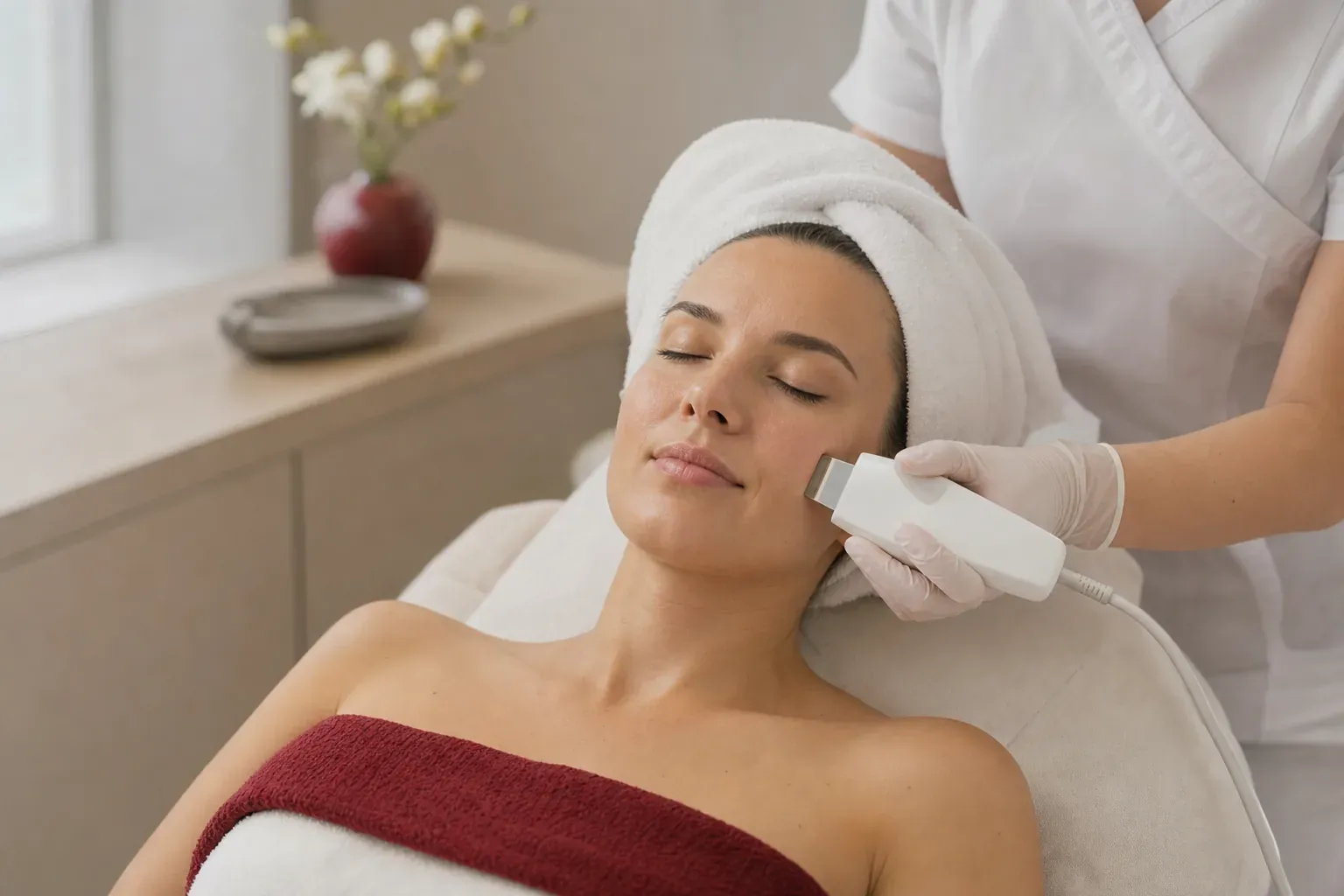
Ultrasonic cleansing gently removes dead skin cells, excess sebum and comedones. It usually leaves no noticeable redness or swelling, so it works well when you have a celebration or a photo shoot in a few days.
Manual cleansing cleans the pores most deeply. The cosmetologist removes your makeup, softens the skin with a steaming mask, applies an antiseptic, cleans the pores with special instruments and finishes with a soothing mask. The whole face takes about an hour and a half on average, and the T-zone alone (forehead, nose and chin) about 40 minutes. Your skin stays red and irritated for a while afterward, so manual cleansing isn’t scheduled right before a wedding or a vacation.
Non-traumatic cleansing involves no mechanical pressure, so it also suits sensitive skin.
Hydropeeling is done with a device. It’s recommended for enlarged pores, oily or, on the contrary, dehydrated skin, as well as for uneven texture and flaking.
Which facial cleansing is best for your skin type
As a rough guide:
- oily skin with clogged pores, blackheads and breakouts: usually manual cleansing;
- sensitive or thin skin: non-traumatic or ultrasonic cleansing;
- dehydrated skin, flaking, uneven texture: hydropeeling;
- a celebration or vacation in a few days: ultrasonic cleansing, because after manual cleansing your skin will still be red.
Skin is rarely the same across the whole face. You may have an oily T-zone and dry cheeks, or clogged pores next to inflamed breakouts, so the cosmetologist makes the final decision at the skin check. If there are many painful, inflamed breakouts, manual cleansing is usually postponed until the inflammation settles. When cleansing is part of a skin treatment plan, a cosmetic doctor prescribes it.
A combination cleansing brings several methods together in one visit. At Viva Clinic, on the specialist’s advice, manual cleansing is combined with a peel, facial massage, care treatments or mesotherapy. We explain how a peel differs from a cleansing and how often you can have one in our article about facial peels.
How often to have a cleansing and when to postpone it
How often depends on your skin type and the type of cleansing. Oily skin prone to breakouts needs cleansing more often than normal or dry skin. Manual cleansing is usually done no more than once a month, because the skin needs time to recover. Your cosmetologist will tell you how often to come after the skin check.
A cleansing is postponed if:
- you have active herpes (a cold sore) on your face;
- there is acute inflammation, a wound, scratches or sunburn in the area;
- your skin is freshly tanned;
- a skin condition has flared up;
- you have a cold or a fever.
Tell your cosmetologist if you are pregnant or breastfeeding, take any medication or are allergic to cosmetics.
How to prepare and how to care for your skin afterward
For a few days before the procedure, avoid tanning and don’t use scrubs or peels at home. You don’t need to come without makeup: the cosmetologist removes it before the cleansing.
After the cleansing:
- don’t wear makeup on the day of the procedure;
- don’t touch your face or squeeze anything;
- avoid tanning and the sauna for a few days;
- apply SPF every day, even in autumn and winter;
- care for your skin with the products the cosmetologist picks for your skin type (the clinic also sells professional home-care cosmetics online).
Redness after manual cleansing fades gradually. Contact your cosmetologist or a doctor the same day if it gets worse, your face swells, or you notice pustules, pain or a fever. If your lips, tongue or face swell and breathing becomes difficult, call an ambulance on 103 right away.
Facial cleansing at Viva Clinic is done at the aesthetic medicine center at 16b/3 Kuzovkova St in Slavuta. You can book by phone, on Viber or Telegram.
Questions and answers
Can I squeeze blackheads at home?
It's better not to. At home it's hard to avoid damaging the skin or introducing an infection, so a squeezed blackhead often turns into inflammation or leaves a mark. In the treatment room, the cosmetologist applies an antiseptic, works with sterilized instruments and uses single-use consumables.
Do I need a consultation before a facial cleansing?
Yes, your first cleansing starts with a skin check. The cosmetologist assesses your skin and any contraindications and only then chooses the type of procedure and the products. If you're not sure where to start, book a consultation first and the specialist will help you decide.
Do men get facial cleansing?
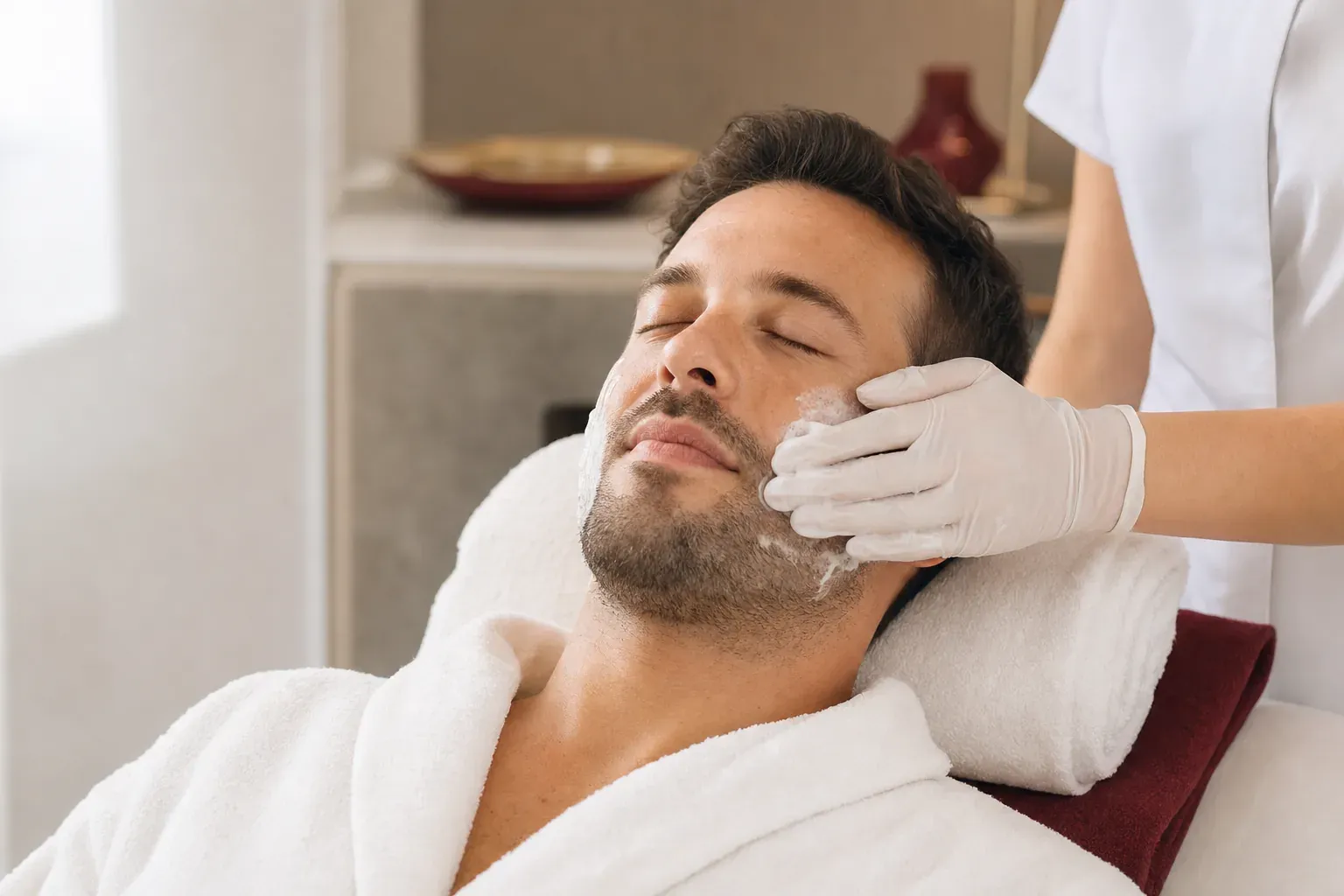
Yes. Facial and back cleansing are the treatments men most often come to Viva Clinic for. The type of cleansing is chosen the same way as for women: after a skin check, taking into account oiliness, breakouts and sensitivity.
Can I have a facial cleansing in summer?
Yes, ultrasonic cleansing can be done at any time of year because it usually leaves no redness. After manual cleansing the skin is more vulnerable, so in summer be especially careful with SPF and avoid tanning for a few days afterward. Your cosmetologist will tell you which type suits you in the warm season.