Ultrasonic facial cleansing: how it works and who it suits
Ultrasonic facial cleansing gently removes dead skin cells, excess sebum and light pore congestion using a device with a vibrating metal blade. It's recommended for thin, sensitive and dry skin, and it usually leaves no noticeable redness, so it can be done at any time of year. Your cosmetologist decides how often to repeat it after examining your skin.

Published Updated 5 min read

How ultrasonic facial cleansing works
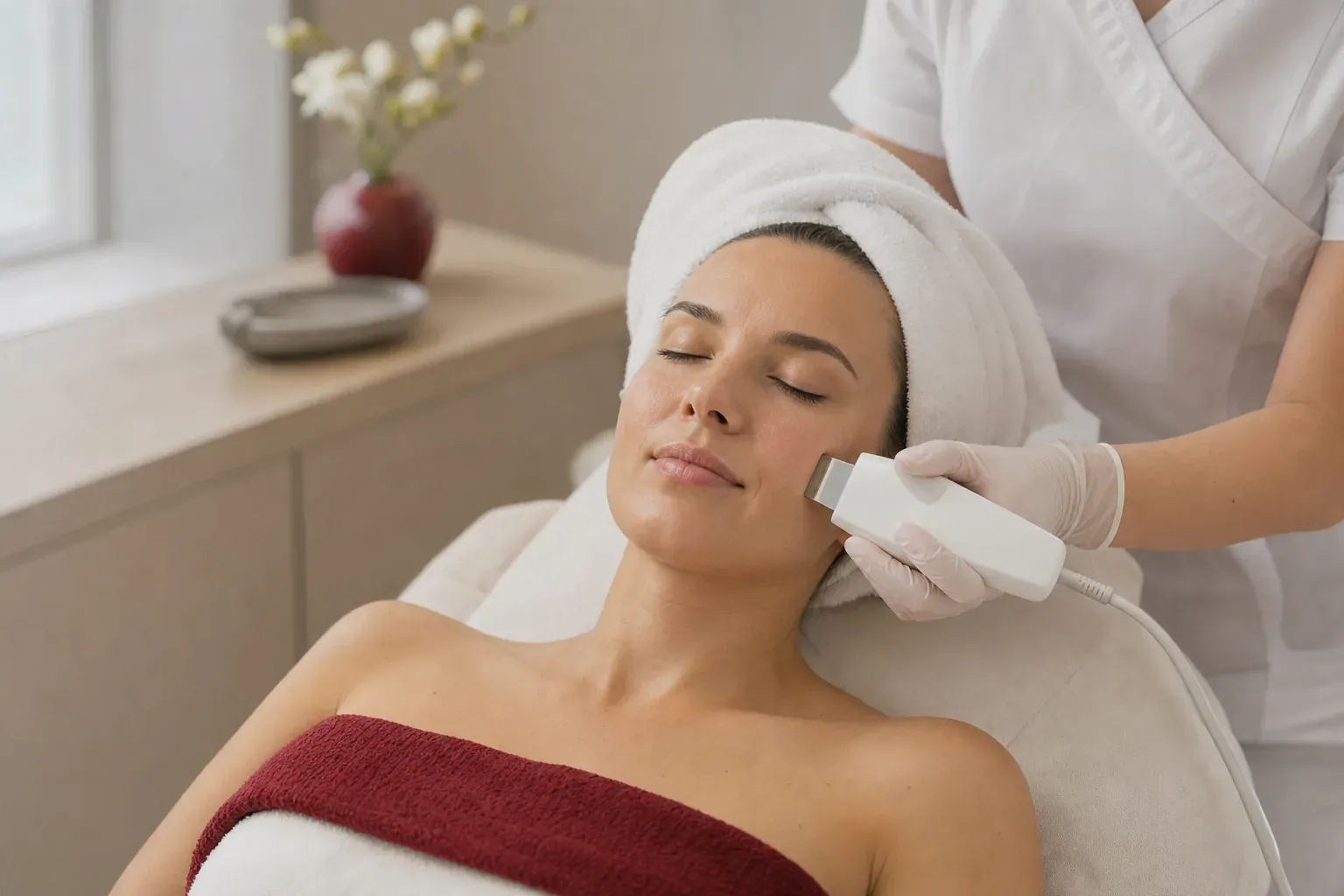
The cleansing is done with a device that has a flat metal blade vibrating at ultrasonic frequency. The skin is moistened with water or a special product, and the vibrations travel to the skin’s surface through this liquid. Tiny bubbles form in the liquid and loosen dead skin cells and sebum at the openings of the pores. While the device is working, a light mist rises over your face.
The cosmetologist moves the blade over the damp skin at a slight angle, one area at a time. Softened flakes and surface impurities come away with the liquid. The pores aren’t squeezed, and no instruments injure the skin.
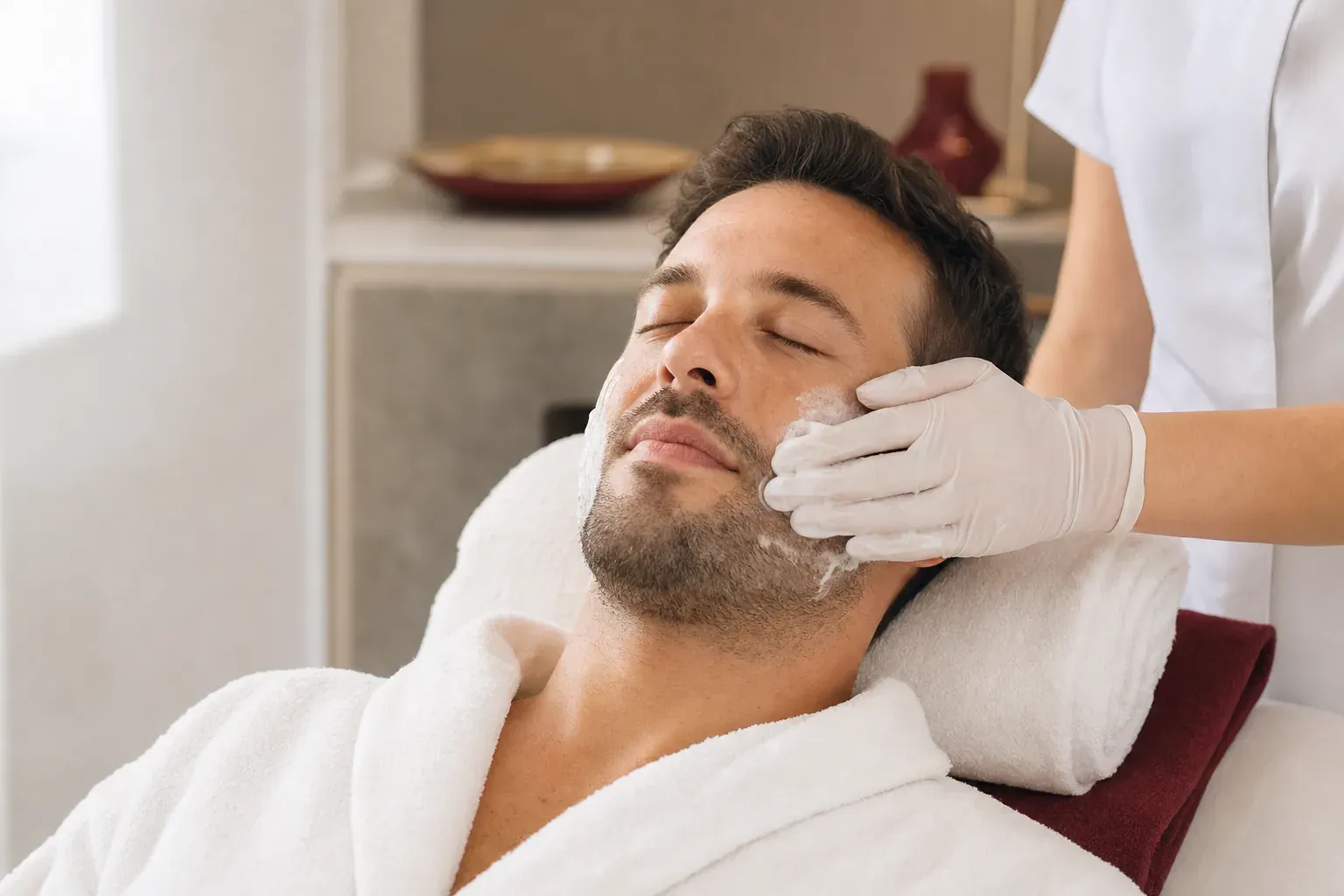
Before the procedure, the cosmetologist removes your makeup and cleanses your skin, and at the end applies a product suited to your skin type. The Viva Clinic aesthetic medicine center uses certified professional cosmetics for cleansing, including REJUVI and Christina Comodex.
Who ultrasonic cleansing suits
It’s recommended for thin, sensitive and dry skin, and for skin whose pores clog moderately, with only a few blackheads. Ultrasound gently removes dead skin cells, excess sebum and comedones, and helps even out skin texture and tone and get rid of flaking.
It’s also a good choice when you have a celebration, a photo shoot or a vacation in a few days, because manual cleansing would leave your skin red for a while. Ultrasonic cleansing can be done at any time of year, including summer.
How ultrasonic cleansing differs from manual and non-traumatic cleansing
Viva Clinic offers four types of cleansing: ultrasonic, manual, non-traumatic and hydropeeling. The first three differ mainly in how they clear the pores.
The cosmetologist does manual cleansing by hand, with special tools such as a sieve and cosmetic spoons. First the skin is softened with a steaming mask and treated with an antiseptic, and at the end a soothing mask is applied. Cleansing the whole face takes about an hour and a half on average, and the T-zone alone about 40 minutes. Manual cleansing clears the pores most deeply, but your skin stays red and irritated for a while afterward. It’s the type most often recommended for oily skin with clogged pores and a tendency to breakouts.
Non-traumatic cleansing involves no mechanical pressure. The pores are cleared with products that soften sebum and dead skin cells, so the skin isn’t injured or left feeling tight. It’s also done on sensitive skin.
Compared with manual cleansing, ultrasonic cleansing is less effective on dense plugs in the pores, but it doesn’t injure the skin. Compared with non-traumatic cleansing, the difference is that the device loosens the plugs, while in non-traumatic cleansing cosmetic products do that work. Our article on which facial cleansing to choose explains in detail how to pick the right type for your skin.
How often to get a facial cleansing
How often depends on your skin type, how quickly your pores clog and the type of cleansing. Oily skin prone to breakouts needs cleansing more often than normal or dry skin. Manual cleansing is usually done no more than once a month so your skin has time to recover.
Ultrasonic cleansing is gentler, but it still shouldn’t be repeated more often than the specialist recommends, because overly frequent treatments dry out and irritate the skin. Your cosmetologist will tell you how often to come after examining your skin. If you’re also planning chemical peels, mention it in advance, since you need a break between a cleansing and a peel.
Between visits, home care keeps your skin in good shape. After the cleansing, the cosmetologist explains how to care for your skin at home and picks products for your skin type. The clinic also sells professional home-care cosmetics online.
Who shouldn’t have a cleansing and how to care for your skin afterward
A cleansing is postponed if:
- you have active herpes (a cold sore) on your face;
- there’s acute inflammation, a wound, scratches or sunburn in the area;
- your skin is freshly tanned;
- a skin condition has flared up;
- you have a cold or a fever.
If you have a pacemaker, be sure to mention it before the procedure: ultrasonic cleansing is usually not done in that case, and the cosmetologist will suggest another type. Also tell them if you are pregnant or breastfeeding, take any medication or are allergic to cosmetics.
If you have many painful, inflamed breakouts, see a dermatologist first. Active acne is treated by a doctor, and the cosmetologist will choose a cleansing that complements the treatment.
After the cleansing:
- don’t wear makeup on the day of the procedure;
- don’t touch your face or squeeze anything;
- avoid tanning and the sauna for a few days;
- apply SPF every day, even in autumn and winter.
Contact your cosmetologist or a doctor the same day if the redness keeps getting worse, your face swells, or you notice pustules, pain or a fever. If your lips, tongue or face swell and breathing becomes difficult, call an ambulance on 103 right away.
Ultrasonic facial cleansing at Viva Clinic is done at the aesthetic medicine center at 16b/3 Kuzovkova St in Slavuta. You can book by phone, on Viber or Telegram.
Questions and answers
Does ultrasonic facial cleansing hurt?
There's usually no real pain. During the procedure you feel light tingling or warmth from the vibrating blade. If your skin is very sensitive or an area feels unpleasant, tell the cosmetologist right away, and they'll work more gently.
Does ultrasonic cleansing remove blackheads?
Partly. Ultrasound removes surface impurities and light comedones well, while dense, deep blackheads are best cleared by manual cleansing. If your skin is oily and you have a lot of blackheads, the cosmetologist usually recommends manual cleansing. They make the final choice after examining your skin.
How should I prepare for ultrasonic cleansing?
No special preparation is needed. For a few days before the procedure, avoid tanning and don't use scrubs or peels at home. You don't need to come without makeup, as the cosmetologist removes it before the cleansing. Mention any medication, allergies to cosmetics and recent treatments.
How is ultrasonic cleansing different from hydropeeling?
Both are done with a device, and both are gentle on the skin. Hydropeeling cleanses, moisturizes and softens the skin and is recommended for enlarged pores, dehydrated skin and flaking. Ultrasonic cleansing gently exfoliates dead skin cells and removes excess sebum. Your cosmetologist will decide which one suits you after a skin check.