Ingrown hairs after shaving: why they happen and how to get rid of them
A hair becomes ingrown when, after shaving or hair removal, it curls back into the skin or grows underneath it without breaking through. This happens most often with curly and coarse hair in the beard area, on the bikini line, in the armpits and on the legs. Shaving in the direction of hair growth with a sharp blade makes it less likely, and if ingrown hairs keep coming back, Viva Clinic in Slavuta can suggest cleansing, peels or laser hair removal.

Published Updated 4 min read

Why hairs grow in after shaving and hair removal
After shaving, the tip of the hair is sharp. As a curly or coarse hair grows back, it can curl around and re-enter the skin next to the follicle. Sometimes it never reaches the surface at all and grows sideways under the skin.
Wax, sugaring or an epilator pull the hair out together with its bulb, and the new one grows from deep down. If the opening of the follicle is blocked by dead skin cells, the hair can’t break through and keeps growing under the skin.
The skin reacts to an ingrown hair as if it were a foreign body. Red, itchy bumps appear, sometimes with a pus-filled tip, and you may see a dark hair under the skin. In men, hairs most often grow in on the beard area and neck, and in women on the bikini line, in the armpits and on the legs. People with curly and coarse hair are more prone to it.
How to shave so hairs grow in less often
These habits lower the risk:
- before shaving, soften the skin with warm water and apply shaving gel or foam;
- shave in the direction of hair growth;
- use a sharp, clean blade and rinse it after every stroke;
- don’t stretch the skin, and don’t go over the same spot several times;
- after shaving, rinse your skin with cool water and apply an alcohol-free soothing product.
When hairs keep growing in, try an electric razor or a trimmer that leaves short stubble: such hairs are less likely to go back under the skin. Between shaves, gentle exfoliation helps by clearing dead skin cells from the follicle openings. Don’t use scrubs on irritated or inflamed skin. For the first few days after shaving or waxing the bikini area, it’s best not to wear tight underwear, because friction irritates the skin.
Why you shouldn’t dig out ingrown hairs
People often try to get an ingrown hair out with a needle or tweezers. Picking at the skin easily brings in infection from fingers and nails: the bump becomes inflamed, fills with pus and takes longer to heal. Such wounds often leave dark marks, and deep inflammation can leave scars. Don’t squeeze the pustules that form over ingrown hairs either.
If the hair lies very close to the surface, a warm, damp compress for a few minutes may help it come out on its own. If hairs grow in again and again, show your skin to a cosmetologist.
When to see a doctor about ingrown hairs
Slight redness around an ingrown hair often goes away by itself if you give your skin a break from shaving. Contact a doctor the same day if:
- the redness spreads quickly, and the skin around it is hot, swollen and painful;
- the bump has turned into a large, painful lump with pus;
- you have a fever.
Don’t open an abscess yourself, and show it to a doctor instead. For bumps that keep coming back and leave dark marks or scars, book an appointment with a dermatologist. Similar bumps occur with other skin conditions, such as folliculitis, and they’re treated differently.
How to get rid of ingrown hairs: cleansing, peels and laser hair removal
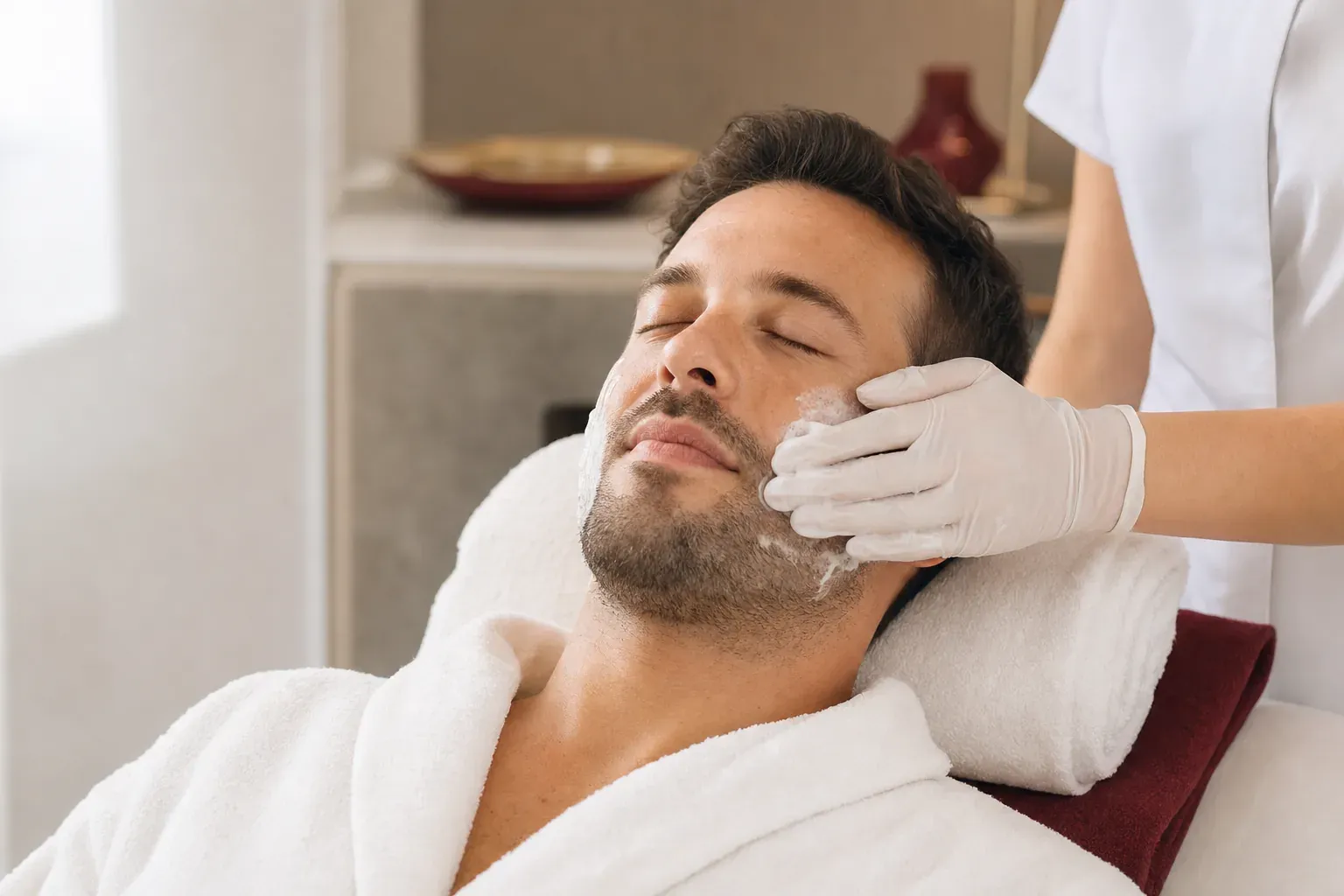
Once the inflammation has settled, a cosmetologist will examine your skin and choose treatments. Men with ingrown hairs in the beard area can start with a consultation with a cosmetologist for men at Viva Clinic.
Peels remove dead skin cells, so the follicle openings clog less and hairs can break through more easily. For oily, breakout-prone skin, peels with salicylic acid are usually chosen, and a cosmetic doctor makes the final choice after an examination. Facial cleansing clears clogged pores, and if there are inflamed spots, manual cleansing is postponed or a gentler type is chosen.
If changing your habits and peels don’t do much, ask a cosmetic doctor about laser hair removal. The laser acts on the hair follicle, so after a course less hair grows, and there are usually fewer ingrown hairs too. Viva Clinic uses the D-Las 100 mix diode laser, which handles different hair types, including ingrown hairs. A course usually consists of several sessions, up to 10, and takes 6–12 months. During the course you can only shave, and wax, sugaring, tweezers and epilators are stopped at least 2 weeks before a session. Laser hair removal isn’t done on blonde or gray hair. The doctor checks contraindications, including cancer, decompensated diabetes, a fresh tan and a tendency to keloid scars, at the consultation.
Treatments are done at the Viva Clinic aesthetic medicine center at 16b/3 Kuzovkova St in Slavuta. You can book by phone, on Viber or Telegram.
Questions and answers
Can I shave if a hair has grown in and become inflamed?
It's better to take a break until the inflammation settles. The blade injures inflamed bumps, and the inflammation can spread. If you have to shave every day, for example for work, ask a cosmetologist or dermatologist how to care for your skin in the meantime.
Why do ingrown hairs leave dark marks?
They're marks left by inflammation. They gradually fade on their own, but they darken and last longer in the sun, so apply SPF every day on exposed areas. If the marks don't fade, a cosmetic doctor may suggest a brightening peel.
How can I tell an ingrown hair from a pimple?
They look alike: both can be a red bump, sometimes with a pus-filled tip. An ingrown hair appears where you shave or remove hair, and you can often see a dark hair inside the bump. If you're not sure or the bumps don't go away, see a cosmetologist or dermatologist.
Can I get rid of ingrown hairs for a long time?
Yes, if there's less hair in the area. Laser hair removal does this: after a course, less hair grows, and there are usually fewer ingrown hairs too. How long the result lasts varies from person to person, and a cosmetic doctor will tell you at the consultation how many sessions you need.