
Sinusitis: symptoms, treatment and when you need an ENT doctor
Maxillary sinusitis is inflammation of the maxillary sinus, the air space in the cheekbone under each eye. It most often starts with a cold and clears up along with it. If a blocked nose, pain under the eyes and thick discharge last longer than 10 days, get worse after improving, or come with a high fever from the start, see an ENT doctor.
Published Updated 5 min read
How sinusitis differs from a common cold
During a cold, the lining of the nose becomes inflamed, and so do the sinuses almost every time, because they connect to the nose through narrow openings. So a few days of congestion and facial pressure during a cold don’t mean you have sinusitis that needs separate treatment.
A common cold is usually worst in the first 2–3 days and clears up in a week to ten days. Doctors suspect sinusitis when symptoms last longer than 10 days without improving, or when you feel better for a few days and then get worse again: the fever comes back and the pain and discharge get stronger.
Sinusitis symptoms
Sinusitis most often shows up as:
- a blocked nose, often worse on one side;
- thick yellow or green discharge from the nose or down the back of the throat;
- pain, pressure or fullness under the eyes, in the cheek and sometimes in the upper teeth;
- pain that gets worse when you bend your head forward;
- a weaker or lost sense of smell;
- a fever, tiredness, headache and cough, especially at night.
In children, sinusitis more often shows up as a runny nose that won’t go away, a cough and bad breath, and they complain of facial pain less often.
The color of the discharge alone doesn’t prove the infection is bacterial. Yellow and green mucus also happens with a viral cold, so the doctor looks at the whole picture and how long you have been ill.
When sinusitis clears up on its own and when you need an ENT doctor
Most acute sinusitis is caused by viruses and clears up without antibiotics along with the cold. For an ordinary cold, an internist or a family doctor is enough. Book an ENT doctor if:
- symptoms last longer than 10 days and aren’t easing;
- you got worse after starting to improve;
- you have had a high fever and severe facial pain from the first days;
- sinusitis comes back several times a year or hasn’t cleared up after 12 weeks.
Sometimes the inflammation spreads beyond the sinus. Call an ambulance (103) or go to hospital straight away if:
- you have swelling or redness around the eye, or the eyelids are so swollen that the eye is hard to open;
- you have double vision or worse vision, or the eye hurts when it moves or bulges;
- you have a severe headache, it’s hard to bring your chin to your chest, or you feel confused;
- you have swelling on the forehead, or a high fever that won’t come down.
How sinusitis is treated and what not to do at home
The doctor chooses the treatment after an exam. Viral sinusitis usually needs rest, plenty of fluids and remedies that make it easier to breathe through the nose. Many people find that rinsing the nose with saline helps. Decongestant nasal drops are used for a short time only, no longer than the leaflet says, because with long use they cause congestion themselves.
Antibiotics for sinusitis are prescribed only by a doctor, when there are signs of a bacterial infection. They don’t work against viruses. Taken when they aren’t needed, antibiotics cause side effects and make bacteria more resistant. If your doctor prescribes an antibiotic, take it for as many days as they told you, even once you feel better.
Before you see a doctor:
- don’t heat your face with bags of hot salt, a boiled egg or a heat lamp: heat isn’t used when there is pus in the sinus, and without an exam you can’t know whether there is;
- don’t put onion or garlic juice in your nose, as it can burn the lining;
- don’t take antibiotics left over from last time;
- don’t use decongestant drops for weeks.
How an ENT doctor examines the sinuses
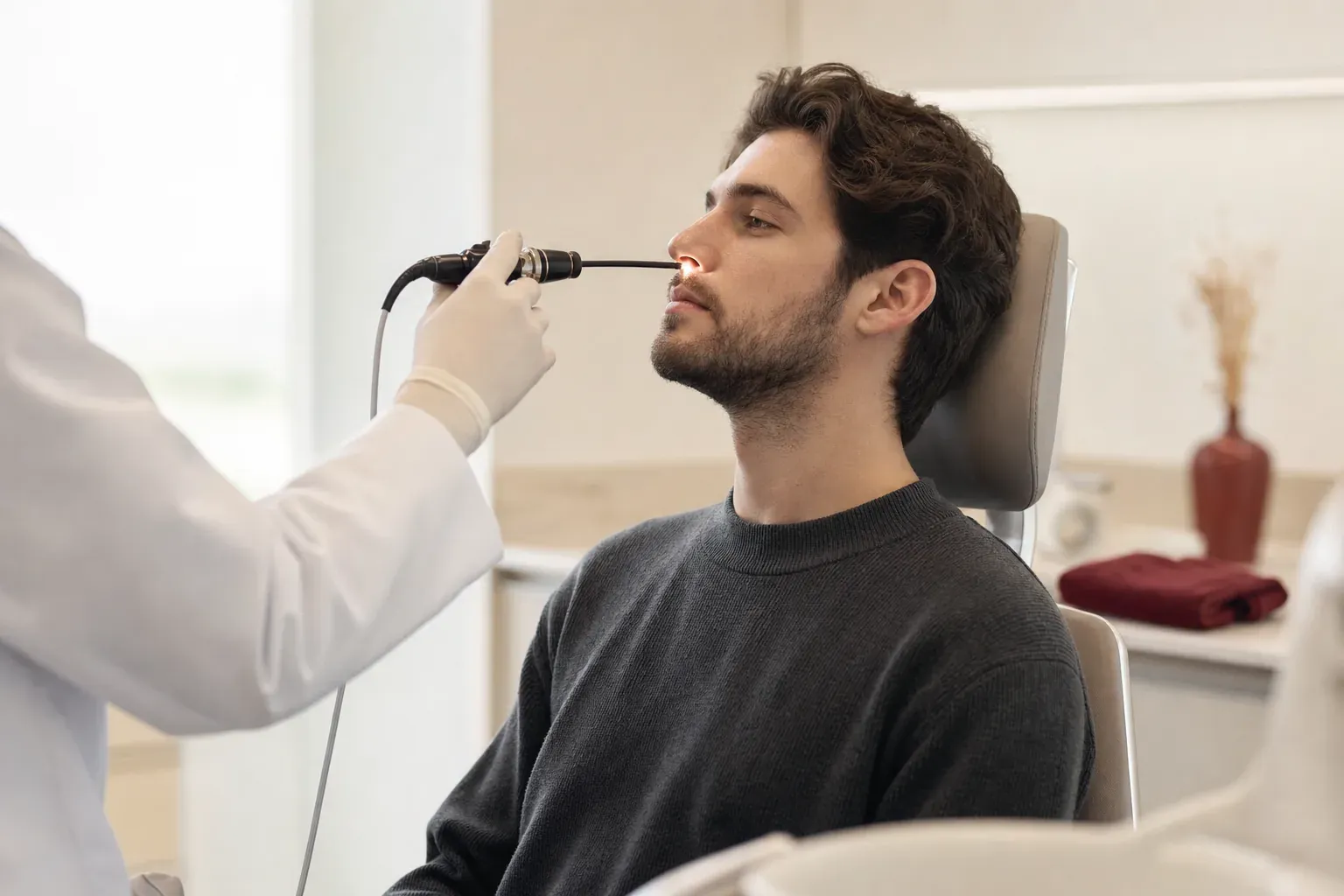
The doctor asks how long you have had a runny nose, what your temperature and discharge have been like and what medicines you have already taken. Then the doctor examines your nose, throat and ears. For a closer look, an endoscope is used, a thin tube with a camera. It shows the inside of the nose, swelling of the lining and discharge coming from the sinus openings. If needed, the lining is numbed before the exam, so tell the doctor in advance about any drug allergies.
Don’t rinse your nose or use nasal drops before your appointment, so the doctor can see the lining as it is.
When sinusitis drags on or keeps coming back, the doctor looks for the cause. It may be a deviated septum, nasal polyps or an allergy.
The Viva Clinic ENT doctor in Slavuta sees adults and children at 27a Sobornosti St or 3 Danyla Halytskoho St, and the exact address is confirmed when you book. You can have the consultation and endoscopic exam at the clinic, and any lab tests you need at Diagnost-Lab at 32 Sobornosti St. You can book an appointment with the ENT doctor at Viva Clinic by phone or on Viber.
Questions and answers
Is sinusitis contagious?
Sinusitis itself doesn't pass from person to person. The cold it often starts with is contagious, though. So in the first days of a runny nose, wash your hands more often, air the room and, if you can, keep away from babies and older people.
Can sinusitis be caused by a tooth?
Yes. The roots of the upper teeth sit close to the floor of the maxillary sinus, and inflammation around a root can spread to it. If the sinusitis is on one side, lasts a long time or comes with toothache, the ENT doctor may suggest seeing a dentist.
Do I need an X-ray or CT scan for sinusitis?
Usually not. A doctor diagnoses acute sinusitis from your symptoms, how long they have lasted and an exam of the nose. An X-ray or CT scan of the sinuses is ordered when sinusitis drags on, keeps coming back, doesn't respond to treatment or a complication is suspected.
Who should I see if my child has sinusitis?
A pediatrician or an ENT doctor. The Viva Clinic pediatrician treats sinusitis in children, and the ENT doctor sees children and can examine the nose with an endoscope. If your child's eyelids are swollen, they have a high fever or they become listless, see a doctor the same day.