Ear infections: symptoms, treatment and what not to do at home
Otitis is inflammation of the ear. Otitis externa affects the skin of the ear canal, while otitis media develops behind the eardrum and most often starts after a cold. If your ear hurts, your hearing drops or fluid is coming out of your ear, see an ENT doctor and don't put anything in the ear before the exam.
Published Updated 5 min read
Types of ear infection
Otitis externa often starts after swimming, when water stays in the ear for a long time, or after cleaning the ears with cotton buds, which scratch the skin. The ear hurts more if you pull on the outer ear or press the small flap of cartilage in front of the ear canal. The skin of the canal swells and itches, there may be some discharge, and sounds become muffled.
Otitis media develops behind the eardrum, in a small space connected to the back of the nose by the Eustachian tube. During a cold the tube swells, fluid and germs get trapped in the ear, and inflammation sets in. In children the Eustachian tube is shorter and wider, so they get otitis media more often than adults.
Less common is inner ear inflammation, or labyrinthitis. It causes dizziness, nausea and a sudden drop in hearing, and these symptoms need a doctor the same day.
Ear infection symptoms in adults and children
Adults most often notice:
- ear pain, dull or shooting, often worse when lying down;
- a blocked feeling or pressure in the ear;
- reduced hearing, with your own voice sounding louder;
- a raised temperature;
- discharge from the ear.
Sometimes the pressure of pus makes a small hole in the eardrum. Then pus drains from the ear, and the pain often eases sharply. That relief doesn’t mean the infection has gone, and the ear needs to be checked by a doctor.
A young child can’t always tell you what hurts. Watch for these signs:
- the child cries, especially when lying down or feeding;
- pulls at or rubs their ear;
- sleeps badly, is fussy, refuses food;
- has a temperature;
- responds less to quiet sounds.
What not to do at home if your ear hurts
- Don’t put drops in the ear without an exam. If the eardrum is damaged, drops will reach the middle ear, and some of them can harm hearing.
- Don’t warm the ear if there is pus coming out of it or you have a fever.
- Keep cotton buds, matches and hairpins out of the ear: they can easily injure the skin of the canal or the eardrum.
- Don’t put garlic, onion or cotton wool with oil or alcohol in the ear, and don’t use ear candles.
- Don’t take antibiotics left over from last time without a doctor’s advice.
Before the exam you can ease pain and fever with a medicine your doctor has recommended before, at the dose in the leaflet, and for a child at the dose for their age. Keep the sore ear dry. If the ear infection started with a runny nose, treat the nose the way your doctor advised.
When ear pain needs a doctor urgently
See a doctor the same day if:
- the pain is very severe;
- you have a high temperature that won’t go away;
- pus or blood is coming out of the ear;
- your hearing suddenly drops or you feel dizzy;
- swelling, redness or pain appears behind the ear and the ear starts to stick out;
- a child under 2 has ear pain or a fever.
If the pain is moderate but you are no better after 2–3 days, book an appointment as well.
Call an ambulance (103) if ear pain comes with a severe headache, difficulty bringing the chin to the chest, confusion or a drooping face, if a child becomes very listless, or if a baby under 3 months has a temperature of 38 °C or higher.
How an ENT doctor examines the ear
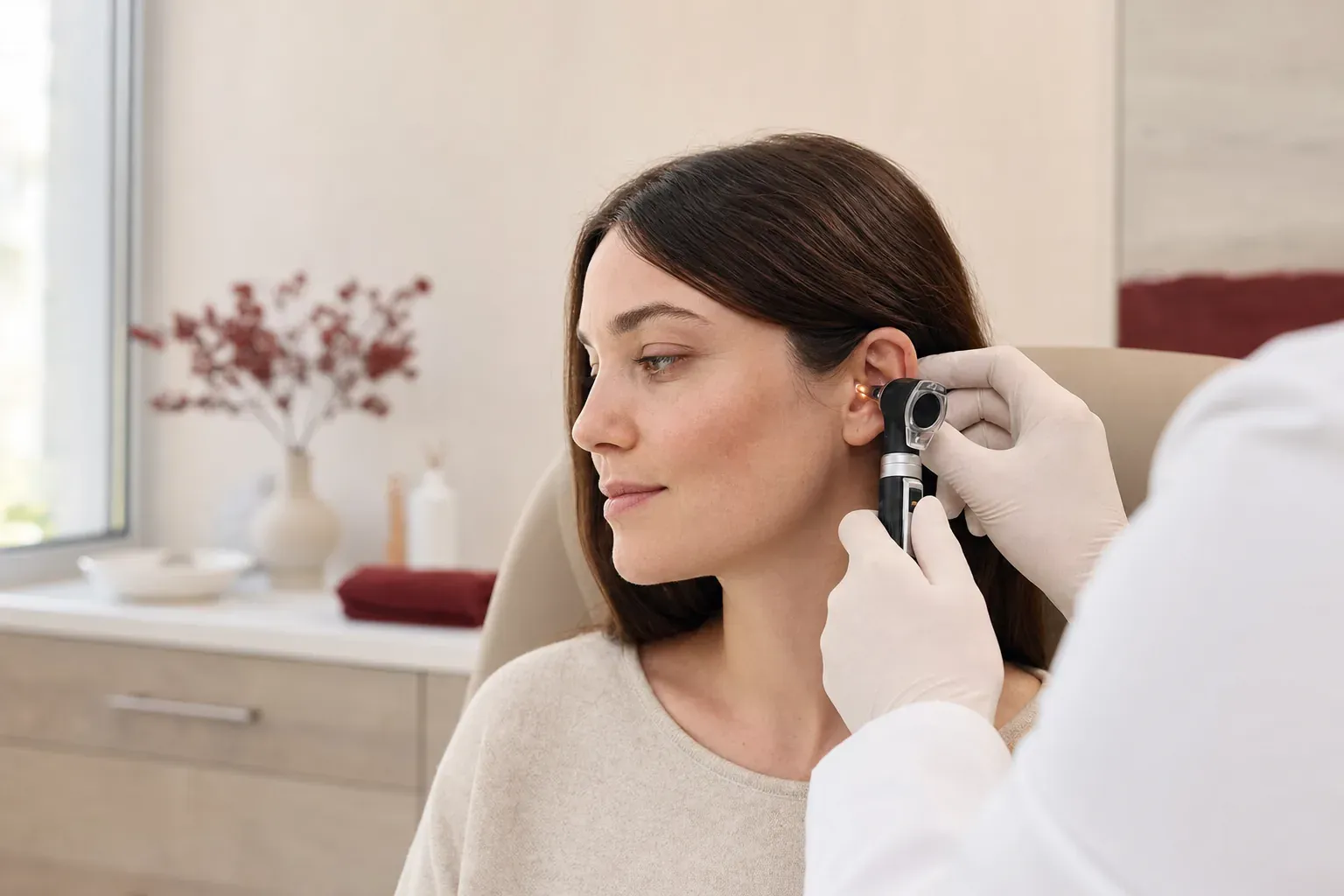
The doctor looks into the ear with an otoscope, an instrument with a light and a small funnel that goes into the opening of the ear canal. It shows the skin of the canal and the eardrum: whether the eardrum is red, bulging outward, has fluid behind it or a hole in it. The exam doesn’t hurt, although with otitis externa a touch to the swollen canal can be unpleasant. If there is discharge or wax in the canal, the doctor will carefully remove it to see the eardrum.
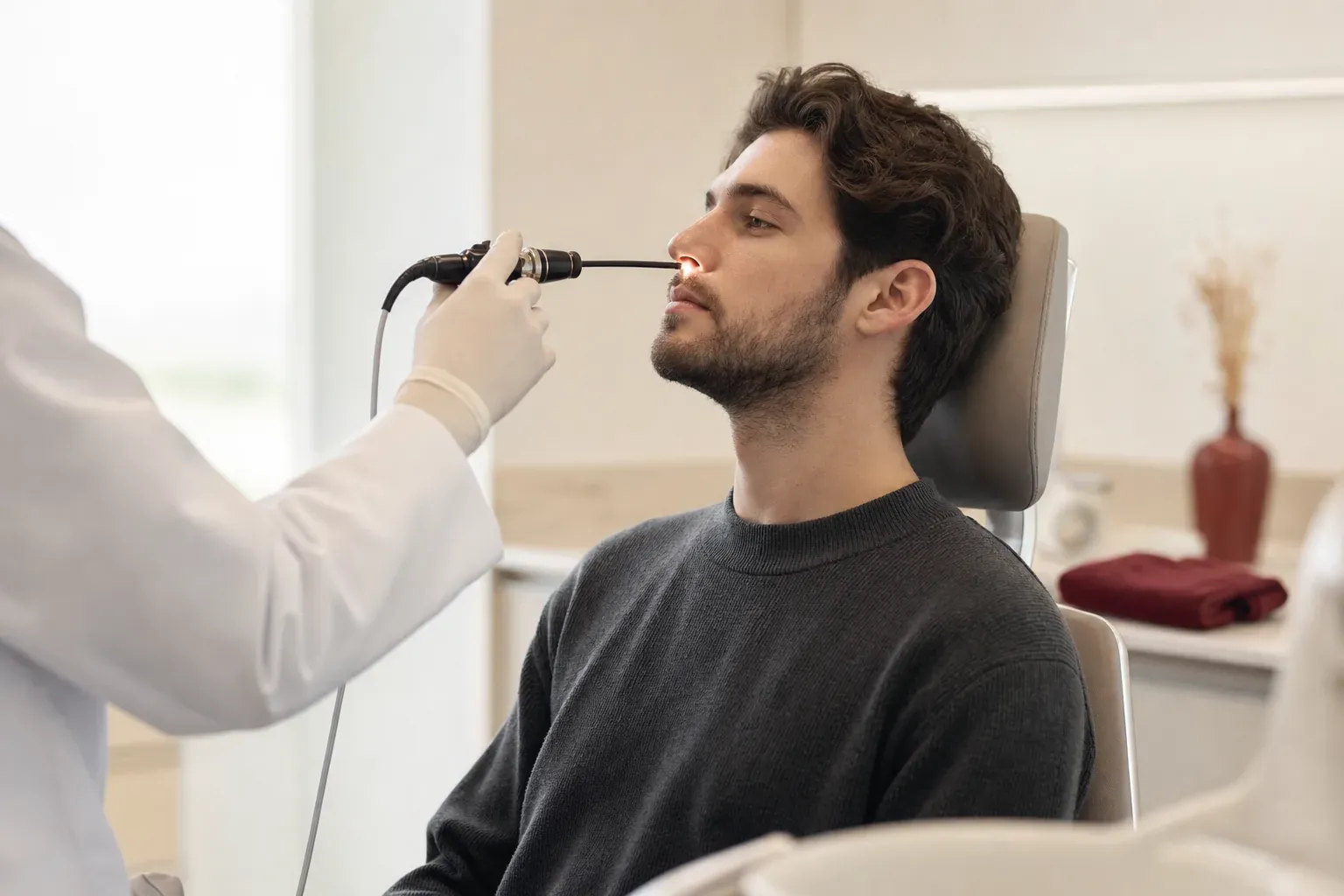
Otitis media often starts in the nose, so the doctor also examines the nose and throat and, if needed, the back of the nose with an endoscope. In children, adenoids are a common cause of repeated ear infections.
After the exam, the doctor will tell you which type of otitis you have and choose treatment. Otitis externa is usually treated with ear drops prescribed by the doctor. Otitis media often clears up on its own within a few days, so an antibiotic isn’t always needed, and the doctor decides on it. Arrange a follow-up visit, where the doctor will check that the eardrum has healed and your hearing has recovered.
The Viva Clinic ENT doctor in Slavuta sees adults and children at 27a Sobornosti St or 3 Danyla Halytskoho St, and the exact address is confirmed when you book. You can book an ear exam with the ENT doctor at Viva Clinic by phone or on Viber. If a blocked nose and pain under the eyes come along with your ear problem, read about sinusitis symptoms.
Questions and answers
How long does an ear infection last?
Acute otitis media usually settles within a few days, most often within a week. Otitis externa usually clears up in about a week with treatment. If the pain isn't easing or is getting worse after 2–3 days, see your doctor again.
Can I swim with an ear infection?
It's better not to until the ear has healed. Water in the ear canal keeps otitis externa going, and if the eardrum is damaged, water can get into the middle ear. The ENT doctor will tell you when you can go back to the pool after a follow-up exam.
Can an ear infection affect hearing?
During otitis media, hearing often drops because of fluid behind the eardrum, and it usually comes back after recovery. If your ear still feels blocked a few weeks later or your child doesn't hear well, see an ENT doctor, because fluid may have stayed in the ear.
Who should I see if my child has ear pain?
A pediatrician or an ENT doctor. The Viva Clinic pediatrician examines children with ear pain and can come to your home, and the ENT doctor sees children at the clinic. If ear infections keep coming back, or your child snores or breathes through the mouth, the ENT doctor will check the adenoids.