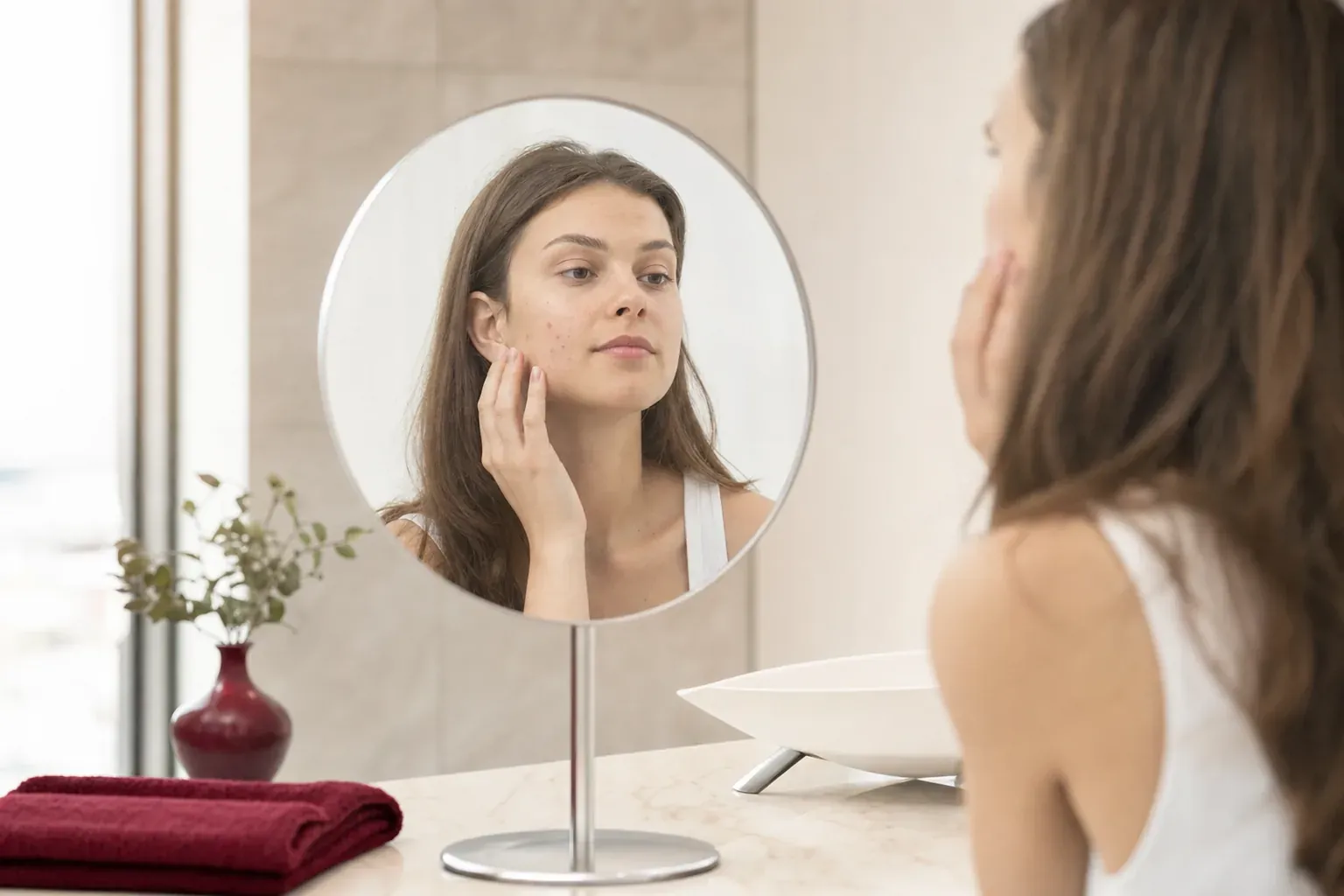
What lichen looks like on the skin and how it is treated
In Ukraine, people use the word lishai, usually translated as lichen, for several different skin conditions: fungal skin infections (ringworm), pityriasis versicolor, pityriasis rosea and shingles. They have different causes, so they need different medicines. Before putting anything on the patch, show it to a dermatologist, who will tell you which condition it is and how to treat it.
Published Updated 6 min read
What lichen looks like: the four most common types
These rashes look alike, and they are easy to confuse with eczema or psoriasis. You can’t diagnose yourself from photos online, but the general signs can help you understand what to show the doctor.
Fungal skin infection (ringworm)
It is usually a round or oval red patch with scales. The edge is brighter and slightly raised while the center is paler, so the patch looks like a ring. It itches and slowly grows. On the scalp, the fungus causes patches of short, broken-off hair. People catch it from other people and from animals (frequently cats and dogs), and through shared items. Children are affected more than adults.
Pityriasis versicolor
Small spots appear on the chest, back, shoulders and neck and gradually merge into larger ones. They can be light brown or pink, and on tanned skin they look lighter because they don’t tan. If you gently scrape a spot, it flakes into fine, bran-like scales. It itches only a little or not at all. It is caused by a yeast that lives in small amounts on almost everyone’s skin. Heat and sweating make it multiply faster, which is why the rash tends to appear in summer.
Pityriasis rosea
It starts with one larger pink patch a few centimeters across that flakes slightly, usually on the trunk. Doctors call it the herald patch. A week or two later, smaller oval spots spread over the trunk, shoulders and thighs. On the back they may line up in slanting rows, like the branches of a Christmas tree. The rash may itch mildly. It is most common in teenagers and young adults. The exact cause hasn’t been established, and doctors link it to a viral infection. It usually clears up by itself in six to eight weeks, sometimes longer.
Shingles (herpes zoster)
Shingles is caused by the chickenpox virus. After chickenpox, the virus stays dormant in nerve cells and can reactivate years later, especially after 50 or when the immune system is weakened. First, pain, burning or tingling appears on one side of the body. A few days later, a band of red skin with fluid-filled blisters develops in the same place. Typically the band wraps halfway around the trunk, but it can also appear on the face. In a week to ten days, the blisters dry out and crust over. In some people, especially older ones, nerve pain lasts for weeks or months after the skin has healed.
What to do before you see a dermatologist
Don’t put anything on the patch until a doctor has seen it. Brilliant green (zelenka) and iodine stain the skin and hide the true color and edges of the rash, which makes it harder for the doctor to tell what kind of lichen it is. Iodine also dries the skin and can burn it.
It’s also better not to try steroid creams recommended by friends or at a pharmacy. On a fungal patch, such a cream seems to help at first because it reduces redness. Meanwhile, the fungus keeps spreading, and the rash changes so that it is harder to recognize. If you have already put something on your skin, remember the name of the product and how many days you used it.
Until you have a diagnosis, act as if the rash is contagious:
- use your own towel, comb and hat;
- wash bed linen and towels in hot water;
- don’t scratch the patches, so you don’t spread the rash to other areas or get an infection;
- if your cat or dog has bald patches, take it to a vet;
- don’t pop shingles blisters and keep them covered with clothing, and until they crust over, avoid contact with pregnant women, babies, people with a weakened immune system and anyone who has never had chickenpox.
When to see a doctor the same day
Antiviral medicines that a doctor prescribes for shingles work best in the first days after the rash appears (doctors aim for the first 72 hours). So if you have pain and blisters on one side of your body, don’t wait for a routine appointment.
See a doctor the same day if:
- blisters appear on your face, near your eye or on the tip of your nose, or your eye hurts or turns red, or your vision gets worse;
- the pain is very severe or the rash spreads quickly over your body;
- you have a fever, and the skin around the patches is swollen, hot or oozing pus;
- the rash appears in a pregnant woman, a baby or someone with a weakened immune system, for example during chemotherapy.
Call an ambulance (103) if the rash comes with a severe headache, confusion or seizures, or if the person is hard to wake up.
How a dermatologist identifies the type and treats it
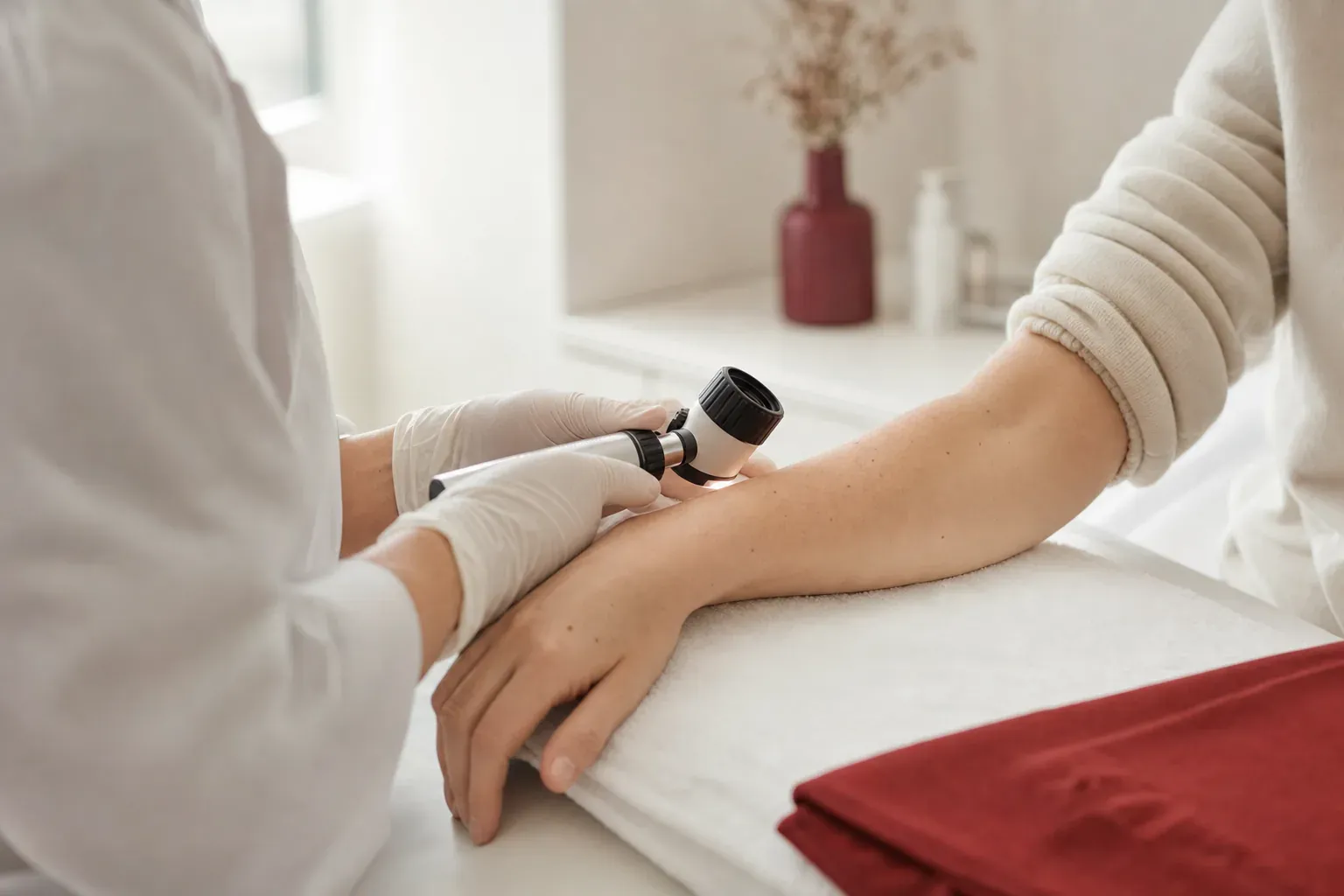
The doctor will ask when the patches appeared, whether the skin itches or hurts, whether anyone at home has a similar rash and whether you’ve been in contact with animals. Then they will examine all of your skin and, if needed, your hair and nails. In most cases the type of lichen is clear from the exam alone. If there is doubt, the doctor will tell you which tests you need.
Treatment depends on the type:
- ringworm is treated with antifungal products for the skin, tablets are sometimes added if large areas of the body are affected, and if the scalp is affected, tablets are always needed;
- pityriasis versicolor is also treated with antifungal products, and the doctor will explain how to lower the chance of it coming back;
- pityriasis rosea clears up on its own, and the doctor may suggest something for the itch and gentle skin care;
- shingles is treated with antiviral medicines and pain relief, and if the rash is near the eye, you also need to see an ophthalmologist.
The doctor decides on the medicines and how long treatment lasts. Don’t stop antifungal treatment as soon as the patch fades: if you stop too early, the fungus often comes back.
A dermatologist consultation at Viva Clinic takes place at 27a Sobornosti St or 3 Danyla Halytskoho St in Slavuta, and the exact address is confirmed when you book. You can have the tests your doctor orders at Viva Clinic’s own Diagnost-Lab laboratory at 32 Sobornosti St (4th floor). You can book by phone or on Viber.
Questions and answers
Is lichen contagious?
It depends on the type. Ringworm is contagious: it spreads from people and animals and through shared items. Pityriasis versicolor and pityriasis rosea don't spread from person to person. A person with shingles can give chickenpox to someone who has never had it and hasn't been vaccinated.
Can you catch ringworm from a cat or dog?
Yes, people often catch ringworm from cats and dogs, especially kittens and stray animals. If an animal has round bald patches with flaky skin, take it to a vet. Make sure to tell the dermatologist about your contact with the animal.
Can I shower if I have lichen?
Yes, a warm shower usually does no harm unless your doctor has said otherwise. Don't rub the patches with a washcloth or soak in a hot bath, and pat your skin dry with your own towel. Apply the products your dermatologist prescribed to clean, dry skin.
Can lichen come back?
Yes, some types return. Pityriasis versicolor often comes back in hot weather, and you can catch ringworm again if the source of infection, such as a pet, is still around. Shingles rarely recurs, and pityriasis rosea usually happens only once in a lifetime.