What is acne and how is it treated
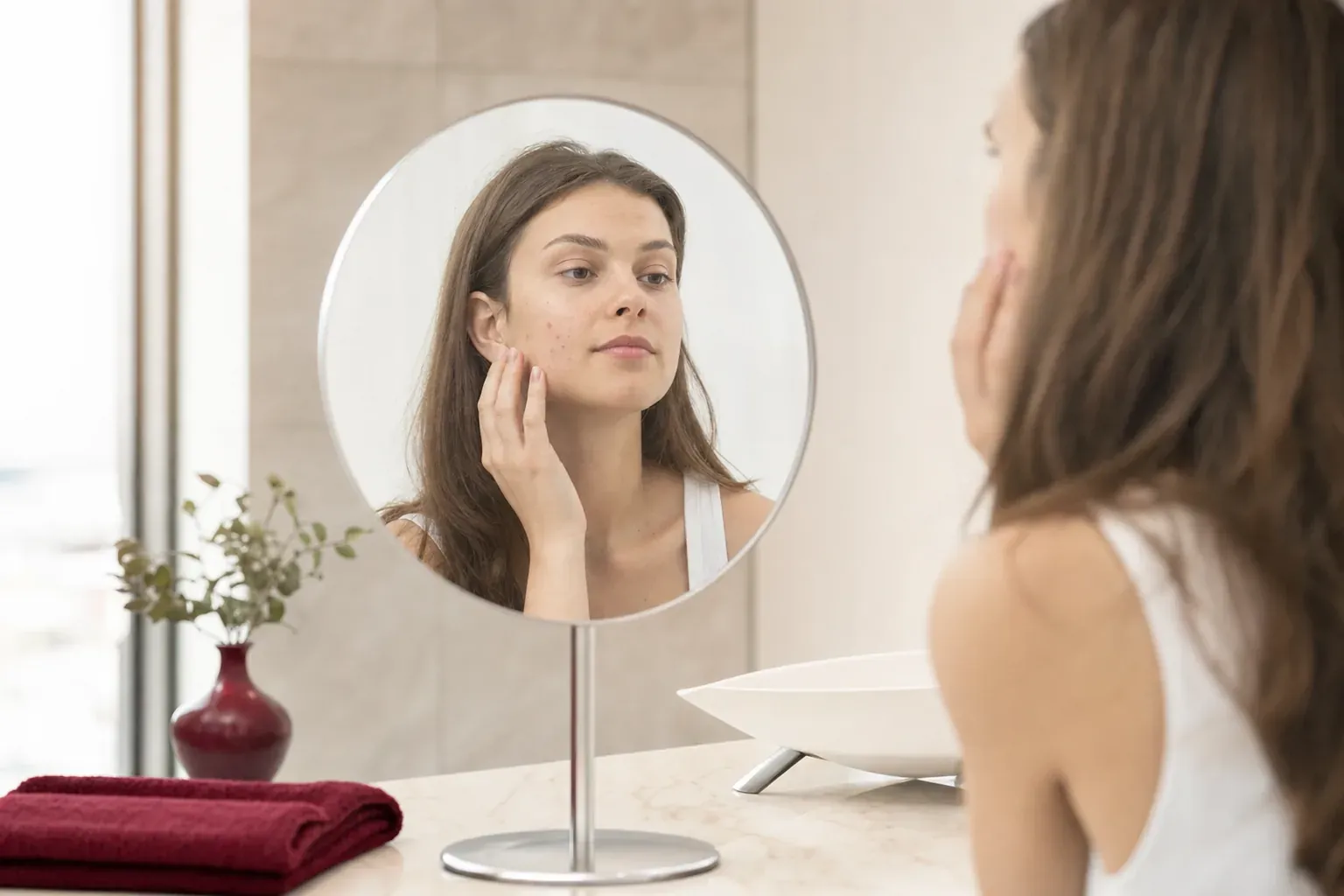
Acne is a chronic inflammation of the oil glands and hair follicles. It shows up as blackheads and pimples, and sometimes as painful lumps on the face, chest or back. Mild acne can often be kept under control with skincare, but if lumps or scars appear, a dermatologist chooses the treatment.
Published Updated 5 min read
What causes acne
Every hair follicle has an oil gland next to it. When the skin makes too much oil and dead cells don’t shed in time, the pore gets clogged. Bacteria that normally live on the skin multiply inside it, and inflammation begins.
Things that play a part:
- hormones: acne often starts in the teenage years, flares before a period and can come with hormonal disorders such as polycystic ovary syndrome;
- genetics: if your parents had acne, your risk is higher;
- some medicines, including hormonal drugs and anabolic steroids;
- heavy, oily cosmetics that clog the pores;
- friction and pressure on the skin from a face mask, a helmet, a phone held against the cheek or a habit of resting your face on your hand.
Stress doesn’t cause acne by itself, but breakouts often get worse during stressful periods.
Types of acne
One person can have several kinds of spots at the same time:
- closed comedones (whiteheads): small white or skin-colored bumps under the skin;
- open comedones, or blackheads;
- papules: red bumps without a pus-filled head that hurt when touched;
- pustules: pimples with a white or yellow head;
- nodules and cysts: deep, painful lumps that last for weeks and often leave scars.
Blackheads turn dark because the oil in them oxidizes in the air. Dirt has nothing to do with it, so scrubbing harder won’t help and will only irritate the skin.
Doctors classify acne as mild, moderate or severe based on the number and type of spots, and treatment depends on this. Mild acne is mostly comedones and the odd pimple, while severe acne involves nodules and cysts that leave scars.
Why you shouldn’t squeeze pimples, and how to care for your skin
When you squeeze a pimple, some of what’s inside comes out, and the rest is pushed deeper into the skin. The inflammation spreads, the pimple takes longer to heal, and it is more likely to leave a dark mark or a scar. Fingers and nails can also easily bring infection into the wound. If redness spreads after squeezing, swelling and pain get worse, or you get a fever, see a doctor the same day.
At home, simple skincare helps:
- wash your face twice a day with a gentle cleanser, without scrubs or alcohol-based toners that dry out and irritate the skin;
- choose makeup and sunscreen labeled non-comedogenic;
- use a product with SPF every day, because the sun leaves dark marks where pimples were;
- take off makeup before bed, change your pillowcase often and wipe your phone screen;
- don’t put toothpaste or alcohol on pimples, because they irritate the skin.
When to see a dermatologist, and whether you need hormone tests
Book an appointment with a dermatologist if:
- you get painful, deep nodules or cysts;
- your spots leave scars or dark marks;
- acne appears or persists after the age of 25;
- several months of regular skincare haven’t helped;
- breakouts are really upsetting you or your teenager.
The doctor examines your skin, works out the type of acne and asks which cosmetics and medicines you use, and, for women, about the menstrual cycle. Then they prescribe products for the skin and, for more severe acne, sometimes tablets. The first changes usually show after a few weeks, so it’s too early to judge after the first week. Acne is a chronic condition, so once your skin improves, the doctor will recommend maintenance care to make flare-ups less frequent. Only a doctor should prescribe antibiotics for acne: if you take them on your own or repeat an old course, the bacteria get used to the drug and it stops working.
Not everyone needs hormone tests. A dermatologist may order them if acne appears suddenly and is severe, continues into adulthood, or in women comes with irregular periods, extra hair growth on the face and body, or hair loss on the scalp. In that case, an endocrinologist or gynecologist joins the treatment. An endocrinologist also sees patients at Viva Clinic, and you can have hormone tests at Viva Clinic’s own Diagnost-Lab laboratory at 32 Sobornosti St.
A Viva Clinic dermatologist in Slavuta sees patients at 27a Sobornosti St or 3 Danyla Halytskoho St, and the exact address is confirmed when you book. You can book by phone or on Viber.
How a cosmetologist can help
Facial cleansing and peels add to the treatment your dermatologist prescribes. Cleansing clears blackheads and trapped oil from the pores, and a peel removes dead skin cells and evens out the skin’s surface. These procedures don’t affect hormones or how much oil the skin produces, so with moderate or severe acne they are planned alongside treatment from a dermatologist. If the skin has many inflamed pimples or nodules, manual cleansing is usually postponed or a gentler type is chosen. The cosmetologist decides what suits you after examining your skin, and if cleansing is part of the treatment, a cosmetic doctor prescribes it.
The Viva Clinic aesthetic medicine center at 16b/3 Kuzovkova St does four types of facial cleansing: ultrasonic, manual, non-traumatic and hydropeeling. On the specialist’s advice, manual cleansing can be combined with a peel. You can book by phone, on Viber or Telegram.
Questions and answers
Does acne go away with age?
Often, yes: for many people breakouts settle down after the teenage years, by about 20 to 25. For some, acne lasts longer or appears for the first time in adulthood, especially in women. If pimples leave scars or dark marks, it isn't worth waiting for acne to clear up by itself.
Does diet affect acne?
For some people, yes. Breakouts can get worse after sweets, white bread and pastries, and sometimes after dairy. If you notice a pattern like this, tell your dermatologist about it. Strict diets chosen at random, without a doctor's advice, usually don't help the skin.
Is acne contagious?
No, acne doesn't spread from person to person. The bacteria involved in the inflammation live on everyone's skin. Breakouts happen because pores get clogged and because of how the oil glands work, which hormones and genetics influence.
Can acne be treated during pregnancy?
Yes, but not with every product. Some acne medicines are not allowed in pregnancy because they can harm the baby. Tell your dermatologist if you are pregnant, breastfeeding or planning a pregnancy, and they will choose treatments that are allowed during this time.