Fever in children: when to bring it down and when to call a doctor
Doctors usually call it a fever when a child's temperature is 38 °C (100.4 °F) or higher. Bring it down if the fever is making your child feel unwell, and only with a fever medicine your pediatrician has recommended, at the dose for your child's age given in the leaflet. Call an ambulance on 103 straight away if a baby under 3 months has a fever, or if your child has a rash that does not fade when pressed, struggles to breathe, is very drowsy or has a seizure.
Published Updated 6 min read

A fever usually comes from a viral infection: it is how the body fights the germ. On its own, a fever rarely harms a child. Your child’s behavior tells you more about how they are doing: whether they are drinking and responding to you as usual.
What temperature counts as a fever in a child
Doctors usually speak of a fever when body temperature is 38 °C (100.4 °F) or higher. Measure it with a digital thermometer under the arm and keep it there as long as its instructions say. A hand on the forehead tells you that your child is hot, but not how hot.
After running, crying, a warm bath or time in a stuffy room, a thermometer can read a little over 37 °C even in a healthy child. Wait half an hour for your child to settle and measure again.
How high the temperature is does not show how serious the illness is. An ordinary cold can cause 39 °C, while a dangerous infection sometimes starts with a mild temperature. The pediatrician looks at your child’s overall condition: how they breathe, the color of their skin, whether they are drinking and peeing, and how they respond to you.
What causes a temperature of 39 °C in a child
Most often it is a virus: a cold, the flu or a stomach bug. A temperature this high can also come with an ear infection, tonsillitis, pneumonia, a urinary tract infection, chickenpox, measles and other childhood infections. In babies and toddlers, a urinary tract infection sometimes shows no signs other than a temperature, so the pediatrician may order a urine test even when there are no complaints about peeing.
A temperature can also go up after a vaccination. The doctor explains what reaction to expect from a particular vaccine when your child gets it, and an unusual or strong reaction is a reason to see the pediatrician.
Teething can raise the temperature slightly, but do not put 39 °C down to teething until a doctor has examined your child. A baby wrapped up tightly in a warm room can also overheat.
How to help your child at home and what not to do
Offer drinks often, even if it is only a few sips at a time: water or a homemade fruit drink. Breastfeed your baby more often or offer formula. Dress your child in light clothes and cover them with a thin blanket. If they are shivering, cover them a little more warmly, but do not bundle them up: thick layers make it harder for the body to lose heat. Air the room while your child is in another one so it does not get too hot.
The only fever medicine to use is one your pediatrician has recommended, at the dose for your child’s age given in the leaflet. Keep to the interval between doses stated in the leaflet, and do not alternate different medicines unless a doctor has advised it. Write down the times, temperatures and medicines you gave: these notes will be useful at the appointment.
Many parents wait for the temperature to reach 38.5 °C before giving medicine. It is better to go by how your child feels. If your child is playing and drinking at that temperature, you can skip the medicine. But if they are crying and refusing drinks at 38 °C, medicine will help them feel better. For a child with a long-term illness or a history of seizures with fever, agree on a plan with the pediatrician in advance.
Things to avoid:
- rubbing your child down with vinegar, alcohol or vodka: alcohol is absorbed through the skin, and your child breathes in the fumes;
- sponging with cold water or applying ice: the cold brings on shivering and makes your child feel worse;
- wrapping your child in several blankets to “sweat it out”;
- giving aspirin, metamizole (analgin) or other adult medicines, or antibiotics without a doctor’s prescription.
How long can a fever last in a child
With a cold, a fever usually lasts two to three days and gradually goes down. See the pediatrician if the temperature has not come down after more than three days, comes back after a few days of improvement, or your child is getting worse each day. You can always come in sooner if you are worried about your child.
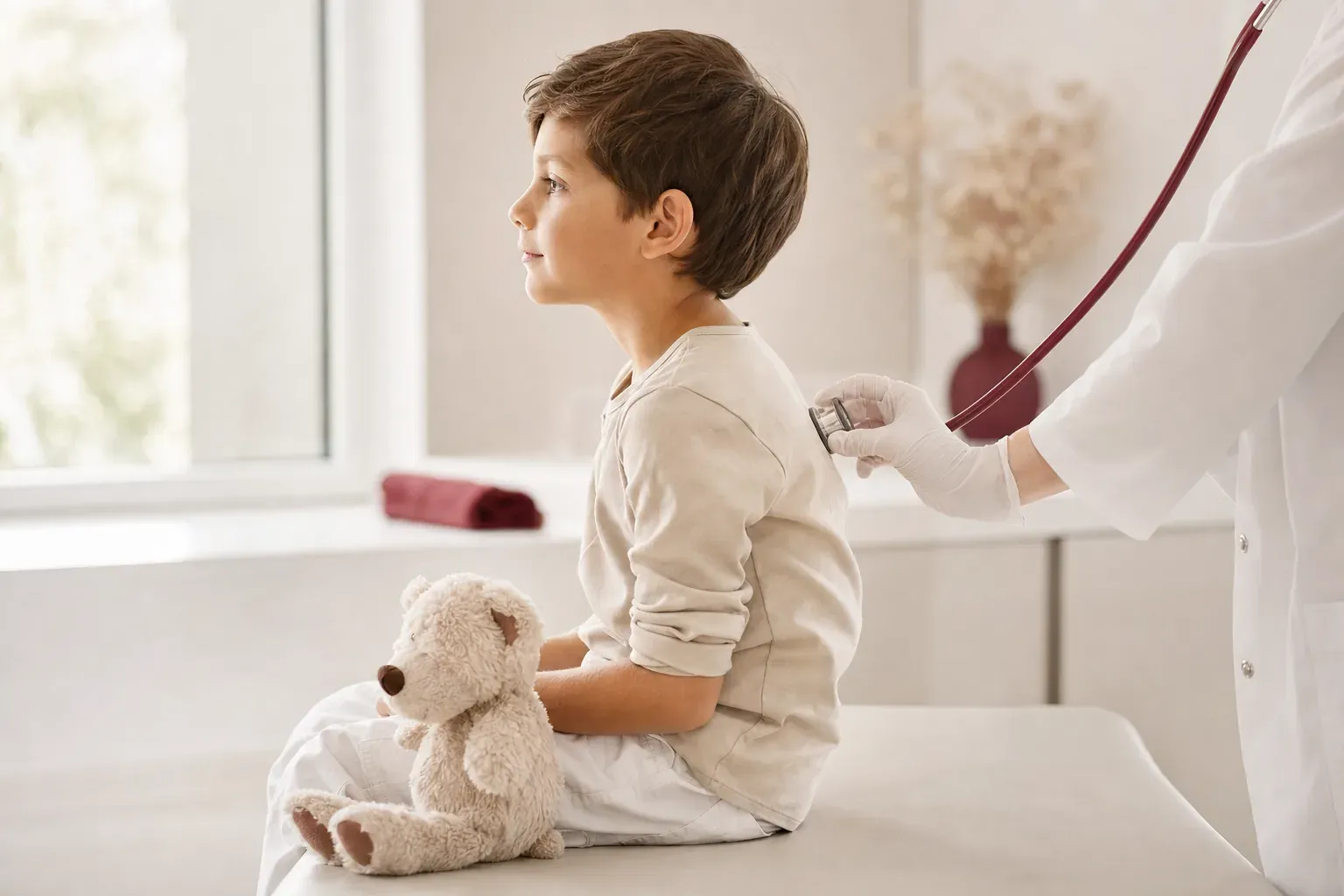
At the appointment, the doctor will ask when the fever started and what you have already given, examine the throat, ears and skin, and listen to the lungs. If needed, the doctor will give you a referral for blood or urine tests, which can be done at the Diagnost-Lab laboratory at 32 Sobornosti St (4th floor).
A Viva Clinic pediatrician in Slavuta sees children from birth to 18 at 27a Sobornosti St or 3 Danyla Halytskoho St (the exact address is confirmed when you book) and can also examine your child at home. You can book by phone or on Viber. If you have signed a declaration for your child with a Viva Clinic pediatrician, checkups and treatment by the pediatrician, basic lab tests and an ECG are free for your child. Without a declaration, a consultation with the pediatrician is paid.
When to call an ambulance or see a doctor urgently
Call an ambulance on 103 if:
- your baby is under 3 months old and has a temperature of 38 °C or higher;
- a rash appears that does not fade when you press on it with a finger or the bottom of a clear glass;
- your child is breathing with difficulty, fast or noisily, or the skin between the ribs is sucked in;
- the lips have turned blue, or the skin has become very pale, gray or blotchy;
- your child has a seizure;
- your child is very drowsy or floppy, hard to wake, or not responding to you as usual;
- your child cannot bend their head to bring the chin to the chest, light hurts their eyes, or a baby’s soft spot is bulging.
See a doctor the same day if:
- your baby is 3 to 6 months old and has a temperature of 39 °C or higher;
- your child refuses to drink or has vomited several times;
- there are signs of dehydration: dry lips and tongue, crying without tears, peeing much less than usual, or a sunken soft spot on a baby’s head;
- your child has ear, throat or tummy pain, or it hurts to pee;
- the fever has lasted more than three days.
If you notice any sign from the first list, call 103 straight away, even if you have already arranged a home visit from the pediatrician.
Questions and answers
Can I bathe my child when they have a fever?
Yes, if your child feels well enough. A short shower or bath in warm water is fine; dry your child straight away and dress them in light clothes. A cool bath to bring the temperature down is not needed, because it only makes your child shiver.
What should I do if my child has a seizure with a fever?
Call an ambulance on 103. Lay your child on their side on a flat, safe surface, move hard or sharp objects out of the way, do not put anything in their mouth and do not hold them down. Note how long the seizure lasts, as the doctor will need to know.
Does my child need antibiotics for a temperature of 39 °C?
No, not if the cause is a virus: antibiotics do not work against viruses and do not lower a temperature. A doctor prescribes them after an examination when there are signs of a bacterial infection, such as pneumonia or a urinary tract infection. Do not give your child antibiotics left over from a previous illness.
Why doesn't the temperature come down after fever medicine?
Fever medicine often lowers the temperature only partly or for a short time, and that happens even with an ordinary cold. It is given to make your child more comfortable, so do not give the next dose sooner than the leaflet allows. If your child stays floppy or drowsy, have a doctor see them the same day.