Varicose veins: what they are, early signs and treatment
Varicose veins are enlarged leg veins that develop when the valves inside them weaken and blood pools. The first signs are usually heavy, swollen legs in the evening, spider veins and night cramps, and later twisted veins become visible under the skin. Treatment starts with a vein ultrasound, and based on the results a vascular surgeon chooses compression, a minimally invasive procedure or surgery.

Published Updated 4 min read
Blood from the legs travels up to the heart against gravity, and valves inside the veins stop it from flowing back down. When the valves no longer close tightly, blood pools in the legs, pressure in the veins rises and the vein walls slowly stretch. This is how varicose veins develop. The process takes years, and at first it is easy to mistake for ordinary tired legs.
How to recognize varicose veins early
The first signs of varicose veins are usually noticed in the evening or after standing for a long time:
- heavy, tired or aching legs at the end of the day;
- swollen ankles and marks from sock elastic;
- spider veins on the thighs and shins;
- night cramps in the calves;
- itching or burning along the veins;
- veins that become more visible and bulge after long periods of standing.
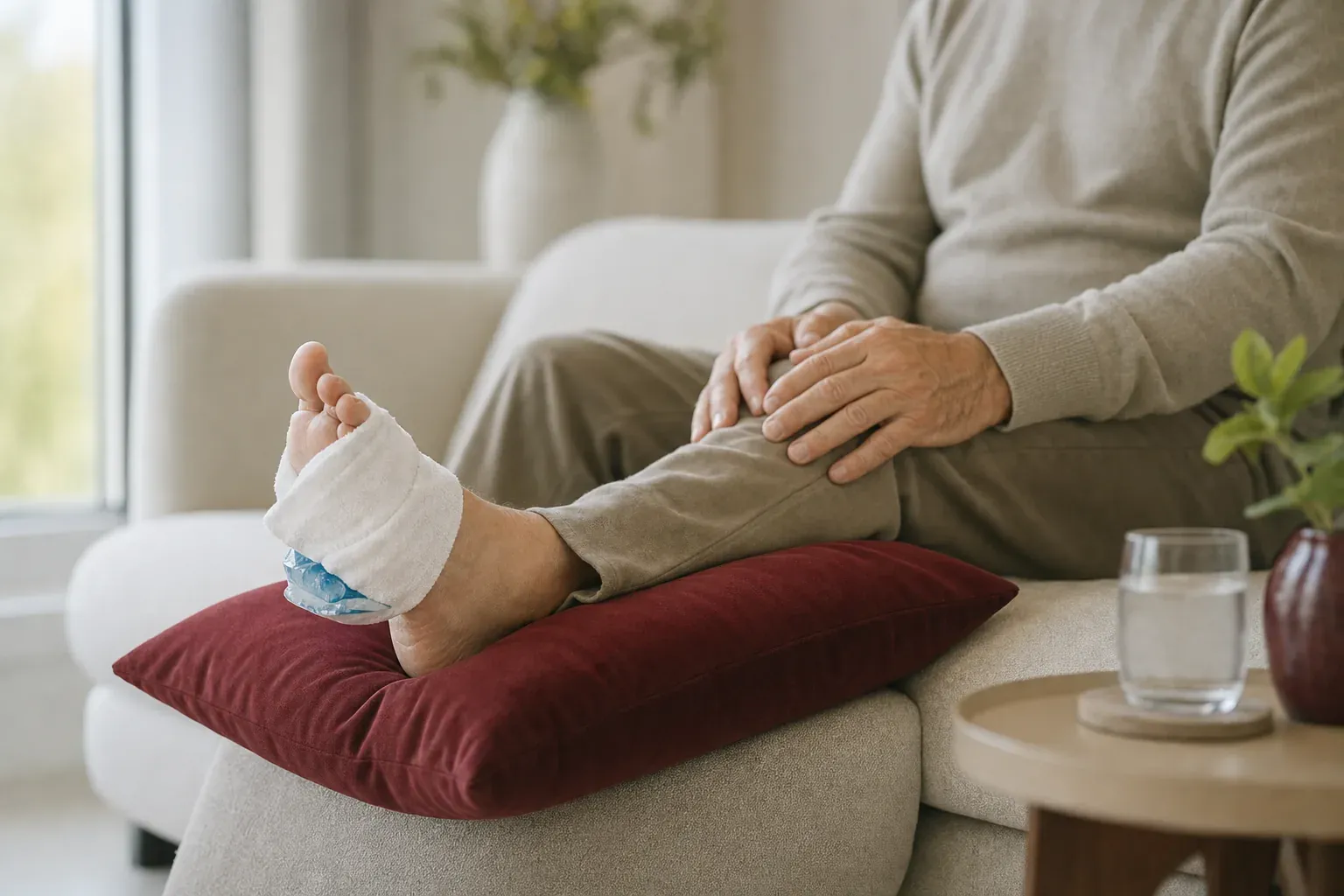
These feelings usually ease after resting with your legs raised. Without treatment, the skin on the lower legs can darken and harden over the years, and in advanced cases sores appear that are slow to heal.
Spider veins on their own do not mean you have venous disease, and sometimes they are only a cosmetic issue. But they can also be the first sign that deeper veins are not working well, so it is worth having an ultrasound.
Who is at higher risk
Varicose veins are more common in people whose parents or other close relatives have them. Other risk factors include:
- a job that involves standing or sitting for long periods, such as shop work or driving;
- several pregnancies;
- excess weight;
- too little movement during the day;
- age, because vein walls weaken over the years.
Women are affected more often than men, partly because of hormones and pregnancy.
Why treatment starts with a vein ultrasound
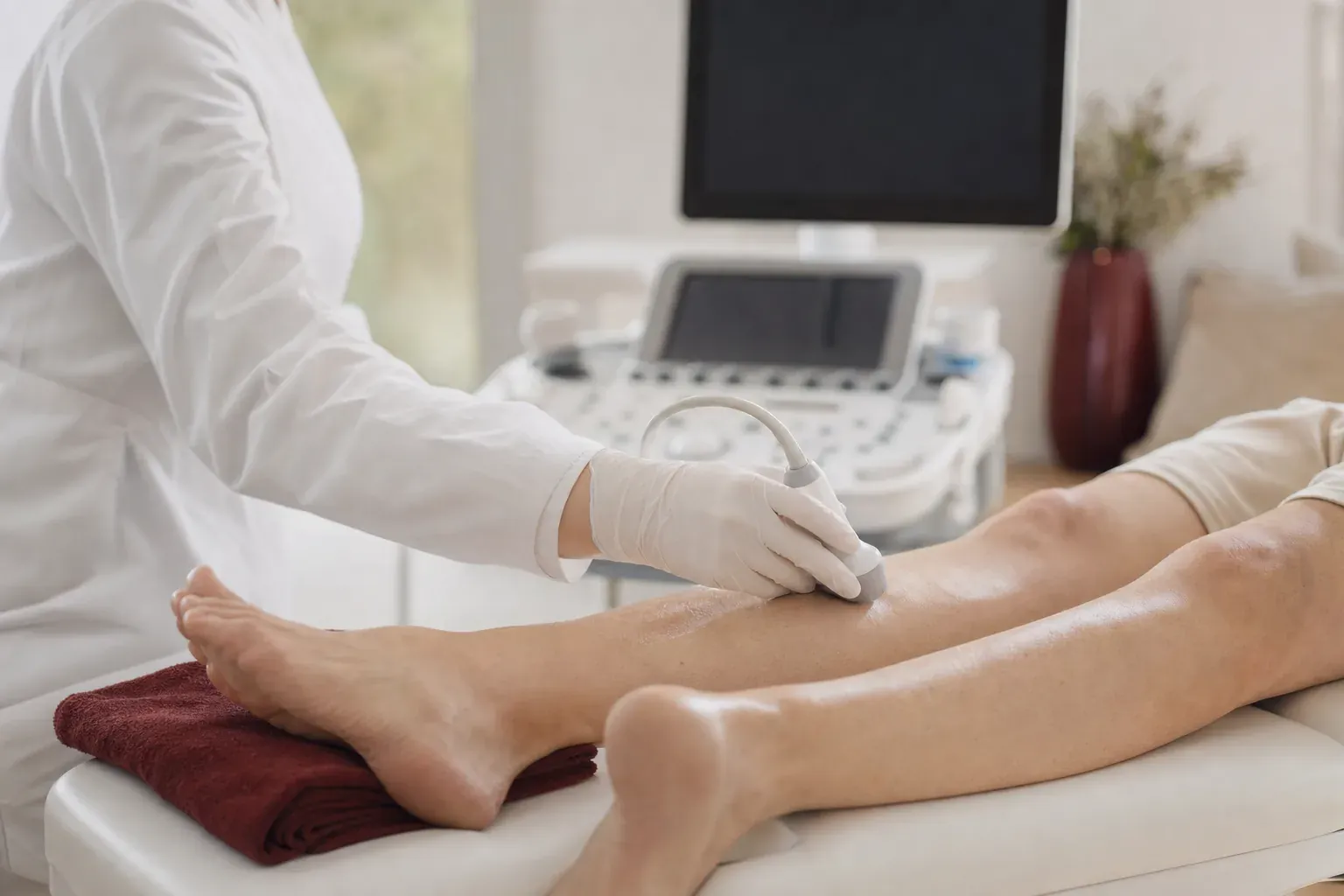
What you see on the skin does not always show where the problem is. Twisted veins under the skin are often caused by a fault in a larger vein that cannot be seen from the outside. Spider veins sometimes come with the same hidden problem. A vein ultrasound with color Doppler (also called duplex scanning) shows how the valves work, which way the blood flows and whether there are any clots. Without this test, the doctor cannot choose a treatment method.
A Viva Clinic vascular surgeon performs a vein ultrasound with color Doppler after the exam. If needed, the doctor orders blood tests (complete blood count, metabolic panel, lipid panel, coagulation panel), a urine test and an ECG. You can have the tests done at the clinic’s own Diagnost-Lab laboratory at 32 Sobornosti St.
How varicose veins are treated
The method depends on which veins are affected and how badly. In general, the options are:
- compression stockings: stockings or knee-highs of the right class reduce swelling and heaviness;
- medicines prescribed by a doctor to ease symptoms;
- sclerotherapy: a solution is injected into a small vein, which then seals and gradually fades;
- endovenous laser ablation (EVLA): a laser closes the affected vein from the inside through a small puncture;
- surgery, when minimally invasive methods are not suitable.
Simple habits help at home: walking more, taking breaks from sitting or standing at work, resting with your legs raised and watching your weight. They ease heaviness and swelling, but they do not make enlarged veins go away.
At Viva Clinic, varicose veins are treated on an outpatient basis, including with a laser. Laser treatment does not suit every vein, so the doctor decides after a vein ultrasound. If this method is not right for you, the doctor will explain other options. To learn how the procedure and recovery go, read the article on laser treatment for varicose veins.
You can book a vascular surgeon consultation at Viva Clinic by phone or on Viber. Appointments take place at 27a Sobornosti St or 3 Danyla Halytskoho St, and the exact address is confirmed when you book. The consultation with a vascular surgeon is paid. Patients come to Slavuta for varicose vein treatment from Netishyn, Shepetivka, Khmelnytskyi, the Khmelnytskyi and Rivne regions and from all over Ukraine.
When you need urgent help
Varicose veins raise the risk of blood clots. See a doctor the same day if one leg suddenly swells and hurts, especially in the calf, or if a vein becomes hard, red and painful to touch. These can be signs of a clot in the vein.
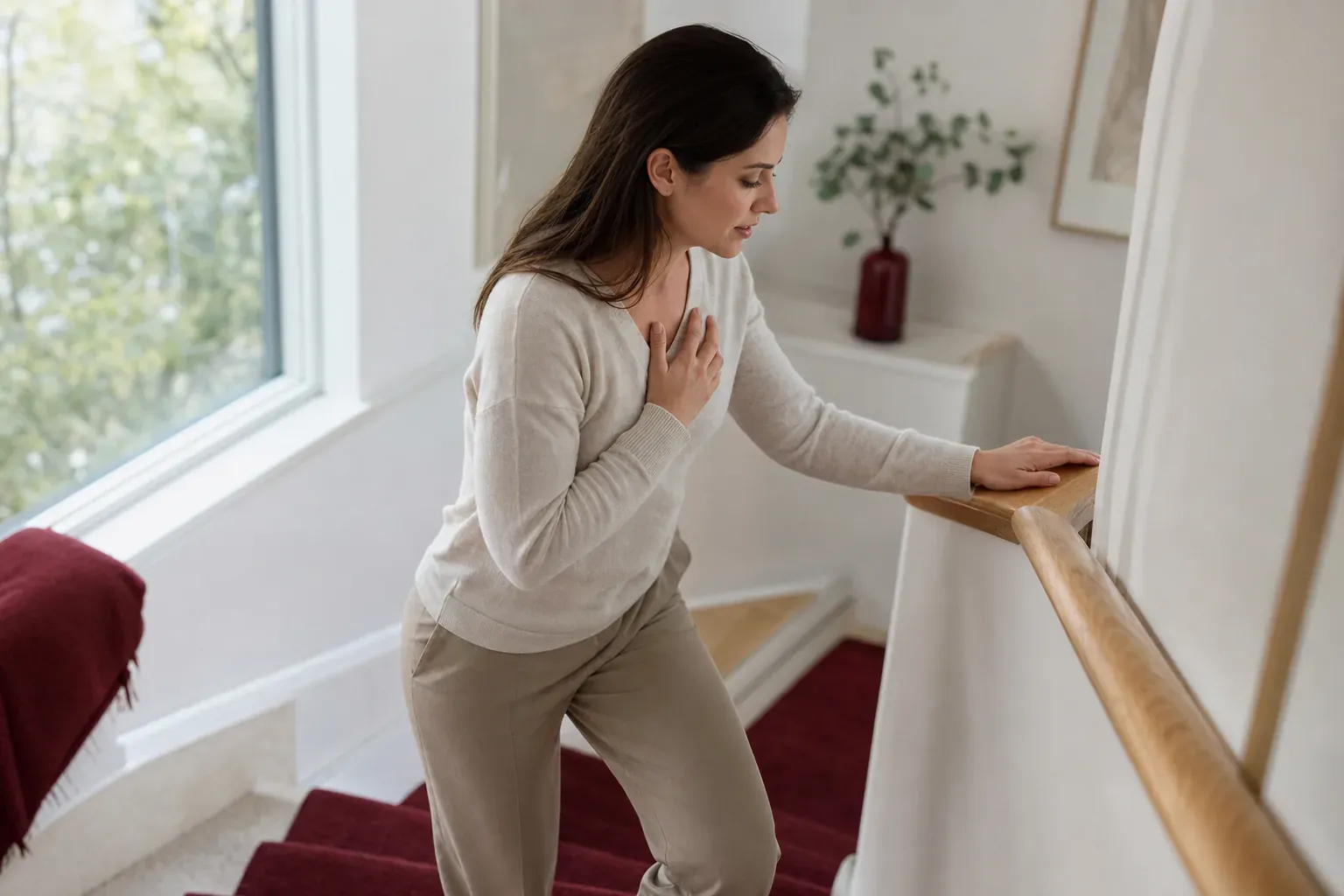
Call an ambulance on 103 if you suddenly develop shortness of breath, chest pain or cough up blood: this can happen when a clot breaks off and travels to the lungs. You also need an ambulance if a varicose vein bleeds. While you wait, lie down, raise your leg and press firmly on the wound with a clean cloth.
Questions and answers
Can varicose veins be treated without surgery?
Often you can avoid traditional surgery with incisions. An affected vein can be closed with a laser through a puncture, and small veins can be sealed with sclerotherapy. Compression and prescribed medicines only relieve symptoms. The doctor decides after a vein ultrasound whether a minimally invasive method suits you.
Can I use a sauna if I have varicose veins?
It is better to limit it. Heat widens the veins and makes swelling worse, so hot baths, saunas and steam rooms can make you feel worse with varicose veins. If you do not want to give up the habit, talk to a vascular surgeon first.
Does everyone with varicose veins need compression stockings?
No. Compression is prescribed for a medical reason, and the doctor chooses the compression class. In some arterial diseases of the legs compression is not allowed, and badly fitted stockings squeeze the leg and hinder blood flow. So it is best to buy them after an exam and a vein ultrasound.
Can I exercise with varicose veins?
Yes, and movement actually helps. When you walk, swim or cycle, your calf muscles push blood upward. Heavy lifting and exercises with long periods of straining are best limited. A vascular surgeon will tell you what kind of activity suits you.