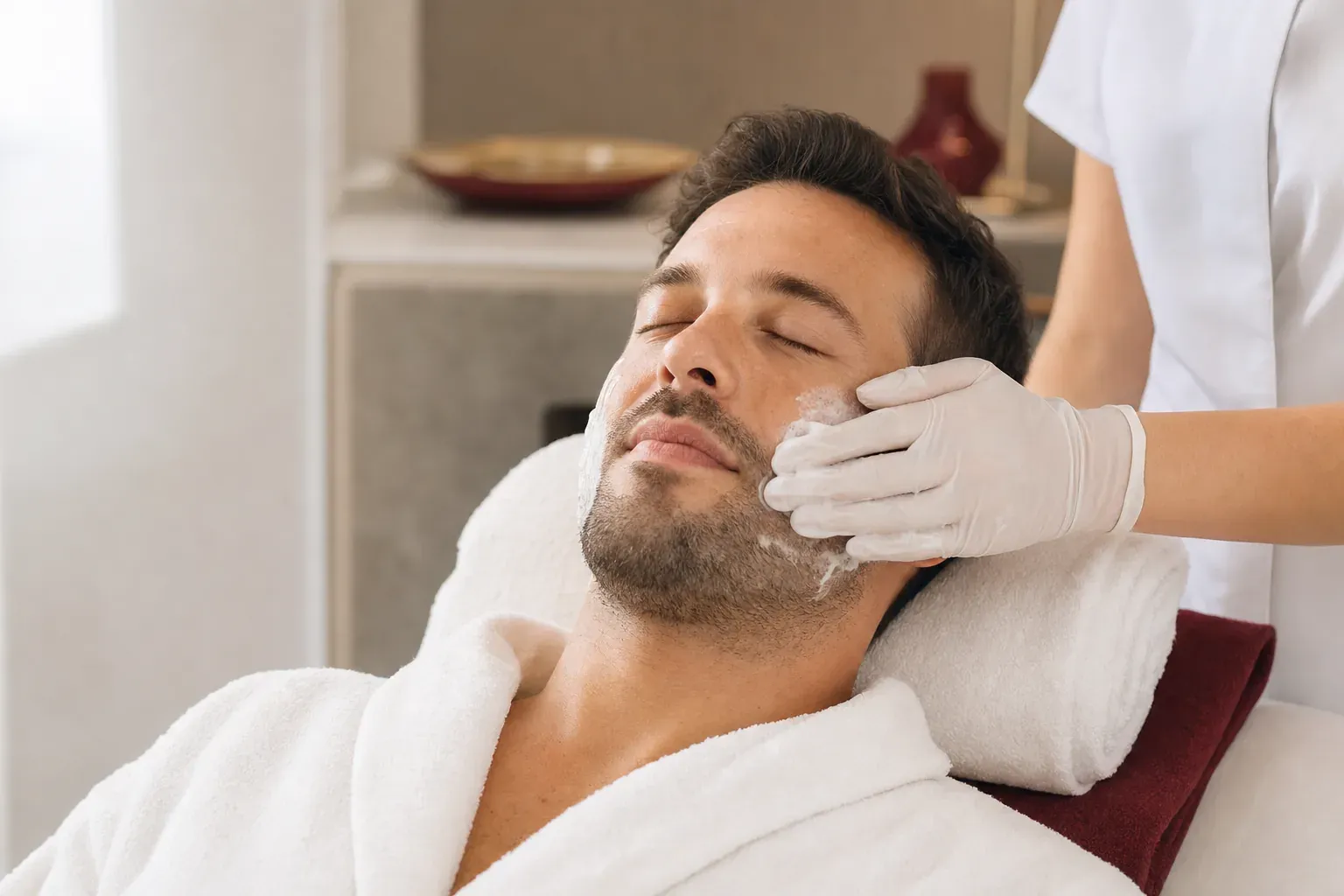
Facial care at a cosmetologist: where to start and how often to go
Facial care at a cosmetologist's starts with a skin check: the specialist assesses your skin type and condition, asks about allergies and medication and suggests a treatment plan. How often you come depends on your skin and the treatment; manual cleansing, for example, is usually done no more than once a month. If you have inflamed breakouts or a mole has changed, see a dermatologist first.

Published Updated 4 min read

Where to start with professional skin care
You usually don’t need a separate consultation: the first classic cosmetology treatment starts with a skin check. If you don’t know which treatment to choose, book a consultation first.
The cosmetologist assesses your skin type and condition: oiliness, dryness or dehydration, pores, breakouts, dark spots and broken capillaries. They ask what bothers you, whether you’re allergic to cosmetics or medicines and what medication you take. Also mention if you are pregnant or breastfeeding.
Then the specialist suggests one treatment or a combination and explains how often to repeat them. Discuss a plan for several months ahead right away, because some treatments, such as peels, depend on the season.
Which facial care treatments are available and how to plan them by season
Classic cosmetology includes cleansing, peels, masks and facial massage. Viva Clinic offers four types of facial cleansing: ultrasonic, manual, non-traumatic and hydropeeling. Superficial and medium-depth PEEL-EXPERT peels are chosen for sensitive, oily or breakout-prone skin, pigmentation and post-acne marks. Masks hydrate and soften the skin; an alginate mask, for example, is made from substances extracted from brown seaweed. The cosmetologist chooses restorative masks for your skin’s condition and finishes a manual cleansing with a soothing mask. Massage boosts blood flow and tones the muscles, so your skin looks fresher afterward. Methods where a device acts on the skin, such as RF lifting or muscle stimulation, are part of device-based cosmetology.
A rough plan for the year might look like this:
- in autumn and winter, when the sun is gentler, peels are done, including for pigmentation, because the skin is more sensitive to UV light afterward;
- medium-depth peels aren’t done in summer, and superficial peels in the warm season are possible only if your doctor agrees and you apply SPF every day;
- cleansing, masks and massage can be done all year round, and ultrasonic cleansing is convenient in summer because it usually leaves no noticeable redness;
- don’t schedule manual cleansing right before a celebration, because your skin stays red for a while afterward; for care before an event, there are SOS treatments.
How often to see a cosmetologist
Your cosmetologist advises how often to come after examining you, because it depends on your skin and the treatment. Manual cleansing is usually done no more than once a month so your skin has time to recover. Oily skin prone to breakouts needs cleansing more often than normal or dry skin. Superficial peels are done as a course, one to four weeks apart depending on the product, with a break after the course.
It’s best not to repeat treatments more often than the specialist recommends. Over-dried, irritated skin tolerates the sun and further treatments less well.
A treatment is postponed if you have active herpes (a cold sore), wounds, acute inflammation or sunburn on your face, if your skin is freshly tanned or if you have a cold.
Home care and daily SPF
Between visits, your skin’s condition depends on how you care for it at home. After a treatment, the cosmetologist recommends products for your skin type. The treatment room uses professional skincare that the clinic buys from official suppliers, and the clinic also sells home-care products online.
Apply SPF every day, even in autumn, in winter and on cloudy days. After cleansing, and especially after peels, the skin is more sensitive to UV light, and without sun protection dark spots appear on it more easily.
Don’t start new products with acids or retinol on your own right before or right after treatments. Ask your cosmetologist first when you can add them to your routine.
When to see a dermatologist first
Skin diseases are treated by a dermatologist, and the cosmetologist’s treatments complement that care. See a dermatologist first if:
- you have many inflamed, painful or deep breakouts on your face;
- a rash, itching or flaking doesn’t go away;
- your face is constantly red or burning;
- a mole has changed color, shape or size, itches or bleeds, or a new growth has appeared that worries you.
A Viva Clinic dermatologist sees patients in Slavuta at 27a Sobornosti St or 3 Danyla Halytskoho St; the exact address is confirmed when you book. When cleansing or a peel is part of a skin treatment plan, a cosmetic doctor prescribes it. They take into account the treatment prescribed by the dermatologist and choose procedures that won’t interfere with it.
Classic cosmetology at Viva Clinic is offered at the aesthetic medicine center at 16b/3 Kuzovkova St in Slavuta. You can book by phone, on Viber or Telegram.
Questions and answers
What's the difference between a cosmetologist and a dermatologist?
A dermatologist diagnoses and treats diseases of the skin, hair and nails. A cosmetologist cares for the skin with treatments such as cleansing, peels, masks and massage. When there's a skin condition, such as inflammatory acne, the dermatologist prescribes treatment, and the cosmetologist's procedures complement it.
How should I prepare for my first visit to a cosmetologist?
No special preparation is needed. Think about which medications you take, what you're allergic to and which products you use at home. For a few days before the visit, avoid tanning and don't try new products. You don't need to come without makeup, as the cosmetologist will remove it.
Can I have several treatments in one visit?
Yes, if your cosmetologist recommends it. For example, manual cleansing is combined with a peel or facial massage. The specialist decides what to combine after examining your skin, based on its condition and how much time it needs to recover.
Do I need to see a cosmetologist if my skin has no problems?
Not necessarily. If your skin doesn't bother you, the right home care and daily SPF are often enough. One visit can still be useful: the cosmetologist will identify your skin type and recommend products, and then you can decide whether you want regular treatments.