Dark spots on the face: when a peel can help
A chemical peel can lighten dark spots on the face: marks left after breakouts, solar lentigines and freckles. Spots fade gradually over a course of treatments and darken again without daily SPF, and melasma tends to come back even after successful treatment. Show any new spot that is growing or changing color or shape to a dermatologist first.

Published Updated 5 min read
Types of dark spots on the face
Dark spots appear where the skin produces too much melanin, the pigment that gives it color. Four types are most common on the face.
Freckles are small light-brown dots that often appear in childhood in people with fair skin. They darken in summer and fade in winter. Freckles themselves are harmless.
Solar lentigines, also called age spots, are flat brown spots with clear edges. They appear over the years on areas that often get sun: the cheeks, forehead, hands and shoulders. They don’t fade in winter.
Melasma, also known as chloasma, shows up as symmetrical brown patches on the cheeks, forehead or above the upper lip. It’s more common in women. It’s triggered by sun, heat and hormonal changes, including pregnancy and hormonal contraceptives.
Post-inflammatory marks stay where there were pimples, scratches, burns or irritation. Post-acne marks belong here too. These spots fade on their own, but it usually takes months, and years if the pigment lies deep in the skin.
When to show a spot to a dermatologist first
Moles and other skin growths can look like dark spots, and a peel doesn’t remove them. Show a spot to a dermatologist before any cosmetic treatment if it:
- appeared recently and is growing;
- is changing color, shape or size;
- has uneven edges or several shades;
- is raised, itches, bleeds or crusts over.
At Viva Clinic, a dermatologist examines such growths and, if needed, performs dermatoscopy. This is an examination through a dermatoscope, a device with magnification and a light, which helps tell benign growths from malignant ones. If necessary, you can also see an oncologist at the clinic. Visits to a dermatologist at Viva Clinic are by appointment, with no waiting in line.
How a chemical peel helps with pigmentation
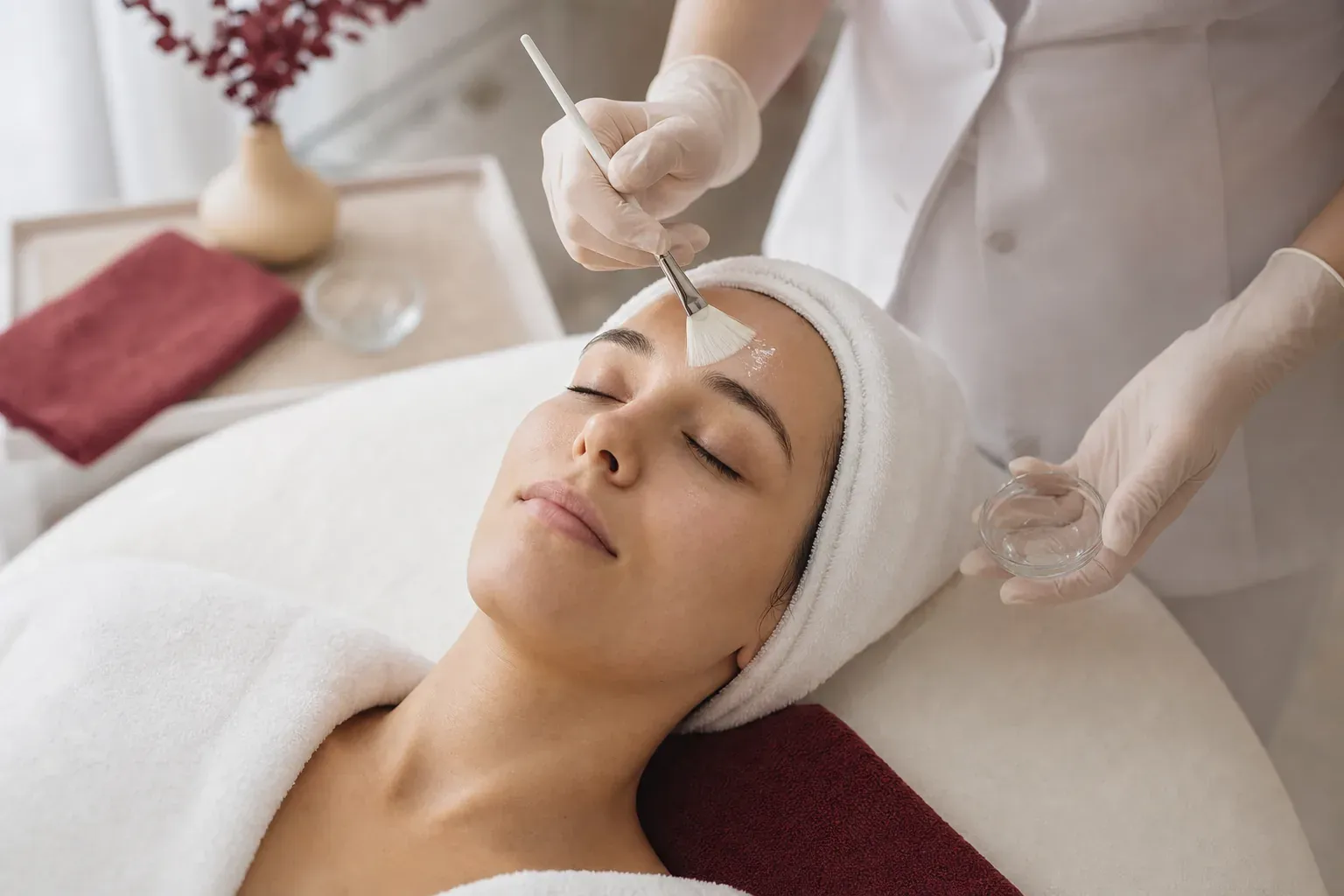
A chemical peel removes dead skin cells with an acid solution. The pigment that has built up in the upper layers of the skin gradually comes away with them, so the spots fade. The deeper the pigment lies, the harder it is to lighten.
The Viva Clinic aesthetic medicine center offers superficial and medium-depth PEEL-EXPERT peels. Superficial peels act in the upper layers of the skin. Medium-depth peels go deeper, so the skin flakes more visibly afterward and takes longer to recover. For dark spots and post-acne marks, a brightening peel is used, and the cosmetic doctor decides which one suits you after an examination, taking into account the type of spots and how sensitive your skin is.
Superficial peels are done as a course, one to four weeks apart depending on the product. After a medium-depth peel, the skin takes one to two weeks to heal. Some spots fade noticeably during the course while others change little, depending on their type and depth.
With melasma, the peel is chosen with particular care. Irritation and inflammation can make these patches darker, so a peel that’s too strong can do harm. Melasma often needs long-term treatment prescribed by a dermatologist, and peels are only one part of it. Our article about facial peels explains how peels work in general and how often you can have them.
Why peels for pigmentation are done in autumn and winter
After a peel, the skin is more sensitive to UV light, and new dark spots appear on it more easily. That’s why most peels are planned for autumn and winter, when the sun is gentler. Medium-depth peels aren’t done in summer. Some superficial peels can be done in the warm season if your doctor agrees and you apply SPF every day.
You need sun protection both during the course and after it. Apply SPF every day, even on cloudy days and in winter, and reapply it during the day when you’re in the sun. A few days of tanning at the seaside can bring back spots that faded over the whole winter. Melasma darkens with sun and heat, so with melasma you need to protect your skin all year round.
Who shouldn’t have a peel and how to prepare
A peel is postponed if:
- you have active herpes (a cold sore) on your face;
- there are wounds, scratches, inflammation or sunburn in the area;
- your skin is freshly tanned;
- a skin condition has flared up;
- you’re allergic to any ingredient of the product;
- you have a cold or a fever.
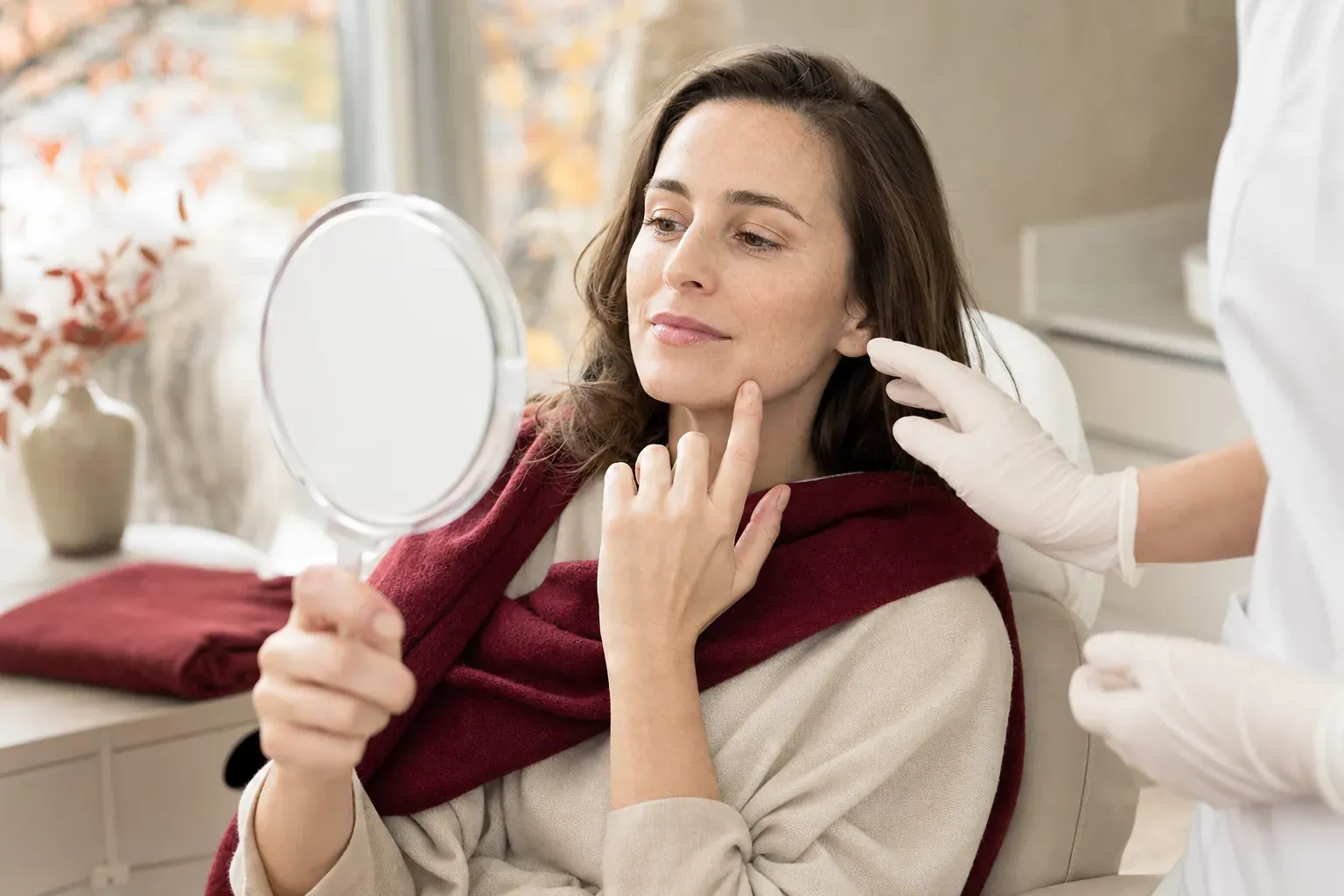
Before the procedure, a cosmetic doctor examines your skin and checks for contraindications. Tell them if you are pregnant or breastfeeding, have allergies or take any medication. Some medicines, including acne medication, make the skin more sensitive, and medium-depth peels are usually not done while you’re taking isotretinoin or for six months after the course. Also mention home products with acids or retinol and any cleansing, injections or another peel you’ve had recently, since you need a break between procedures. If the spots appeared during pregnancy or while you were taking hormonal medication, mention that too.
For a few days after a superficial peel, your skin may look pink, feel tight and flake a little. Don’t pick at the flakes, and put off scrubs and home acid products until the specialist says you can. Contact a doctor the same day if you get blisters, weeping skin or crusts, or if swelling and pain get worse. If your lips, tongue or face swell and breathing becomes difficult, call an ambulance on 103 right away.
Peels are done at the Viva Clinic aesthetic medicine center at 16b/3 Kuzovkova St in Slavuta. You can book by phone, on Viber or Telegram.
Questions and answers
How many peels does it take for dark spots to fade?
Usually several, since peels for pigmentation are done as a course. A cosmetic doctor decides the exact number after examining your skin: it depends on the type of spots, how long you've had them and how your skin responds. How much the spots will fade can't be predicted, and results vary from person to person.
Can a peel remove freckles?
It can lighten them, although freckles usually darken again in the sun. They're harmless, so whether to have a peel is up to you and your cosmetic doctor. To make the result last longer, apply SPF every day, especially in spring and summer.
Does a chemical peel hurt?
There's usually no severe pain. During the procedure you feel tingling or burning that soon passes, and the sensations are stronger with a medium-depth peel. The specialist keeps track of how long the solution stays on. If the burning becomes sharp, say so right away.
Can I lighten dark spots at home?
Only with gentle products your cosmetic doctor recommends, together with daily SPF. Strong acids or whitening creams chosen on your own can irritate or burn the skin, and then new dark spots appear. Skin prone to melasma reacts this way especially easily.