Is laser hair removal safe and who should avoid it
Laser hair removal acts on the hair follicles in the skin, and the laser light doesn't reach the internal organs. Burns and dark spots can happen if the settings are wrong, the skin is tanned or the doctor didn't know about a contraindication. That's why, before the course, a cosmetic doctor examines your skin and hair, asks about illnesses and medication and sets the laser parameters.

Published Updated 4 min read
How the laser acts on the skin
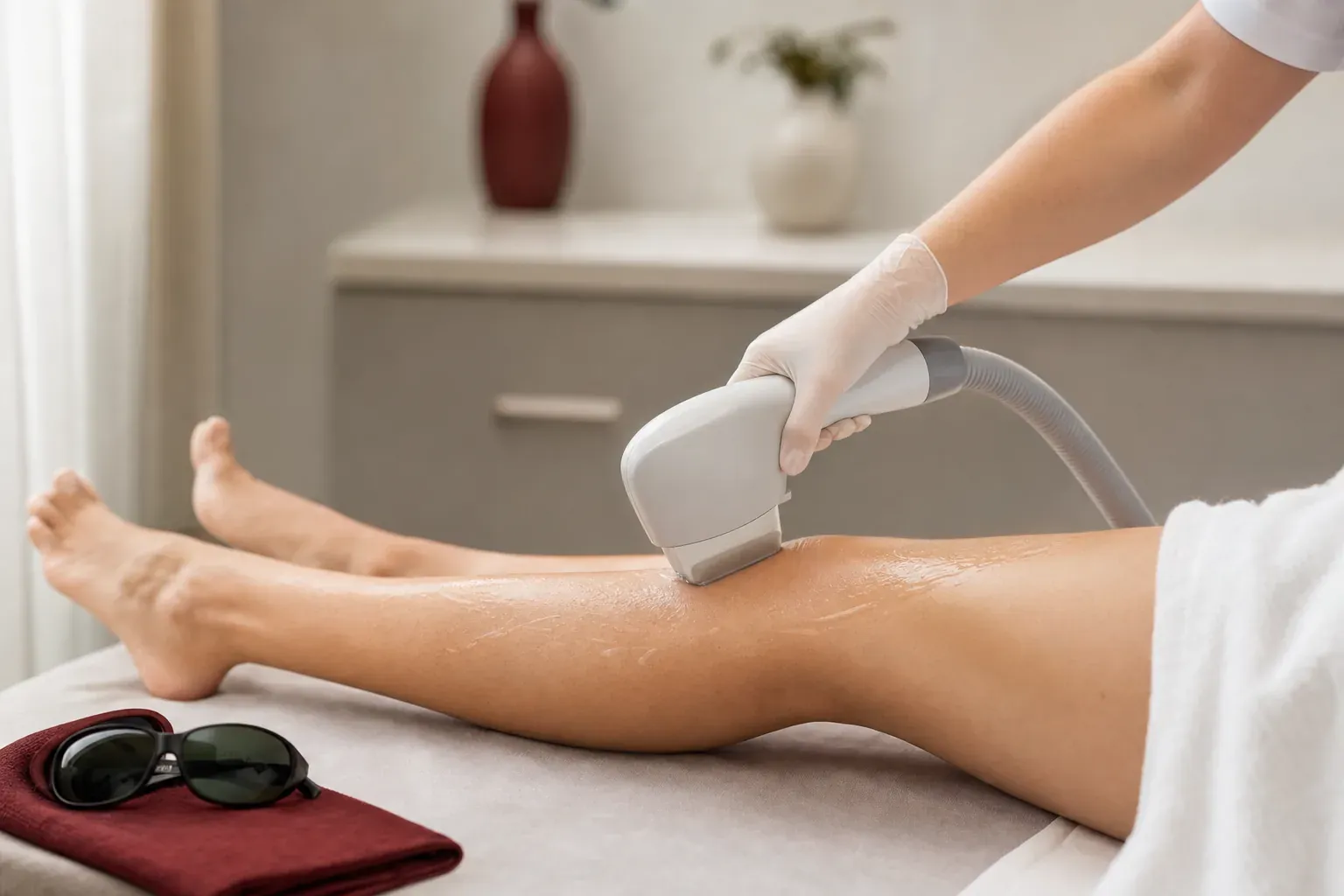
During a pulse, laser light is absorbed by the melanin in the hair. The energy turns into heat, which damages the follicle, the root the hair grows from. The light penetrates only a few millimeters into the skin, to the depth where the follicles lie. Laser light is not ionizing radiation, the kind used in X-rays, for example.
Laser light poses the greatest risk to the eyes, so you wear protective glasses at every session. A cooling system that switches on automatically with each pulse protects the skin from overheating. Most people describe the feeling of a pulse as a light tingling, and if you’re sensitive to pain, the skin is numbed beforehand with a cream or spray. At Viva Clinic, hair removal is done with a diode laser with three wavelengths.
Can laser hair removal cause cancer or infertility
There are no grounds to think so. The laser light doesn’t reach the ovaries or any other internal organs, even when the bikini area or belly is treated, because the skin absorbs it. The heat lasts an instant and stays next to the follicle.
The procedure does have contraindications, and they’re checked before the first session. Tell your doctor about any chronic illnesses, and show them any moles or other growths in the treatment area separately. Mention tattoos in the area too: the ink absorbs laser light, and the skin over the tattoo can get burned.
What the real risks are
Complications happen when the skin itself absorbs part of the laser energy. This can occur on tanned skin, with incorrectly set parameters or when medication has made the skin more sensitive to light. The result can be redness and swelling that take a long time to go away, blisters and crusts, and later dark or light spots.
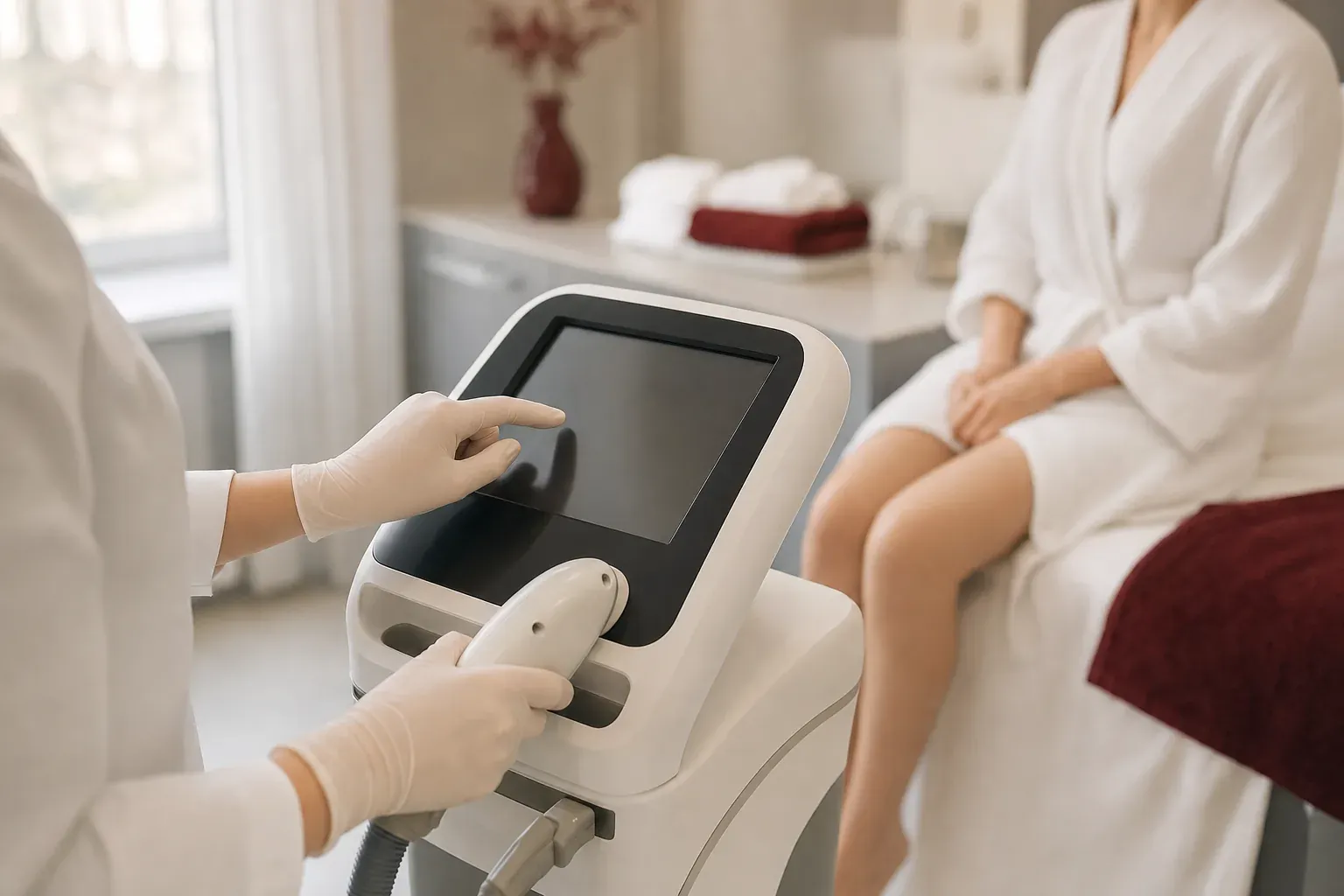
To prevent this, before your first session at Viva Clinic a certified cosmetic doctor assesses your skin, identifies your hair type, checks for contraindications and sets the laser parameters. The doctor also asks whether you’ve tanned recently and what medication you take. The device settings depend on these answers, so mention a fresh tan or new medication even if it seems minor.
Spatulas and gel are single-use, the handpiece is wrapped in protective film, and work surfaces are sterilized regularly.
Mild redness right after a session is common and usually fades on its own. If you get blisters, crusts or severe pain, don’t pop the blisters, and contact your doctor the same day. If your face or lips swell and breathing becomes difficult after a numbing cream, call an ambulance on 103.
Contraindications to laser hair removal
The procedure is not done, for example, for people with cancer or decompensated diabetes. It doesn’t work on blonde or gray hair: there’s almost no pigment in it, so the laser has nothing to act on.
Hair removal is postponed if:
- you’re pregnant;
- you have a fresh tan;
- a skin condition has flared up or there’s inflammation in the treatment area;
- you have a cold;
- there are scratches or wounds in the treatment area.
Tell your doctor about any medication separately. Some antibiotics, acne medicines and other drugs make the skin more sensitive to light, and this determines whether the procedure can be done now. Don’t stop medication you’ve been prescribed on your own. If you have a rash or skin inflammation that won’t go away, see a dermatologist first.
Can you have laser hair removal in summer
Yes, if your skin isn’t tanned and you’re prepared not to tan for 2 weeks before a session and for up to 2 weeks after it. When you go outside, apply sunscreen with SPF 35 or higher to the treated area. Underarms and the bikini area are covered by clothing in summer, so they’re easier to protect from the sun. The face, arms and legs tan faster, so it’s easier to start a course on these areas in autumn, when it’s simpler not to tan between sessions. If your course started in spring, you can continue it in summer on the same terms: no tanning and sun protection for the treated skin.
Laser hair removal at Viva Clinic is done at the aesthetic medicine center at 16b/3 Kuzovkova St in Slavuta, after a consultation with a cosmetic doctor. To learn how a course works and how many sessions are usually needed, read the article how laser hair removal works. You can book by phone, on Viber or Telegram.
Questions and answers
Can laser hair removal be done on the face?
Yes. Viva Clinic does laser hair removal on the face, including above the upper lip. During the session you wear protective glasses, and the doctor sets the laser parameters for your skin and hair. A session on the upper lip takes about 10 minutes.
Can I have laser hair removal if I have diabetes?
Not if your diabetes is decompensated. If it's well controlled, a cosmetic doctor makes the decision at the consultation, so tell them about your treatment and your recent blood sugar levels. Don't change the medication your endocrinologist prescribed on your own.
When can I go to the pool or sauna after laser hair removal?
No sooner than 3 days after the session. For the same 3 days, avoid hot baths, hot showers and massage, and don't apply products with alcohol to the skin. For the first 3 to 5 days, use the skin-recovery products your doctor recommends.