Bikini laser hair removal: how to prepare and how many sessions you need
Bikini laser hair removal, classic or deep, is done as a course: usually up to 10 sessions over 6–12 months, 3 weeks to 2 months apart. For 2 weeks before a session, avoid tanning and don't remove hair with wax or sugaring, and shave the area on the day of the procedure. A cosmetic doctor will tell you at the consultation how many sessions you need.

Published Updated 5 min read

Classic or deep bikini: what gets treated
A classic bikini usually means the area along the underwear line, that is, the hair that shows outside a swimsuit. A deep bikini covers the whole area: the pubic area, the outer labia and the fold between the buttocks. Discuss exactly what to treat in your case with the cosmetic doctor at the consultation.
Hair in the bikini area is usually dark and coarse, and the laser works well on it: the light is absorbed by melanin, the hair’s pigment, and heats the follicle. The skin here is often darker than elsewhere, so the doctor sets the laser parameters carefully. Laser hair removal doesn’t work on blond or gray hair, because it has almost no pigment.
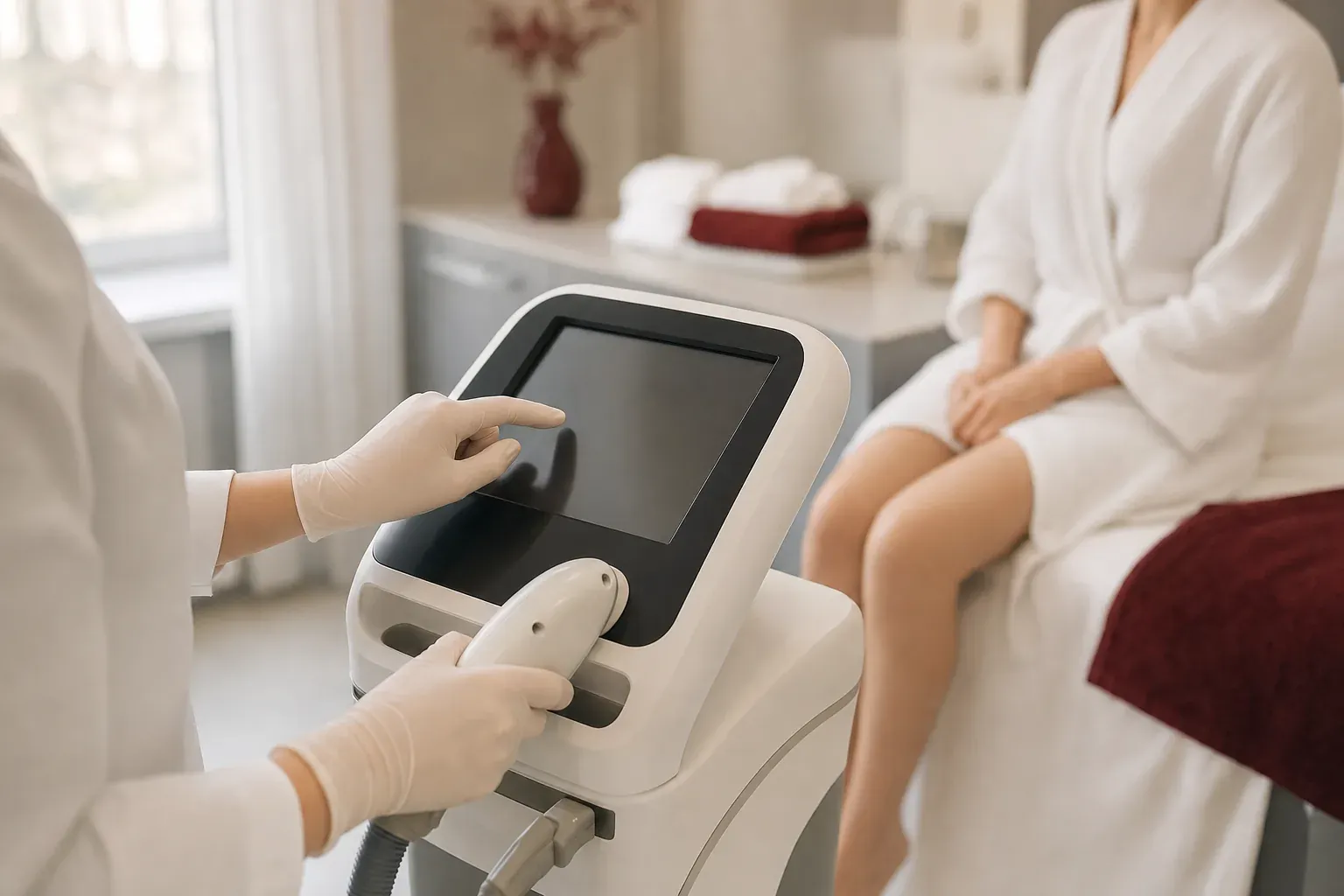
At Viva Clinic, hair removal is done with the D-Las 100 mix diode laser made by the Ukrainian manufacturer Medicalaser. It has three wavelengths, 755, 808 and 1064 nm, and works on different hair types, including ingrown hairs, which often bother people who shave or use sugaring in the bikini area.
How to prepare for bikini laser hair removal
Before your first session, you need a consultation. A certified cosmetic doctor assesses your skin, identifies your hair type, checks for contraindications and sets the laser parameters. If you take any medication or get herpes outbreaks in the bikini area, mention it.
Before each session:
- for 2 weeks, avoid tanning, including tanning beds, and don’t remove hair with wax, sugaring, tweezers or an epilator; shaving is fine;
- at least 2 weeks should pass between your last dose of antibiotics and the session;
- for 3 days, don’t apply products containing alcohol or oil to the area;
- shave the area on the day of the procedure or no earlier than 12 hours before;
- come with clean skin, without deodorant or cosmetics.
Shave carefully to avoid cuts. If there are scratches or abrasions on the skin, the session will have to be postponed.
What a session is like and what you’ll feel
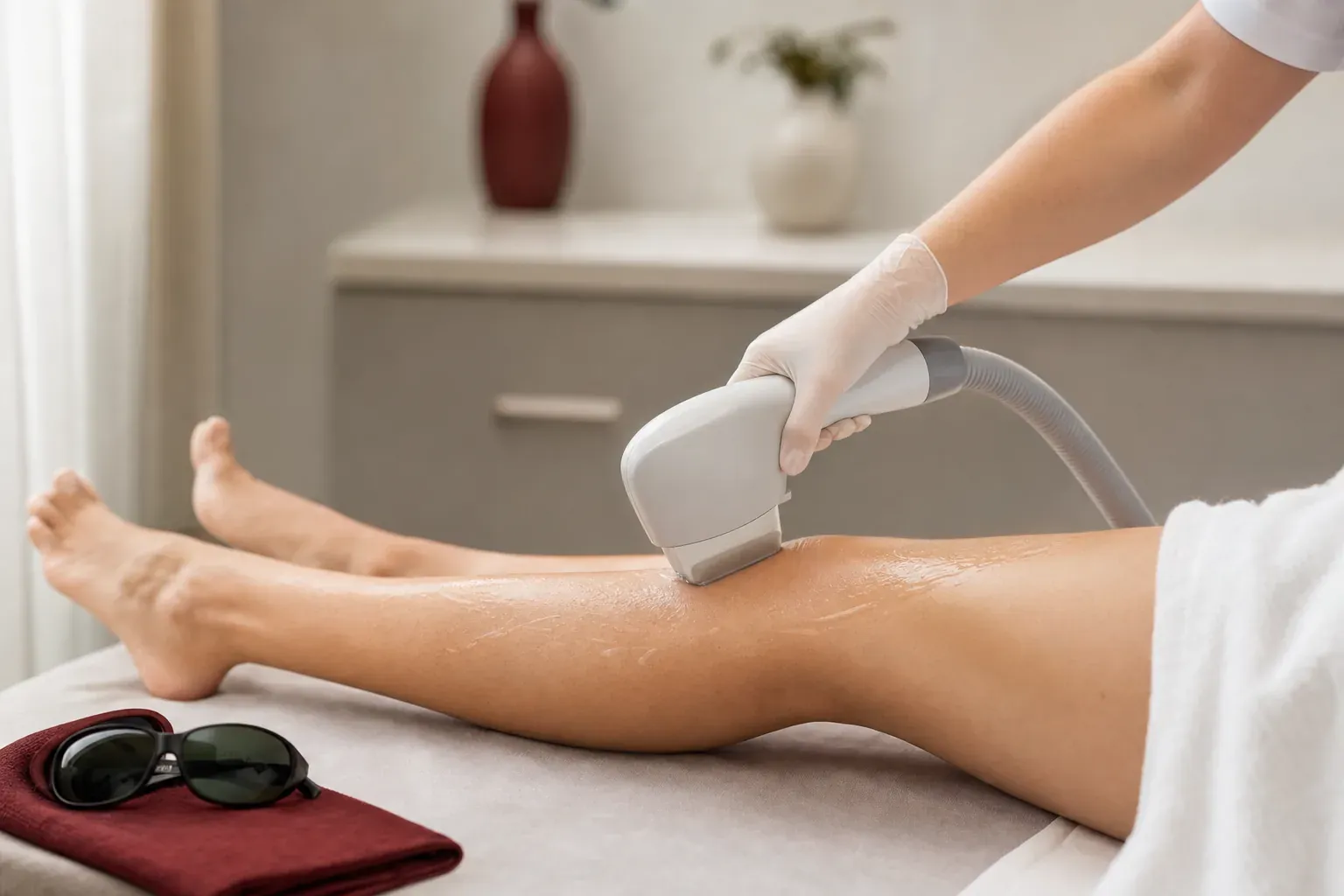
During the session, you wear protective glasses while the doctor moves the laser handpiece over the area. The laser gives short pulses, and cooling switches on automatically with each one. The handpiece’s working surface is cooled to −5 °C, which protects the skin from overheating.
Most people describe the sensation as light tingling. The skin in the bikini area is thin and sensitive, and a deep bikini usually feels more intense than a classic one. If you’re sensitive to pain, say so in advance: the skin will be numbed with a cream or spray before the session.
Spatulas and gel are single-use, the handpiece is wrapped in protective film, and work surfaces are sterilized regularly.
How many laser hair removal sessions the bikini area needs
One session is not enough. Hair grows in cycles, and the laser only works on hairs in the active growth phase. The first session removes roughly 15–30% of the growing hair in the area, and treated hair falls out gradually over 14–20 days. The remaining hairs enter the active phase later and wait for the next session.
Sessions are 3 weeks to 2 months apart. The gap depends on how the hair grows back and gets longer each time, because there’s less hair. A course usually takes several sessions, up to 10, over 6–12 months. It’s best not to interrupt it, so you keep the result. How many sessions you need depends on your hair structure and color, and the doctor will assess this at the consultation.
After a full course, the effect usually lasts 3 to 10 years, depending on your skin. Hormonal changes sometimes trigger new hair growth, so some people later need maintenance sessions or a repeat course, and your doctor will tell you whether you’ll need them. Our article on how laser hair removal works explains in detail why the laser only affects part of the hair at a time.
Aftercare and who shouldn’t have laser hair removal
After the session:
- for the first 3–5 days, use the skin-recovery products your doctor recommends;
- for 3 days, avoid hot baths and showers, saunas, pools and massage, as well as products with alcohol or abrasive particles;
- for 2 days, don’t rub the skin with a washcloth;
- for up to 2 weeks, avoid tanning, and if the treated area will be in the sun, apply SPF 35 or higher.
Mild redness right after a session usually goes away on its own. If you get blisters, crusts or severe pain, don’t pop the blisters and contact your doctor the same day. If your face or lips swell and breathing becomes difficult after the numbing cream, call an ambulance on 103.
Laser hair removal isn’t done if you have cancer, decompensated diabetes or an individual intolerance to the procedure. It should be postponed or done only after a doctor’s consultation:
- during pregnancy;
- if you have a skin condition or inflammation in the treatment area;
- if your skin was tanned less than 2 weeks ago;
- if there are many moles in the treatment area;
- if you have varicose veins or a tendency to keloid scars;
- during a cold, flu or other respiratory infection, or an allergy flare-up;
- if there are burns, abrasions or scratches on the skin.
Our article is laser hair removal safe explains the real risks of the procedure.
Bikini laser hair removal at Viva Clinic is done at the aesthetic medicine center at 16b/3 Kuzovkova St in Slavuta. Clients also come from Netishyn, Shepetivka, Khmelnytskyi, the Khmelnytskyi and Rivne regions and from all over Ukraine. You can book a consultation by phone, on Viber or Telegram.
Questions and answers
Is bikini laser hair removal harmful to the ovaries?
No. The skin absorbs the laser light: it only penetrates a few millimeters, down to the hair follicles, and doesn't reach the ovaries or other internal organs. The heat lasts an instant and stays next to the follicle. The procedure does have contraindications, and your doctor checks them at the consultation.
Can I shave the bikini area between sessions?
Yes, during the course shaving is the only hair removal method to use. Wax, sugaring, tweezers and epilators pull the hair out with the bulb, while the laser needs a hair in the follicle, because the light travels along it to the root. So put off other hair removal methods between sessions.
Does laser hair removal help with ingrown hairs in the bikini area?
Yes, the diode laser works on different hair types, including ingrown hairs. After the course, less hair grows in the area, so there are usually fewer ingrown hairs too. If the skin around an ingrown hair is inflamed, the doctor will check it at the consultation and tell you when you can have a session.
How long does a bikini laser hair removal session take?
Usually up to 20 minutes. Before your first session, also plan time for a consultation: the cosmetic doctor checks your skin and hair, looks for contraindications and sets the laser parameters. If several areas are treated in one visit, the session takes longer.