
How laser hair removal works and how many sessions you need
Laser light is absorbed by the pigment in the hair, turns into heat and destroys the hair follicle, but only one in which the hair is actively growing at that moment. That's why one session isn't enough and hair removal is done as a course. How many sessions you need depends on your hair color and structure, which a cosmetic doctor assesses at the consultation.

Published Updated 4 min read
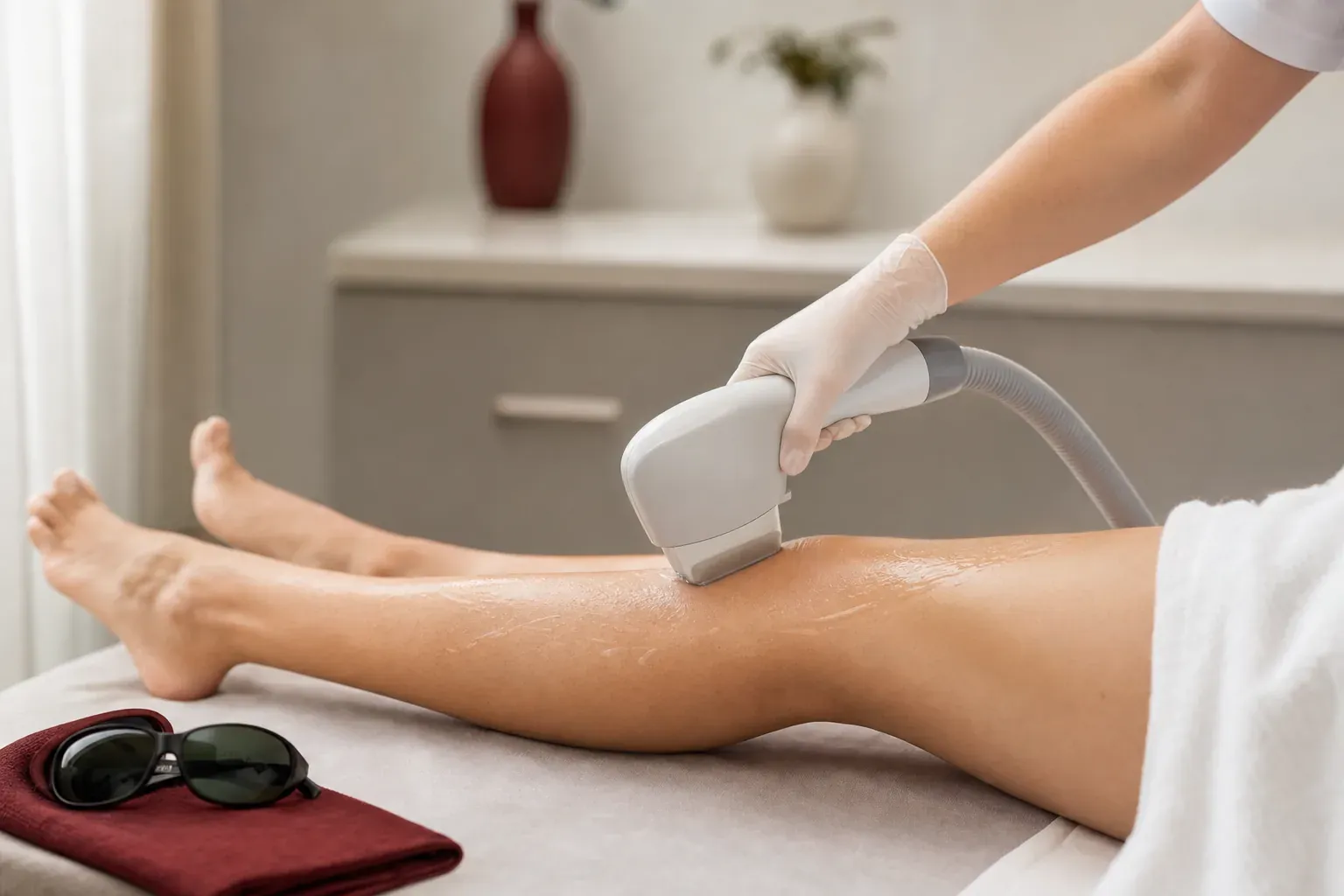
What happens during a laser pulse
The laser emits light of a specific wavelength, which is absorbed by melanin, the pigment that gives hair its color. In the hair, the light turns into heat. The follicle, the root the hair grows from, heats up, and the cells responsible for growth are damaged.
The surrounding skin absorbs less energy, and a cooling system that switches on automatically with each pulse protects it from overheating. The laser “sees” dark hair on light skin best, and settings for darker skin are chosen more cautiously.
Viva Clinic uses the D-Las 100 mix diode laser with three wavelengths: 755, 808 and 1064 nm. During the session you wear protective glasses, and the doctor sets the laser parameters for your skin and hair. Different areas are treated: the face and upper lip, underarms, the belly line, the bikini area including a deep bikini, arms and legs.
Tanned skin absorbs more light itself, so you shouldn’t tan for 2 weeks before a session or for up to 2 weeks after it. We explain who shouldn’t have the procedure and what risks it carries in the article is laser hair removal safe.
How many laser hair removal sessions you need and why
Hair grows in cycles. At any given moment, only some hairs are in the active growth phase, while the rest are resting or getting ready to fall out. The laser acts on hairs in the active phase, and the “sleeping” ones wait for the next session. Treated hair falls out gradually over 14 to 20 days.
Sessions are 3 weeks to 2 months apart, and the gap gets longer each time. A full course usually takes 6 to 12 months. Fine, lighter hair usually needs more sessions than dark, coarse hair, so the doctor gives you an exact number after the examination.
How laser hair removal differs from shaving and waxing
Shaving and depilatory creams remove only the part of the hair above the skin, so it grows back within a few days. Wax, sugaring, tweezers and epilators pull the hair out with its bulb. The new hair takes longer to grow, but the follicle stays alive. The laser acts on the follicle itself, so after a course hair usually grows noticeably less, and what remains becomes finer and lighter.
During the course, shaving is the only way to remove hair. The laser needs a hair in the follicle, because the light travels down it to the root, and after waxing or sugaring the follicle is empty.
How to prepare for a session and what you’ll feel
Before your first procedure, you need a consultation. A certified cosmetic doctor assesses your skin, identifies your hair type and checks for contraindications. If you take any medication, mention it.
Before each session:
- for 2 weeks before, avoid tanning, including tanning beds, and don’t remove hair with wax, sugaring, tweezers or an epilator;
- if you have been taking antibiotics, book the session at least 2 weeks after your last dose;
- for 3 days, don’t apply products with alcohol or oil to the area;
- shave the area on the day of the procedure or no earlier than 12 hours before;
- come with clean skin, without deodorant or cosmetics.
Most people describe the sensation as a light tingling. If you’re sensitive to pain, the skin is numbed with a cream or spray before the session.
How to care for your skin after a session and how long the results last
After the session:
- for the first 3 to 5 days, use the skin-recovery products your doctor recommends;
- for 3 days, avoid hot baths and showers, saunas, pools and massage, as well as products with alcohol or abrasive particles;
- for 2 days, don’t rub the skin with a washcloth;
- for up to 2 weeks, avoid tanning, and apply sunscreen with SPF 35 or higher when you go outside.
Mild redness right after a session usually fades on its own. If you get blisters, crusts or severe pain, contact your doctor the same day. If your face or lips swell and breathing becomes difficult after a numbing cream, call an ambulance on 103.
How long the results last varies from person to person. Some follicles can recover over time, and hormonal changes sometimes trigger new hair growth. That’s why some people need maintenance sessions some time after the course, and your doctor will tell you whether you’ll need them.
Laser hair removal at Viva Clinic is done at the aesthetic medicine center at 16b/3 Kuzovkova St in Slavuta. Clients also come from Netishyn, Shepetivka, Khmelnytskyi, the Khmelnytskyi and Rivne regions and from all over Ukraine. You can book a consultation by phone, on Viber or Telegram.
Questions and answers
Does laser hair removal work on blonde hair?
No, laser hair removal isn't done on blonde or gray hair. The laser targets pigment, and such hair has almost none, so the light has nothing to act on. A cosmetic doctor will tell you at the consultation whether the laser suits your hair.
Does laser hair removal help with ingrown hairs?
Yes, the diode laser works on different hair types, including ingrown hairs. It acts on the follicle, so after a course less hair grows, and there are usually fewer ingrown hairs too. Your doctor will check the skin in the area where hairs grow in at the consultation.
How long does one laser hair removal session take?
It depends on the area. The upper lip takes about 10 minutes, the bikini area up to 20 minutes, and large areas such as full legs take longer. Before your first session, also allow time for a consultation with a cosmetic doctor.