PRP therapy (plasma lifting): what it is and how it works
PRP therapy, also called plasma lifting, means injecting plasma rich in platelets that's made from your own blood. Platelets release substances that start tissue repair and collagen production, so Viva Clinic in Slavuta uses plasma lifting to treat scars, including acne and burn scars. The procedure is done by a cosmetic doctor after a consultation, usually as a course of several sessions.

Published Updated 5 min read
What plasma lifting is and how it works
Blood contains platelets, tiny cell fragments that help blood clot and take part in healing. When tissue is damaged, platelets release substances called growth factors. These start tissue repair and collagen production.
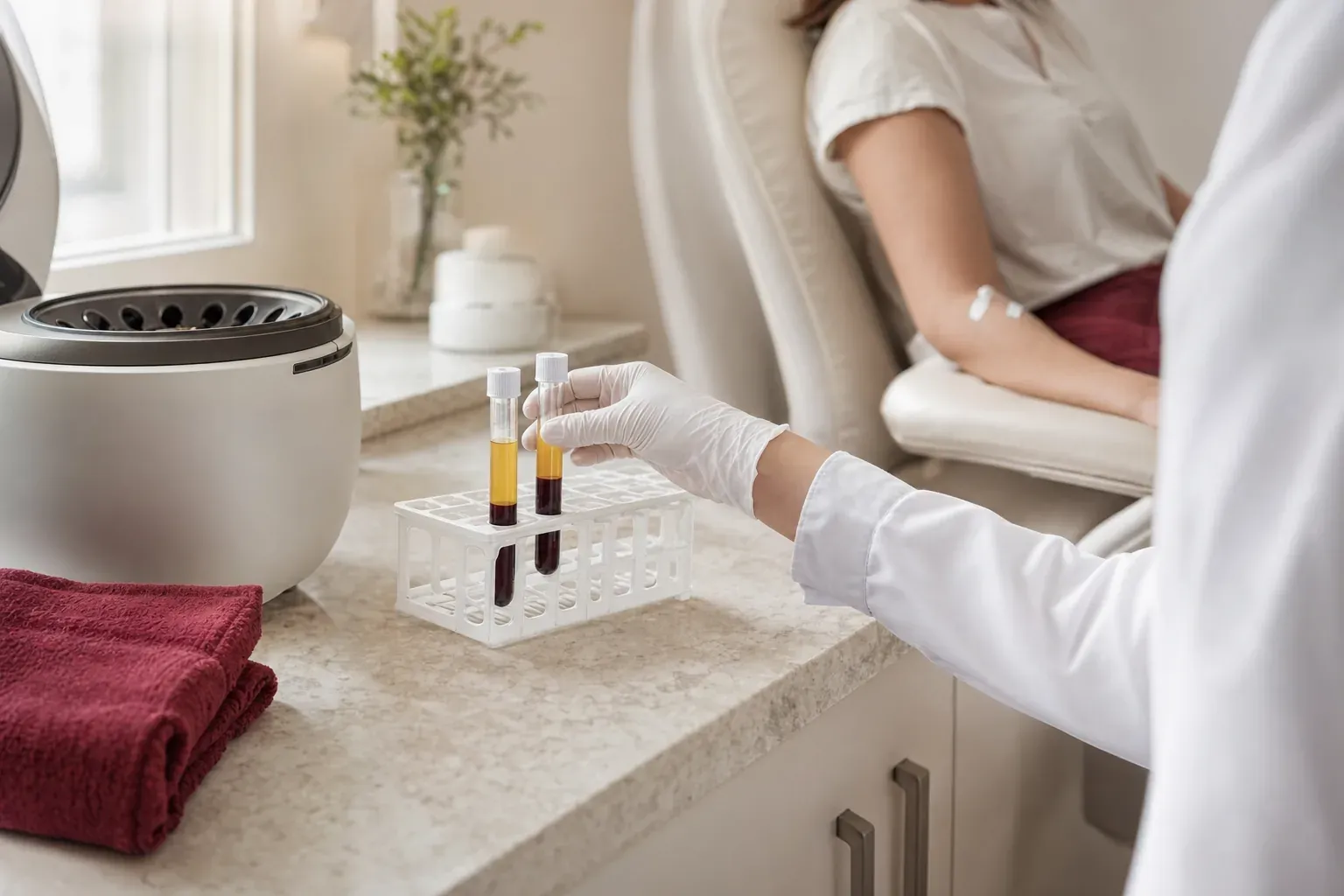
Plasma lifting is built on this mechanism. Blood is taken from a vein, and a centrifuge separates out plasma rich in platelets, known as platelet-rich plasma, or PRP. Plasma lifting, plasma therapy and PRP therapy all mean the same thing: plasma from your own blood is injected into the skin.
What Viva Clinic uses plasma lifting for
At Viva Clinic, plasma lifting is used to treat scars. It’s done for atrophic scars, which are sunken into the skin, like those left by acne or chickenpox, and for burn scars. The face, neck, chest and arms can be treated. The difference between acne marks and acne scars, and what helps each, is explained in our article on acne scars.
Not every scar is treated with plasma. Keloid and hypertrophic scars are raised above the skin and are often treated with other methods, so the doctor may suggest seeing a dermatologist first. A new scar keeps changing for a long time after the wound heals, and the doctor decides when it can be treated. Dark marks left by pimples aren’t scars, and chemical peels are used for those. What you can expect from plasma lifting is a less noticeable scar, since no procedure can remove a scar completely.
People also often think of plasma lifting when they want to improve skin tone or when their hair is thinning. For these, Viva Clinic offers facial and scalp mesotherapy: the doctor chooses the cocktail for the specific concern and, with hair loss, first finds out the cause.
How to prepare for plasma lifting
First, you come in for a consultation. The cosmetic doctor examines the scar, asks when and how it appeared and what medication you take, and checks for contraindications. The clinic’s cosmetic doctors are trained in plasma therapy.
Your doctor will explain how you should prepare at the consultation. For 2–3 days before a session, people are usually advised to:
- avoid alcohol;
- not apply peels or scar-smoothing products to the scar area;
- drink enough water.
Be sure to tell your doctor about every medication you take. Painkillers such as aspirin or ibuprofen and medicines that affect blood clotting act on platelets. Don’t stop medicines prescribed by another doctor on your own. If you tend to feel faint when blood is taken, say so in advance.
How the procedure works and how many sessions you need
On the day of the procedure, blood is taken from a vein, and a centrifuge separates it into layers. The plasma rich in platelets is drawn off from them. The doctor then cleanses the skin, treats it with an antiseptic and injects the plasma into the scar area with a fine needle.
You’ll feel the injections, and how much depends on the area and your pain threshold. If you’re sensitive to pain, tell the doctor beforehand, and pain relief can be used.
One session is usually not enough, because scar tissue remodels slowly. Most often a course of several sessions is planned, and the doctor decides how many and how far apart after the examination, depending on the scar and how your skin responds. Plasma lifting is a paid treatment.
Who shouldn’t have plasma lifting and what to do afterwards
Plasma lifting isn’t done with blood disorders or clotting problems, anticoagulant use, cancer, or during pregnancy and breastfeeding. It’s postponed if there’s inflammation or infection of the skin in the scar area, an acute infection or a flare-up of a chronic illness. Your doctor checks the full list of contraindications at the consultation.
Redness, slight swelling and bruising can last a few days at the injection sites. To help your skin recover:
- don’t wash or wet the injection area on the day of the procedure;
- for 1–2 days, don’t apply makeup or skincare products to it;
- for the first 48 hours, don’t massage the area, and skip saunas, bathhouses, pools, hot baths and intense workouts;
- avoid sunbathing and tanning beds.
Call the doctor who did the procedure right away if the skin in the injection area turns white, blue or blotchy, or the pain gets worse. If your vision suddenly worsens, your eye hurts, you see double or your eyelid droops after a procedure on the face, call an ambulance on 103. Also call 103 if your face, tongue or throat swells and breathing becomes difficult. And if after a few days the skin becomes hot and red, or you notice pus or a fever, contact a doctor the same day.
Plasma lifting at Viva Clinic is done at the aesthetic medicine center at 16b/3 Kuzovkova St in Slavuta. You can book a consultation by phone, on Viber or Telegram.
Questions and answers
How is plasma lifting different from mesotherapy and biorevitalization?
In what goes into the skin. In plasma lifting it's plasma from your own blood, in mesotherapy a ready-made cocktail of vitamins, amino acids, hyaluronic acid and other substances, and in biorevitalization a hyaluronic acid product. All three are done by a cosmetic doctor after a consultation.
Does Viva Clinic offer PRP for the scalp?
At Viva Clinic, plasma lifting is used to treat scars. When hair is thinning, the doctor first looks for the cause, which can be heredity, iron deficiency or thyroid disease. If treatment makes sense, the clinic offers scalp mesotherapy.
Is it safe to inject your own plasma?
The plasma comes from your own blood, so an allergy to the plasma itself is unlikely. Still, it's an injection procedure with contraindications: redness, swelling or bruising can appear at the injection sites, and rarely there's an infection or a reaction to the substance added to the tube to keep the blood from clotting. That's why a cosmetic doctor does it, and only after a consultation.
When will I see results from plasma lifting?
Not right away. Scar tissue changes gradually, so some people notice changes after the first sessions, but the result is judged after the full course. How much a scar changes depends on its type, depth and age, and it varies from person to person.