How long periods last and what counts as a normal menstrual cycle
A period usually lasts 2 to 7 days. For adult women, doctors consider a cycle of about 24 to 38 days normal, counting from the first day of one period to the first day of the next. If bleeding lasts longer than a week, your periods are very heavy, you bleed between them or your cycle suddenly changes, see a gynecologist.
Published Updated 5 min read

How to count your menstrual cycle
Day one of your cycle is the day the bleeding starts. Spotting a day or two before it doesn’t count.
The average cycle is about 28 days. It doesn’t have to be the same length every time: a difference of a few days between cycles is common in healthy women too.
In the first few years after a girl’s first period, cycles are often irregular while hormone regulation settles. Similar swings happen in the years before menopause: periods come late, then early, and get heavier or lighter.
The easiest way to keep track is a calendar in an app or a notebook. Note the day each period starts, how many days the bleeding lasts, how heavy it is, whether it hurts and whether you have any bleeding between periods. Three or four months of notes will give your gynecologist a clearer picture than memory alone.
Which periods count as too heavy or too painful
The heaviest bleeding usually comes in the first days and then tapers off. You can’t measure blood loss at home, so doctors go by everyday signs. Your periods are probably too heavy if:
- you have to change a pad or tampon every one to two hours for several hours in a row;
- one product isn’t enough and you use two at once;
- you have to get up at night to change your pad;
- the bleeding lasts longer than 7 days;
- you miss work, school or your usual activities because of your period.
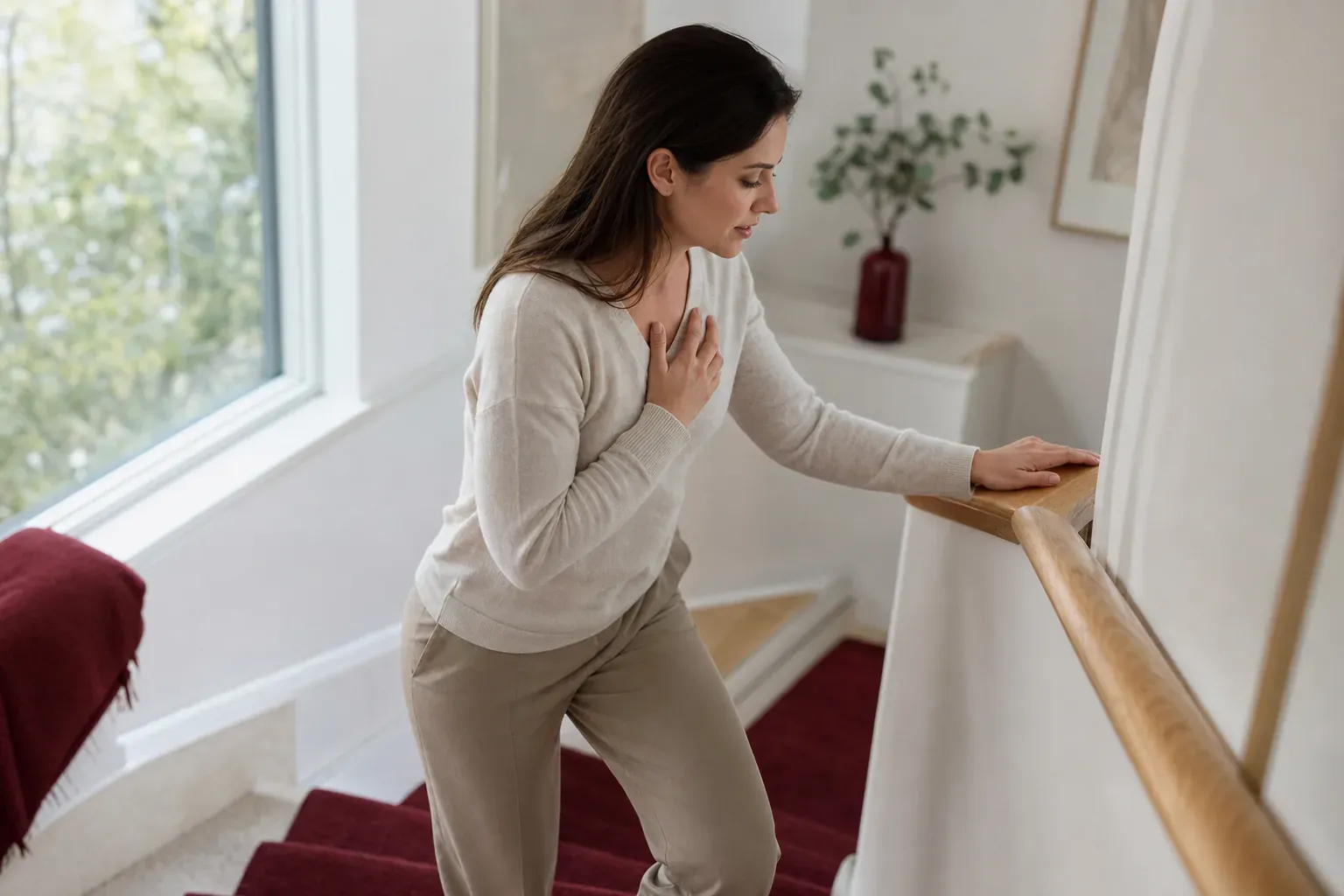
When heavy periods happen every month, your body loses more iron than it can replace. Over time this can lead to iron deficiency anemia, which shows up as tiredness, shortness of breath with everyday activity, pale skin and dizziness. A complete blood count shows your hemoglobin, and your doctor checks your iron stores with a ferritin test.
Many women have cramps on the first days of a period. They are considered usual if they are moderate, ease within a day or two and respond to a painkiller your doctor has recommended. Severe pain that keeps you in bed can be a sign of endometriosis or uterine fibroids, so it is worth seeing a gynecologist about it.
Why your cycle can change
If you are sexually active, the first thing a doctor will think of when your period is late is pregnancy, even if you used protection. So take a test first: most home tests give a result from the first day of a missed period. If it’s negative and your period still hasn’t come, repeat the test a few days later and book a gynecologist. Don’t try to bring on your period with pills, herbs or anything else before an exam, because that makes it easy to miss a pregnancy, including an ectopic one.
Your cycle can also shift because of:
- severe stress and lack of sleep;
- sudden weight loss or gain, exhausting workouts;
- thyroid disease;
- hormonal disorders, such as polycystic ovary syndrome or high prolactin;
- breastfeeding, hormonal contraception, some medicines.
When to see a gynecologist and when to call an ambulance
Book a gynecologist if:
- your cycle has been shorter than 24 days or longer than 38 days for several months in a row;
- your period is late and a pregnancy test is negative;
- your periods have become noticeably heavier or longer than usual;
- you bleed between periods or after sex;
- period pain doesn’t ease with a painkiller or stops you from working or studying;
- you have any bleeding after menopause, even a little.
If you bleed after sex, the gynecologist will examine your cervix and may suggest a colposcopy of the cervix.
Call an ambulance (103) if:
- the bleeding is very heavy and you feel dizzy or very weak, or you have fainted;
- you suddenly get severe pain in your lower abdomen, especially when your period is late or a test is positive;
- you are pregnant and start bleeding or get severe abdominal pain.
Light spotting during pregnancy, and lower abdominal pain with a fever or unusual discharge, should be seen by a doctor the same day.
Which tests a gynecologist may order
The gynecologist will ask about your cycle and symptoms and do a pelvic exam and a breast exam. If you take hormonal contraceptives or other medicines, tell the doctor. Depending on the situation, the doctor may then order:
- a pelvic ultrasound to check the uterus, the uterine lining and the ovaries;
- hormone tests, including thyroid hormones;
- a complete blood count to rule out anemia;
- swabs, if you have unusual discharge.
Your doctor will tell you which day of the cycle to have the ultrasound or hormone tests, because it depends on what needs to be checked.
At Viva Clinic in Slavuta you can have all of these on site. The gynecologist sees patients at 27a Sobornosti St or 3 Danyla Halytskoho St, and the exact address is confirmed when you book. Ultrasound is done at the polyclinic at 27a Sobornosti St, and lab tests and swabs are processed at the Diagnost-Lab laboratory at 32 Sobornosti St. You can book a gynecology consultation at Viva Clinic by phone or on Viber. Bring your cycle calendar for the last few months.
Questions and answers
Are blood clots during a period normal?
Small clots on the first, heaviest days are common. See a gynecologist if the clots are the size of a coin or larger, appear every month or come with very heavy bleeding. The doctor will check you for anemia and look for the cause.
Can stress delay my period?
Yes, severe stress, sudden weight loss, exhausting workouts or illness can shift your cycle. But pregnancy has to be ruled out first, so start with a test. If the test is negative and your period still hasn't come, or delays keep happening, see a gynecologist.
Can I see a gynecologist during my period?
Yes, if there is a good reason, such as heavy bleeding or lower abdominal pain. A routine checkup is best scheduled for the first few days after your period ends. You can pick a convenient date when you book by phone or on Viber.
Which tests are free if my cycle is off?
A complete blood count and a rapid pregnancy test are free if you have signed a declaration with a Viva Clinic family doctor and they refer you. The gynecology consultation, ultrasound and hormone tests are paid. You can have the tests at the Diagnost-Lab laboratory at 32 Sobornosti St.