What gastritis is and how it is treated
Gastritis is inflammation of the stomach lining. It is most often caused by the bacterium Helicobacter pylori or by long-term use of anti-inflammatory painkillers, and less often by alcohol and other factors. Treatment depends on the cause, so the doctor first confirms the diagnosis with an exam, lab tests and, if needed, a gastroscopy.
Published Updated 5 min read

In everyday speech, people call almost any stomach ache gastritis. A doctor makes this diagnosis when tests, most often a gastroscopy, confirm inflammation of the stomach lining. Similar symptoms can occur when the lining is normal, and then the treatment is different.
What are the symptoms of gastritis
Gastritis can cause no symptoms for years. When symptoms do appear, the most common are:
- pain, burning or discomfort in the upper abdomen, in the pit of the stomach;
- feeling full quickly and heavy after a small meal;
- nausea, sometimes vomiting;
- bloating and belching;
- heartburn.
Functional dyspepsia causes the same symptoms. In this condition, the stomach is more sensitive to food and stretching, but the lining looks normal on gastroscopy. It is a common condition with its own approach to treatment. You cannot tell the two apart by how you feel, so tests are needed.
What causes gastritis
Chronic gastritis is most often caused by the bacterium Helicobacter pylori. People often pick it up in childhood, and it can live in the stomach unnoticed for years. The second common cause is anti-inflammatory painkillers that people take for back, joint or head pain, especially if they take them often and for a long time. Alcohol and smoking also irritate the stomach lining. Less often, gastritis is autoimmune or is caused by bile flowing back into the stomach.
Spicy food and stress rarely cause gastritis on their own, although they can make symptoms worse.
Heartburn: what to do
A burning feeling behind the breastbone most often happens when acid from the stomach flows back into the esophagus. It can also occur with gastritis. If you get heartburn only now and then, simple changes help:
- eat smaller portions and avoid overeating;
- do not lie down right after eating, and have dinner a few hours before bed;
- if heartburn bothers you at night, raise the head of your bed;
- notice what makes it worse (fatty or fried food, coffee, alcohol, fizzy drinks) and cut back on it;
- if you smoke, try to quit.
Heartburn remedies from the pharmacy can bring short-term relief, but they do not remove the cause. If you have heartburn on most days for several weeks, or you need medicine for it regularly, see a doctor. The doctor will choose the medicines and how long to take them after an exam.
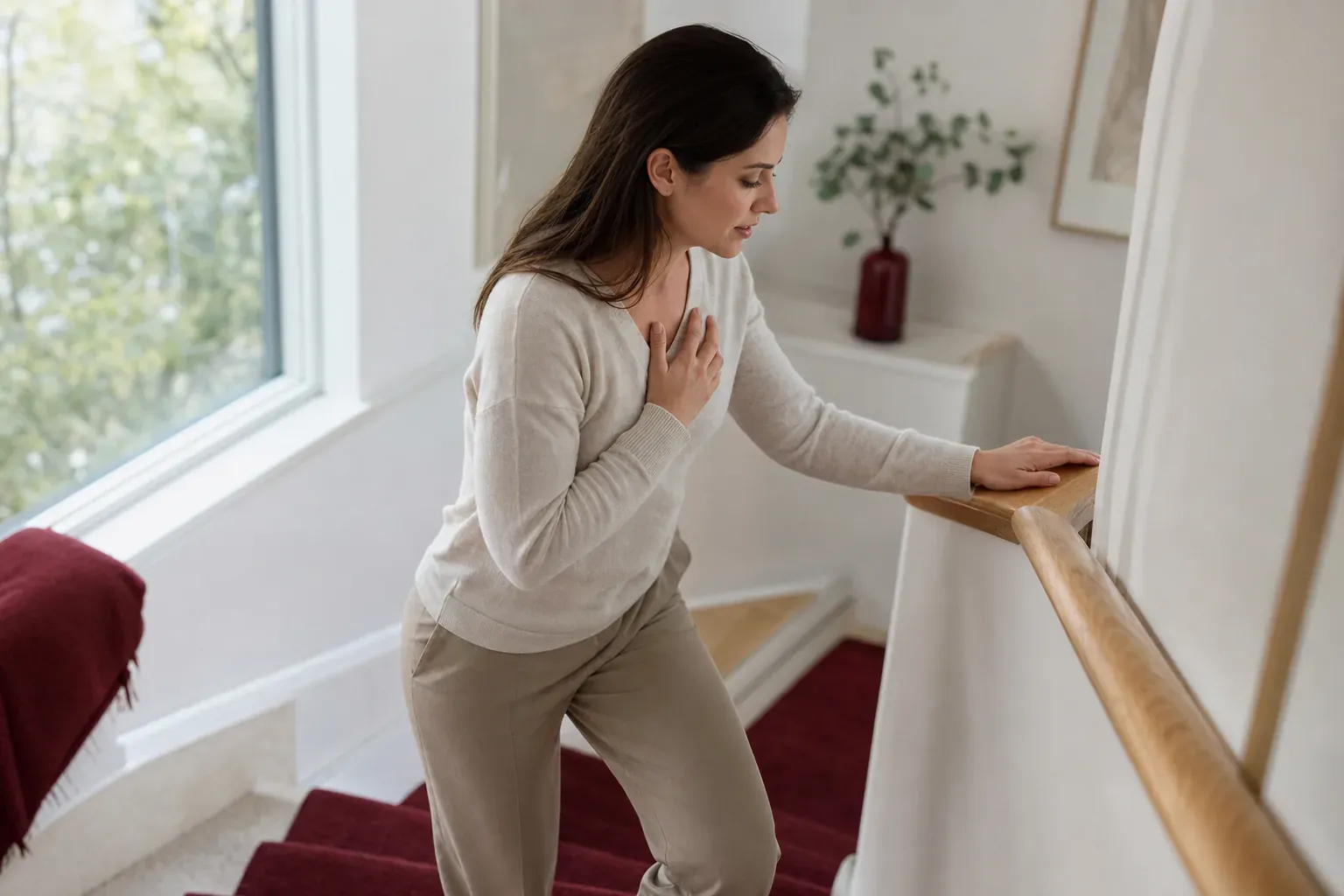
Chest burning can also come from the heart. If it starts during physical effort, spreads to the arm, neck or jaw, or comes with shortness of breath and a cold sweat, call an ambulance on 103: this can be the start of a heart attack.
When to see a doctor urgently
Call an ambulance on 103 if:
- you vomit blood or material that looks like coffee grounds;
- your stool turns black and tarry;
- you suddenly develop sharp, severe abdominal pain.
Book a doctor’s appointment soon if:
- you are losing weight for no clear reason;
- a blood test showed anemia;
- swallowing has become difficult or painful;
- you keep vomiting;
- stomach symptoms have appeared for the first time after the age of 50;
- a close relative has had stomach cancer.
How gastritis is diagnosed and treated
At the appointment, the gastroenterologist asks about your symptoms, diet and medicines, and examines and feels your abdomen. The doctor may then order a complete blood count, a Helicobacter pylori test (a breath test, a stool test or a test on a tiny piece of the stomach lining) and a gastroscopy. Before a breath or stool test, acid-lowering medicines are usually stopped 2 weeks ahead and antibiotics 4 weeks ahead, otherwise the test may miss the bacterium. Your doctor will tell you what to stop and when. During a gastroscopy, the doctor looks at the esophagus and stomach from the inside and takes a biopsy if needed. An abdominal ultrasound is sometimes added to check the liver, gallbladder and pancreas.
What happens next depends on the results. If Helicobacter pylori is found, the doctor prescribes a course of several medicines and checks whether the bacterium is gone at least 4 weeks after the course ends. When painkillers are irritating the stomach, the doctor reviews how and with what you manage pain. Your diet is adjusted so that you eat regularly and do not overeat.
Treating gastritis on your own is risky. Medicines that lower stomach acid dull the pain and can hide an ulcer or a tumor. Randomly chosen antibiotics often fail to kill the bacterium, and it becomes resistant to them, which makes later treatment more difficult.
At Viva Clinic, a gastroenterologist in Slavuta sees patients at 27a Sobornosti St or 3 Danyla Halytskoho St, and the exact address is confirmed when you book. The consultation is paid. You can have a gastroscopy free of charge with an electronic referral from your family doctor, because the clinic has a contract with the National Health Service of Ukraine (NSZU) for it. It can be done under anesthesia if you prefer, and if NSZU covers the test, the anesthesia is free for you too. To see what else is free under a declaration, read what a family doctor declaration covers. Lab tests can be done at the clinic’s own Diagnost-Lab laboratory at 32 Sobornosti St. You can book by phone or on Viber.
Questions and answers
Can gastritis be cured?
Often yes, once the cause is dealt with. When Helicobacter pylori has been treated successfully and the medicines or alcohol that irritated the stomach are stopped, the inflammation usually settles. Some forms, such as autoimmune gastritis, need monitoring by a doctor for years, with check-ups from time to time.
Can Helicobacter pylori spread from person to person?
Yes, most often within families and in childhood. If the bacterium is found in one family member, the doctor decides whether others should be tested. Do not take antibiotics as a precaution without a test, because they do harm and can make later treatment harder.
What diet should I follow with gastritis?
There is no single required gastritis diet. Doctors usually advise eating regularly in small portions, not overeating at night and cutting back on whatever makes you feel worse, such as fatty or fried food, alcohol and strong coffee. Strict long-term diets without a doctor's advice are not needed.
Do I always need a gastroscopy for gastritis?
Not always. For younger people without warning signs, the doctor often starts with a Helicobacter pylori test and treatment. A gastroscopy is recommended if there are warning signs, if symptoms do not improve after treatment, or if they appear for the first time at an older age.