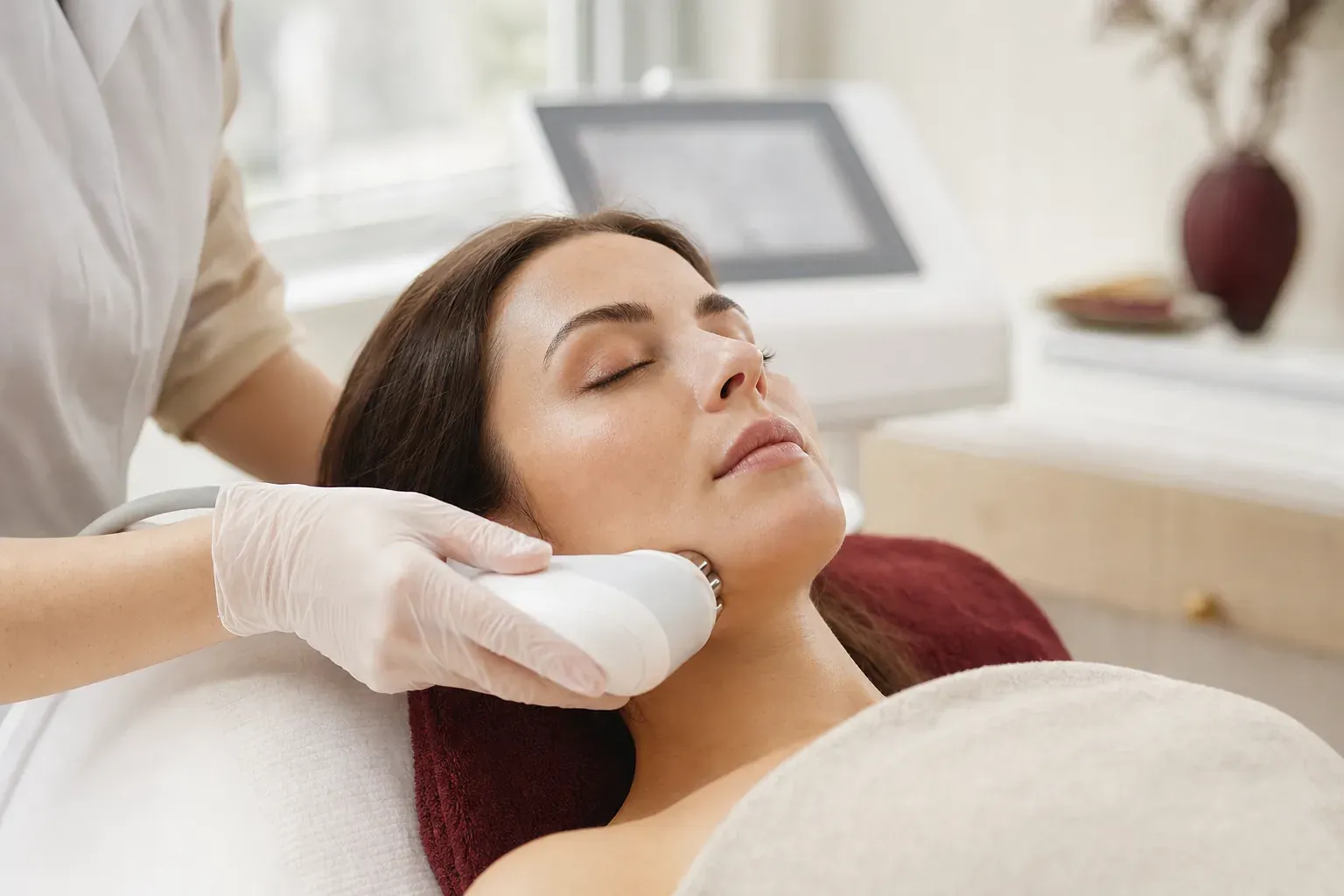
Facial muscle stimulation: how it works and what to expect
Facial muscle stimulation, or myostimulation, is a device-based treatment in which weak pulses of electric current make the facial muscles contract. It's done to help maintain muscle and skin tone and is usually taken as a course. At Viva Clinic in Slavuta, muscle stimulation is done by cosmetologists after a skin assessment and a check for contraindications.

Published Updated 4 min read
How facial muscle stimulation works
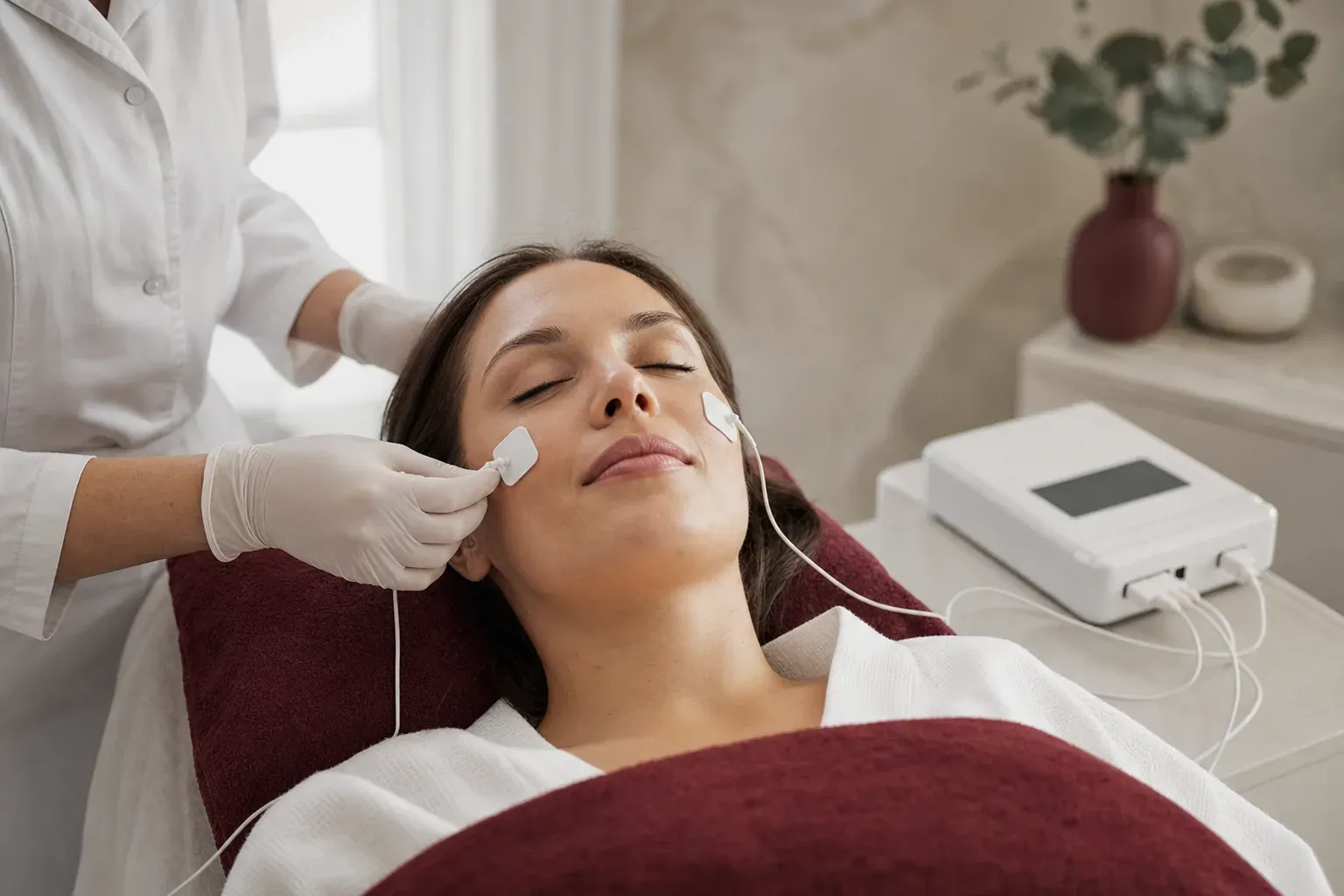
A muscle contracts when it receives an electrical signal from a nerve. Muscle stimulation sends a similar signal from outside: electrodes are placed on the skin over the muscles, and the device sends weak pulses of current through them. The electrodes go on the points where the pulse reaches the muscle most easily. The muscle contracts, then relaxes, and this repeats many times during a session. You don’t have to do anything; you simply lie still.
The muscles of facial expression are attached to the skin, so their tone affects how your face looks. With age, muscles weaken and the contour of the face can become less defined. Regular contractions during muscle stimulation help maintain muscle tone, and with it skin tone. The cosmetologist sets the strength and frequency of the pulses for the area and for how they feel to you.
Why muscle stimulation is done and what not to expect
Muscle stimulation is chosen when facial skin has lost tone and firmness and the contour has become less defined. It works best for mild changes. Muscle tone changes gradually, just as it does with ordinary exercise, so a course is usually needed. Your cosmetologist decides how many sessions you need and will also recommend home care for your skin type. The effect isn’t permanent: without maintenance, the muscles gradually return to their previous state.
Don’t expect the treatment to:
- smooth out deep wrinkles and folds;
- add volume or change your features;
- remove excess skin or marked sagging;
- reduce expression lines on the forehead or between the eyebrows.
Expression lines are caused by overactive muscles, and they’re treated with other methods, such as botulinum toxin injections. How much your face changes depends on your age, skin and lifestyle, so results vary from person to person.
For skin tone, device-based cosmetology also offers RF lifting. It heats the deeper layers of the skin and stimulates collagen production, while muscle stimulation works on the muscles, so the two are sometimes combined. Our article on RF skin tightening explains how it works and who it suits. Facial massage, done as part of classic cosmetology, also tones the muscles. Your cosmetologist decides what to combine.
Muscle stimulation vs microcurrent facial: what’s the difference
The two are often confused because both act on the skin with electric current. In muscle stimulation the pulses are strong enough to make the muscles visibly contract. Microcurrent therapy uses a much weaker current: you can barely feel it, and there are no visible muscle contractions.
At Viva Clinic, the device-based methods for facial tone are muscle stimulation and RF lifting. Electrical pulses are also used in needle-free mesotherapy by electroporation, but for a different purpose: short pulses briefly make the skin more permeable, so the mesotherapy cocktail gets in without a needle. Methods that use current have similar contraindications, so before any of them your cosmetologist will ask about a pacemaker and pregnancy. They’ll tell you which method suits you after examining your skin.
How a session goes and who shouldn’t have muscle stimulation
First, the cosmetologist examines your skin, asks about your health, medication and previous treatments, and checks for contraindications. Before the session the skin is cleansed, the electrodes are placed and the strength of the pulses is gradually increased until you feel your muscles contract. Muscle stimulation usually needs no separate recovery, so you can go back to your day after the session. If you develop blisters, or pain and swelling get worse, contact your cosmetologist or a doctor the same day.
Muscle stimulation isn’t done, or is postponed, in these cases:
- a pacemaker or another implanted electronic device;
- epilepsy;
- pregnancy;
- metal implants or threads in the treatment area;
- skin inflammation in the treatment area;
- cancer.
Current can interfere with a pacemaker, so muscle stimulation isn’t done if you have one. If the skin in the treatment area is inflamed, the session is postponed until the inflammation clears. Your cosmetologist checks the full list of contraindications at the consultation. Also tell them what medication you take and whether you’ve recently had a peel, cleansing or injections.
If the muscles on one side of your face suddenly weaken, or the corner of your mouth or an eyelid droops, call an ambulance on 103: this can be the start of a stroke. After Bell’s palsy (facial nerve palsy), the neurologist treating it decides whether weak facial muscles need electrical stimulation.
Muscle stimulation is done as part of device-based cosmetology at Viva Clinic, at the aesthetic medicine center at 16b/3 Kuzovkova St in Slavuta. You can book by phone, on Viber or Telegram.
Questions and answers
Does facial muscle stimulation hurt?
Usually not. During the session you feel tingling, and your muscles contract and relax in rhythm with the pulses. Your cosmetologist adjusts the current to suit you, so if the sensations become unpleasant, say so and they'll reduce the intensity.
How many muscle stimulation sessions do I need?
Muscle stimulation is usually done as a course, because muscle tone changes gradually and one session isn't enough. Your cosmetologist decides how many sessions you need and how far apart after examining you, depending on your skin and what you want to achieve.
Can I have muscle stimulation after Botox or fillers?
Not straight away. If you've recently had botulinum toxin, filler or other injections, tell your cosmetologist, since you may need a break between procedures. How long depends on the product and the area, so it's best to agree on the timing with the doctor who did the injections.
Can I have muscle stimulation during pregnancy?
No. Treatments that use electric current, including muscle stimulation, aren't done during pregnancy. If you're breastfeeding, tell your cosmetologist as well: they'll check for contraindications and suggest care you can have right now.