Hyperhidrosis: why excessive sweating happens and how Botox can help
Hyperhidrosis means excessive sweating: your underarms, palms, feet or forehead get wet even when it's cool and you're at rest, and it gets in the way of daily life and work. If the sweating started suddenly, happens at night or comes with weight loss or a fever, see an internist or a family doctor first. If no other illness is found and antiperspirants don't help, a cosmetic doctor at Viva Clinic in Slavuta can reduce sweating with botulinum toxin injections.

Published Updated 5 min read

What hyperhidrosis is
Sweating in the heat, during exercise or when you’re nervous is normal: it’s how the body cools down. Doctors talk about hyperhidrosis when you sweat much more than you need to, without an obvious reason. Your palms are so damp that shaking hands is awkward, and you have to change your shirt in the middle of the day.
The most common type is primary, or focal, hyperhidrosis. Its typical features are:
- specific areas sweat: the underarms, palms, feet or forehead;
- both sides sweat about equally, for example both palms;
- the sweating started in childhood or adolescence;
- it usually stops during sleep;
- a relative often has the same problem.
Primary hyperhidrosis isn’t a sign of another illness. The sweat glands are healthy; the nerves simply send them too many signals.
When to see a doctor about sweating first
Sometimes heavy sweating is a symptom of another illness or a side effect of medication. This is called secondary hyperhidrosis, and its cause needs to be treated first. See an internist or a family doctor first if:
- you sweat all over your body;
- the sweating started suddenly, in adulthood;
- you sweat heavily at night, enough to soak your bedclothes;
- only one side of your body sweats;
- along with the sweating, you’re losing weight for no reason or have a fever, a racing heart or shaky hands;
- the sweating got worse after you started a new medication.
One possible cause is an overactive thyroid gland. In that case, sweating comes with a racing heart, weight loss and shaky hands, and we explain which tests check for this in the article thyroid symptoms and tests. Sweating can also come with infections, menopause or sharp swings in blood sugar in people with diabetes. An internist will ask questions, examine you and, if needed, order tests or refer you to an endocrinologist. If you have signed a declaration with a Viva Clinic family doctor, appointments with that doctor are free.
Call an ambulance on 103 immediately if you suddenly break out in a cold sweat along with chest pain or pressure, shortness of breath or severe weakness.
How Botox reduces sweating
Botulinum toxin blocks the signal a nerve sends to the sweat glands, so in the injected area they produce much less sweat. The product is injected into the skin of the area that sweats most: the underarms, palms, feet or forehead. People usually consider injections when antiperspirants, including pharmacy ones, don’t work or irritate the skin.
The product doesn’t work right away: the first changes usually show after a few days. For hyperhidrosis, the effect lasts longer than for expression lines, usually from 3 to 10 months for the underarms and palms. Then the nerve endings recover and the glands work as before. There’s no way to predict exactly how long it will last for you, so go by the result of your first treatment and your doctor’s advice.
How the procedure works and who shouldn’t have it
It starts with a consultation with a cosmetic doctor. The doctor will ask when the sweating started, where exactly and whether it happens at night, as well as about your illnesses and medication, and will check for contraindications. If anything suggests secondary hyperhidrosis, the doctor will advise you to get checked first.
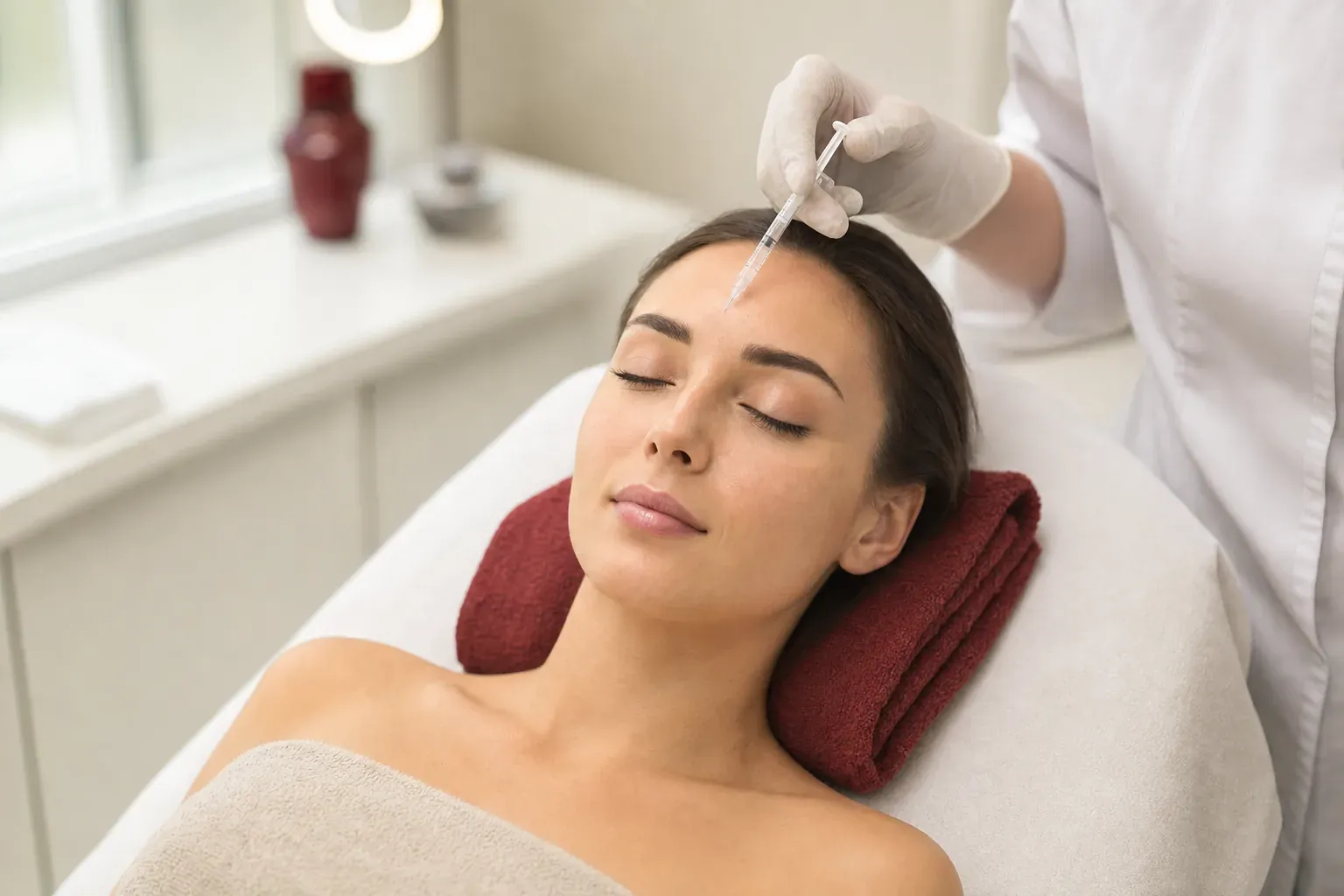
Before the injections, the skin is cleansed and treated with an antiseptic, and the doctor marks out the area that sweats most. The doctor then injects the product with a very fine needle at many points across that area. You’ll feel the injections, and the palms are usually more sensitive than the underarms or face. If you don’t tolerate pain well, say so in advance.
Botulinum toxin injections aren’t done during pregnancy or breastfeeding, with an infection or skin inflammation in the injection area, with myasthenia gravis or other neuromuscular junction disorders, or with an allergy to any component of the product. They’re planned with caution if you have a bleeding disorder or take certain antibiotics. The doctor checks the full list of contraindications at the consultation.
Men also come to cosmetic doctors with sweaty palms, feet or foreheads. We describe treatments for them on the page treatments for men.
What happens after the injections and when to see a doctor
You can go back to your usual activities right away. On the day of the procedure, don’t rub or massage the injection sites. Put off workouts, saunas, bathhouses and hot baths until the next day. Your doctor will tell you when you can use deodorant and shave your underarms.
Slight swelling, redness or bruising at the injection sites usually goes away within a few days. After injections in the palms, some people notice temporarily weaker fingers. Tell the doctor who did the procedure about this too.
Call the doctor right away, without waiting until the next day, if an eyelid droops. Call an ambulance on 103 immediately if you have trouble swallowing, speaking or breathing, your face, tongue or throat swells, or you notice muscle weakness far from the injection sites.
At Viva Clinic, botulinum toxin injections for excessive sweating are done by a cosmetic doctor at the aesthetic medicine center at 16b/3 Kuzovkova St in Slavuta. You can book by phone, on Viber or Telegram.
Questions and answers
Do Botox injections for sweating need to be repeated?
Yes. Botulinum toxin works temporarily: once the nerve endings recover, the sweat glands work as before. Injections can be repeated no more often than once every 3 months, and you decide when together with your doctor, based on how long the previous effect lasted.
Can you overheat if underarm sweating is blocked?
No. The injections reduce sweating only in the injected area, and the rest of your skin sweats as usual, so your body keeps cooling itself. Your doctor will go over other possible reactions and contraindications with you at the consultation.
How old do you have to be to get Botox for sweating?
At least 18, and only after a consultation with a cosmetic doctor. If a child or teenager is bothered by excessive sweating, start with a pediatrician or a family doctor, who will find the cause of the sweating and advise what to do next.