
Botox: what it is, how long it lasts and who shouldn't have it
Botox is the everyday name for botulinum toxin injections: a doctor injects small doses of botulinum toxin type A into the facial muscles, the muscles relax, and lines on the forehead, between the brows and around the eyes smooth out. The first changes usually show after 2–3 days, the full effect after about 2 weeks, and it typically lasts 3–4 months. At Viva Clinic in Slavuta, the injections are done by a cosmetic doctor and only after a consultation that includes a contraindication check.

Published Updated 4 min read
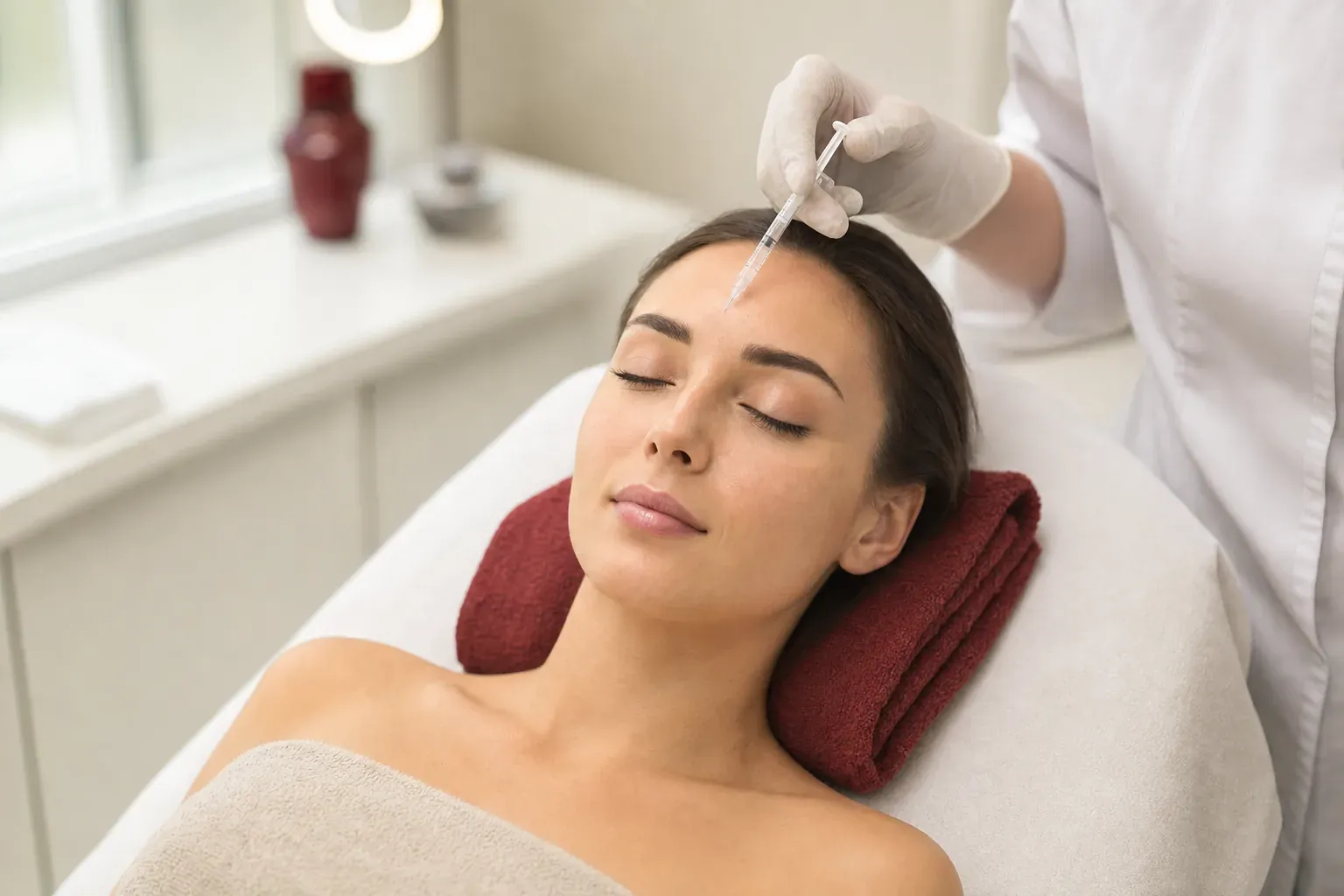
What Botox is and how it works
“Botox” is the brand name of just one botulinum toxin type A product. At Viva Clinic, doctors use products from this group, including Dysport.
Botulinum toxin blocks the signal a nerve sends to a muscle. When it’s injected into a facial muscle, the muscle relaxes and contracts less strongly. The skin above it barely creases, so the lines smooth out. At Viva Clinic, botulinum toxin is used for:
- horizontal lines on the forehead;
- the vertical frown line between the brows that can make you look stern;
- crow’s feet at the corners of the eyes.
Botulinum toxin works best on lines that appear when you move your face. It doesn’t add volume, so it won’t fill deep folds that are visible at rest: those are treated with fillers. We explain the difference in the article Botox or fillers.
Botulinum toxin also blocks the signal to the sweat glands, so it’s used for excessive sweating too. There’s a separate article on this: hyperhidrosis and Botox for sweating.
When you’ll see results and how long Botox lasts
Right after the injections, your face looks almost the same as before. The first changes usually show after 2–3 days, and the full effect after about 2 weeks. So before a wedding, photo shoot or other event, book at least 2 weeks ahead: by then any bruising will have faded too. If the result still looks uneven at that point, tell the doctor who did the injections.
For expression lines, the effect usually lasts 3–4 months, longer for some people. Gradually, the nerve endings recover, the muscle moves again and the lines come back. Men may need a higher dose, because their facial muscles are usually stronger. Your doctor can tell you more precisely how long the result may last for you after seeing how your muscles responded to the first treatment.
How the treatment works at Viva Clinic
First, you come in for a consultation with a cosmetic doctor. The doctor examines your face at rest and while you make expressions, asking you to raise your brows, frown and smile. This shows which muscles are strongest, and the dose depends on it. The doctor also asks about illnesses and medication and checks for contraindications. Mention it if you take antibiotics or medicines that affect blood clotting, or if you’ve had injections before. The doctor chooses the product and dose at the same consultation.
It’s best to avoid alcohol the day before, so there’s less bruising. Before the injections, your skin is cleansed of makeup and treated with an antiseptic, and then the doctor injects the product with a very fine needle at a few points. You’ll feel the injections, but they’re brief.
Botulinum toxin injections at Viva Clinic are done by cosmetic doctors trained in injection cosmetology at the aesthetic medicine center at 16b/3 Kuzovkova St in Slavuta. This is a paid treatment.
Who shouldn’t have Botox
Botulinum toxin injections aren’t done:
- during pregnancy or breastfeeding;
- with an infection or skin inflammation in the injection area;
- with myasthenia gravis or other neuromuscular junction disorders;
- with an allergy to any component of the product, and for Dysport also with an allergy to cow’s milk protein.
The procedure is planned with caution if you have a bleeding disorder or take certain antibiotics. Don’t stop medication another doctor prescribed on your own, even if it thins your blood: that decision is made together with that doctor. Your cosmetic doctor checks the full list of contraindications at the consultation, so mention all your conditions and medicines, even if they seem unrelated to the procedure.
What to avoid after Botox and when to see a doctor
You can go back to your usual activities right away. On the day of the procedure:
- don’t rub or massage the injection sites, and don’t rub makeup into the area;
- don’t lie down for a few hours;
- put off workouts, saunas, bathhouses and hot baths until the next day.
Plan any facial cleansing, peel or facial massage with your doctor, because you need a break between these treatments and botulinum toxin injections.
Slight swelling, redness or bruising at the injection sites usually goes away within a few days. Some people get a headache. Rarely, a brow or eyelid droops. This is temporary, but don’t wait for it to pass: tell the doctor who did the procedure right away.
Call an ambulance on 103 immediately if you have trouble swallowing, speaking or breathing after the injections, your face, tongue or throat swells, or you notice muscle weakness far from the injection sites.
You can book a consultation with a cosmetic doctor by phone, on Viber or Telegram.
Questions and answers
How old do you have to be to get Botox?
At least 18. Before your first treatment, a cosmetic doctor assesses your facial movement, asks about illnesses and medication and checks for contraindications. At the consultation, the doctor will also tell you whether you need injections at all and in which areas.
What's the difference between Botox and Dysport?
They work the same way: both contain botulinum toxin type A and relax the muscle. Their dosing units are different and aren't interchangeable, so the dose is calculated for the specific product. Your cosmetic doctor decides which product suits you at the consultation.
How often can you get Botox?
No more often than once every 3 months. Injections are usually repeated when the effect has worn off and the muscles move almost as before. The doctor sets the interval and dose each time after examining your facial movement, so discuss your plan for repeat treatments with them.
What happens if you stop getting Botox?
Nothing dangerous: your muscles gradually regain their usual movement, and the lines come back. They don't get any deeper than they would have been without the injections. If you decide to have the treatment again later, the doctor will reassess your facial movement and choose the dose.