Alginate mask: what it is and who it suits
An alginate mask is made from a powder based on salts of alginic acid, which comes from brown seaweed. The powder is mixed with water and spread over the face, and within a few minutes it sets into a flexible film that's peeled off in one piece. The mask hydrates the skin and briefly makes the face look fresher, so at Viva Clinic in Slavuta it's also offered as an SOS treatment before a celebration or an important event.

Published Updated 5 min read
What an alginate mask is made of
Alginates come from brown seaweed. They’re salts of alginic acid: mixed with water they thicken, and if calcium is present they set into a gel. For masks, alginates come as a powder together with calcium salts, and manufacturers often add other ingredients to it, such as moisturizing or soothing ones.
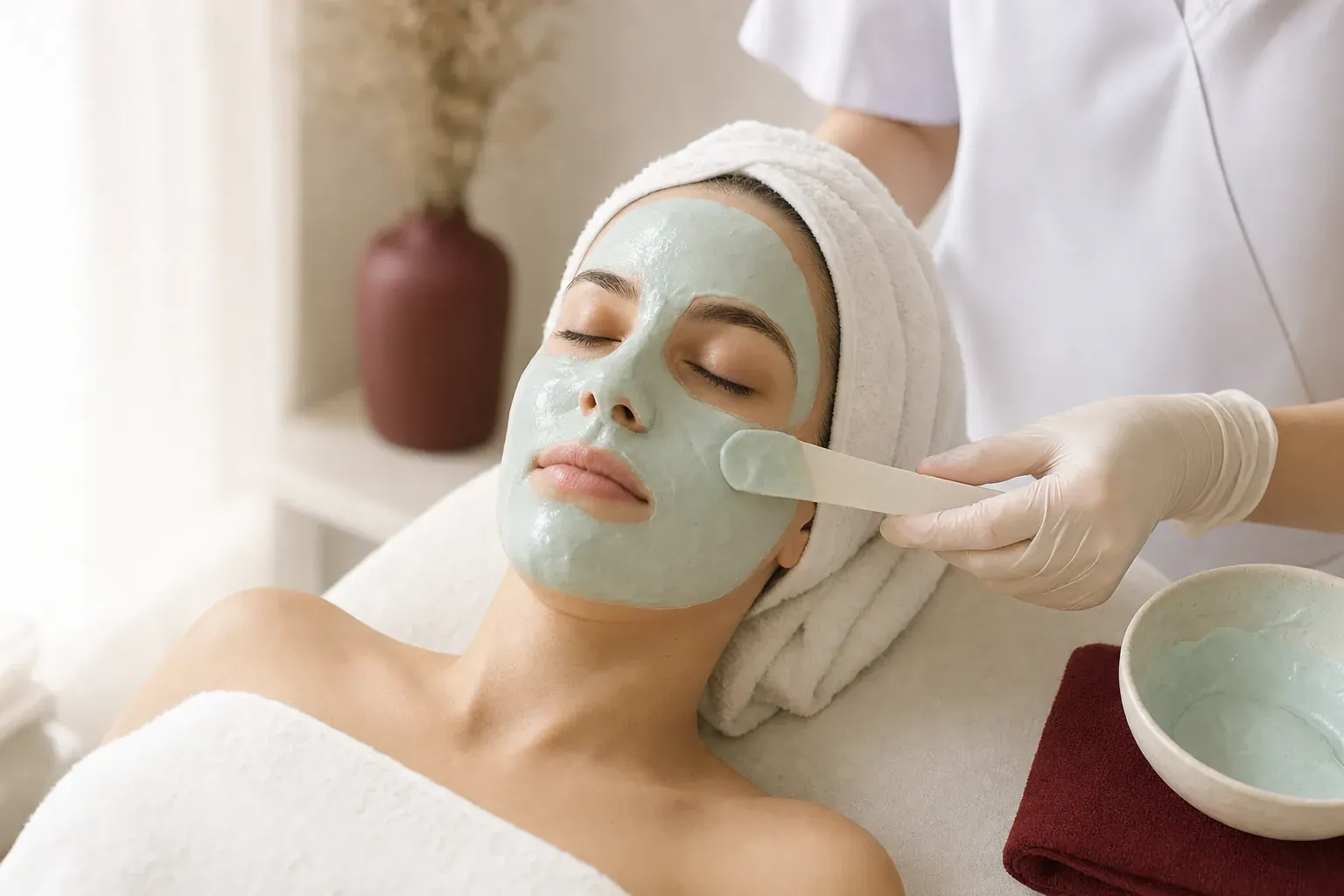
Once mixed with water, the powder turns into a thick paste that has to be applied quickly. Within a few minutes it sets into a springy film that feels like thin rubber. The film fits snugly against the skin and stops moisture from evaporating, so the mask is often applied over a serum or cream. There’s no need to wash it off, because the film is peeled away in one piece.
An alginate mask can be done on its own or together with other care. At Viva Clinic it’s part of the SOS treatments before an event and of regular care in classic cosmetology.
What an alginate face mask does
First of all, the mask hydrates the skin. Afterwards your skin feels softer, the tight feeling goes away, and your face looks fresher and more rested. People choose it when their skin looks tired from stress or lack of sleep, their complexion is dull or their skin is dehydrated. In winter, heating dries out indoor air, and dehydrated skin becomes more common.
The effect is short-lived: after one treatment it gradually wears off, so a week before a celebration is too early for the mask. It doesn’t treat breakouts or pigmentation and doesn’t remove expression lines. If your skin is always dry or dull, a cosmetologist will suggest a course of treatments at the clinic and products for home care.
How the treatment works at the clinic
First, the cosmetologist examines your skin and asks about allergies and medication. Then they remove your makeup and cleanse your face, so you don’t need to come without makeup. If needed, a serum or another product chosen for your skin goes on under the mask.
The powder is mixed with water just before application. The paste is spread with a spatula in a thick layer over your face, and over your neck if needed, while your nostrils are left uncovered so you can breathe freely. You lie with your eyes closed. The paste feels cool, and as it sets your face feels slightly tight, which makes talking awkward.
When the time is up, the cosmetologist lifts the edge of the mask at your chin and peels it off in one piece. Any leftovers are wiped away, and your skin is moisturized with a cream. There’s usually no visible redness after an alginate mask, so you can go back to your normal plans afterwards.
Let your cosmetologist know in advance if you find it unpleasant to lie with your face covered. There are other SOS treatments too, such as oxygen mesotherapy, where a cocktail is delivered onto the skin with a jet of oxygen.
Who an alginate mask suits and how often to have it
The mask suits most people, including those with dry or dehydrated skin. It’s often done before a wedding, graduation, photo shoot, job interview or presentation.
Before an event, an alginate mask is done 1–3 days ahead. If you’ve never had one, try it for the first time well in advance, a few weeks before the date, to see how your skin reacts. Booking on the day of the event is risky: if your skin reacts unexpectedly to a product, there’s no time for it to settle. What to do in advance and what to avoid right before the day is covered in our article on skin care before a wedding.
The mask doesn’t damage the skin, so it can be done more often than manual cleansing or a peel and combined with other treatments. Your cosmetologist will advise how often you should come after examining your skin, because it depends on its condition and the rest of your routine.
Who shouldn’t have an alginate mask
There aren’t many contraindications. The treatment isn’t done, or is postponed, if:
- you’re allergic to any ingredient of the mask;
- there are wounds, scratches, acute inflammation or sunburn on your face;
- you have active herpes or a flare-up of a skin condition;
- you have a cold or a fever.
Tell your cosmetologist if you’re pregnant or breastfeeding, take any medication or are allergic to skincare products. They examine your skin and check for contraindications before the treatment.
Contact a doctor the same day if redness or swelling gets worse after the treatment. If your lips, tongue or face swell and breathing becomes difficult, call an ambulance on 103 right away.
Alginate masks at Viva Clinic are done at the aesthetic medicine center at 16b/3 Kuzovkova St in Slavuta. You can book by phone, on Viber or Telegram.
Questions and answers
Can I do an alginate mask at home?
Yes, alginate masks are also sold for home use. You need to mix the powder with water exactly as the instructions say and spread it evenly before it sets, which not everyone manages the first time. If your skin is sensitive or prone to allergies, check with a cosmetologist first.
What's better before a wedding: an alginate mask or a facial cleansing?
A day or two before the wedding, an alginate mask is the better choice, because it usually leaves no visible redness. Manual cleansing is done well in advance, since your skin stays red and irritated for a while afterwards. Your cosmetologist will advise what to do and when before your event.
How long does the effect of an alginate mask last?
Not long, as with any express treatment. That's why the mask is done 1–3 days before a wedding, photo shoot or important meeting. If your skin is always dry and dull, one mask isn't enough, and a cosmetologist will put together a regular routine for the clinic and for home.
Is an alginate mask suitable for sensitive skin?
Usually, yes: the mask doesn't damage the skin, and it comes off without rubbing. Still, you can be allergic to any ingredient, so tell your cosmetologist if your skin reacts to skincare products. They'll examine your skin before the treatment and choose suitable products.