


Specialist care
Colposcopy in Slavuta
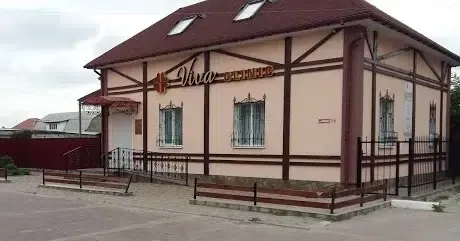
During a colposcopy, a gynecologist examines your cervix under magnification to take a closer look at changes found in a smear or during an exam, and takes a biopsy on the spot if needed. At Viva Clinic in Slavuta, colposcopy is done by gynecologists at 27a Sobornosti St or 3 Danyla Halytskoho St (the exact address is confirmed when you book), and you can book by phone or on Viber.
Paid serviceBy appointment
At a glance
- Where
- 27a Sobornosti St or 3 Danyla Halytskoho St, Slavuta
- Hours
- Mon–Fri 8:00–17:00
- How to book
- phone or Viber
- Payment
- paid
When you may need a colposcopy
- Cytology (a Pap test) showed changes in cervical cells
- A test found HPV type 16 or 18, or another high-risk type that has not cleared within a year
- Your cervix looked unusual during an exam
- You were told you have cervical erosion or ectropion and need to decide whether to treat it
- Bleeding after sex
- A check after cervical treatment
What a colposcopy includes
- Gynecology consultation and pelvic exam
- Examination of the cervix under a colposcope
- Extended colposcopy with acetic acid and, if needed, Lugol’s iodine
- Targeted cervical biopsy, if needed
- Histology of the biopsy sample
- Cervical cytology smear at the Diagnost-Lab laboratory
- Explanation of the results and a plan: monitoring or treatment
Why a colposcopy is done
Through a colposcope the cervix is magnified and well lit. This lets the gynecologist see things that are easy to miss during a routine exam: the edges of an ectropion, areas of changed cells, unusual blood vessel patterns, polyps. A colposcopy is most often recommended when cytology has shown changed cells, a test has found HPV type 16 or 18, or another high-risk type has not cleared within a year. A positive HPV test on its own does not mean you need a colposcopy: the doctor decides based on the virus type and your cytology result.
Early changes on the cervix usually cause no pain and no discharge. That is why many women referred for colposcopy feel completely well. A referral does not mean cancer: most changes checked under the colposcope are not cancer, and some go away on their own.
What people often call cervical erosion is usually an ectropion, an area of delicate cells from the cervical canal on the surface of the cervix. The doctor decides whether it needs treatment after a colposcopy and cytology. How the clinic treats ectropion and dysplasia is described on the page about cervical ectropion treatment.
How to prepare for a colposcopy
The exam is usually planned for a few days after your period ends, in the first half of your menstrual cycle. For 1–2 days before the colposcopy, avoid sex, do not use tampons, vaginal suppositories, creams or lubricants, and do not douche. You can eat and drink as usual.
Tell the doctor in advance if you are or might be pregnant, are allergic to iodine or take medicines that affect blood clotting. A colposcopy can be done during pregnancy too: a biopsy is taken if the doctor sees a suspicious area, and treatment of any changes is usually put off until after the birth. Bring the results of previous smears and HPV tests, and records of any earlier cervical treatment. We describe the preparation and what the exam feels like in more detail in the article what a colposcopy is and how it is done.
What happens during a colposcopy at Viva Clinic
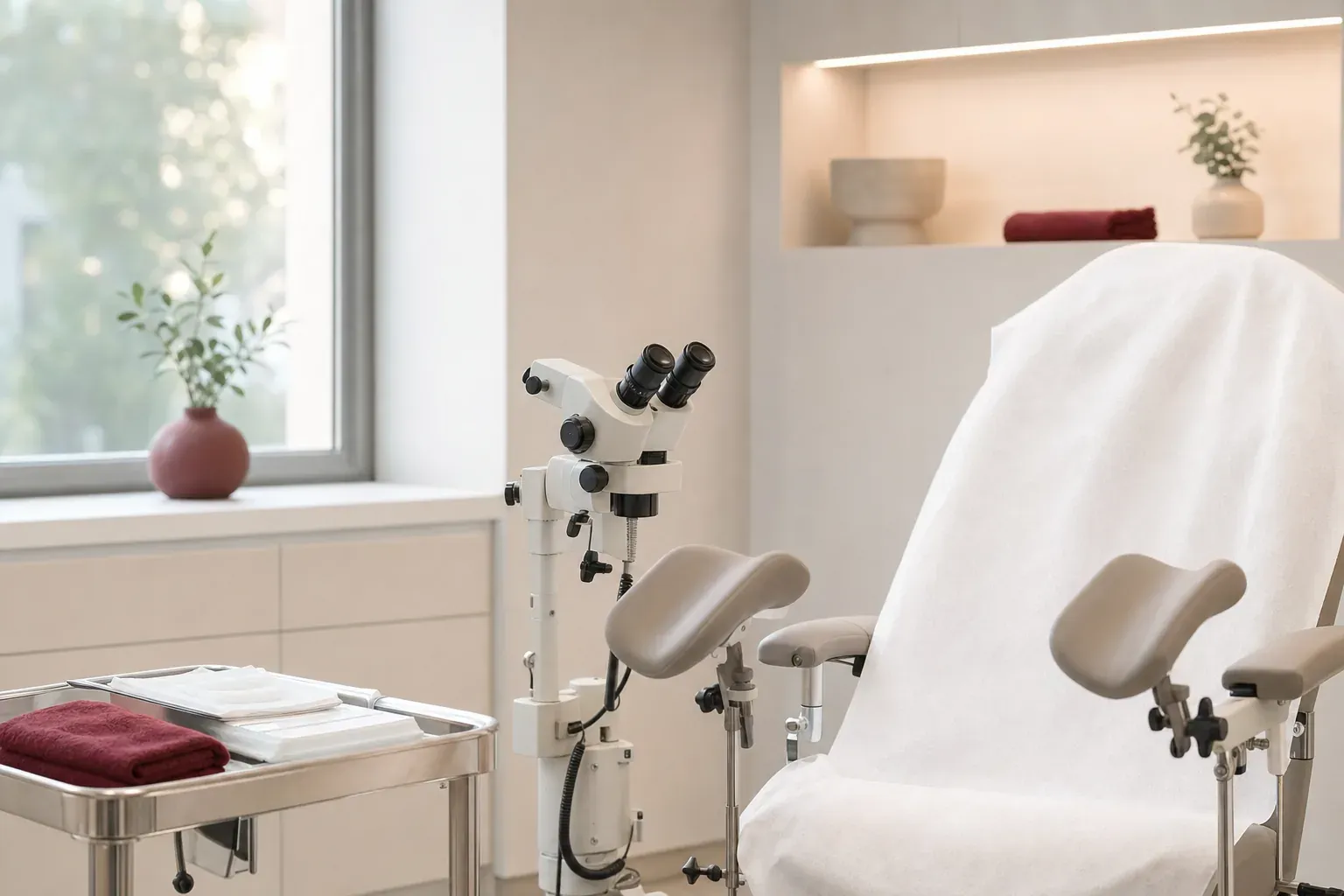
You sit in the gynecological exam chair, the doctor inserts a speculum as in a routine exam and positions the colposcope to look at your cervix. The instrument itself stays in front of the chair and is not inserted. The gynecologist first looks at the cervix, then applies an acetic acid solution and, if needed, Lugol’s iodine. This is called extended colposcopy: changed areas react to the solutions differently from healthy tissue, so their edges are easier to see.
If the doctor sees an area that needs checking, they take a targeted biopsy, a tiny piece of tissue for histology. The whole colposcopy usually takes 15–20 minutes.
After a biopsy you may have spotting or light bleeding for a few days. During this time, do not use tampons and avoid sex, baths and swimming pools; the doctor will tell you how many days these limits apply. See a doctor the same day if you develop a fever, foul-smelling discharge, severe lower abdominal pain or bleeding heavier than a period. If the bleeding is very heavy and you feel dizzy, call an ambulance on 103.
What happens after a colposcopy
The gynecologist explains what they saw right after the exam. If a biopsy was taken, the doctor will tell you with the histology result whether you need treatment. If dysplasia is found, they will explain whether monitoring is enough or treatment is better, and how often to come back for checks. Viva Clinic gynecologists treat ectropion and cervical dysplasia at the clinic, including with laser.
You can have a colposcopy, a cervical biopsy and histology with a Viva Clinic gynecologist in Slavuta, so there is no need to travel to Khmelnytskyi or Kyiv for them. Smears are processed at the clinic’s own Diagnost-Lab laboratory at 32 Sobornosti St. A colposcopy is paid, like the gynecology consultation.
Questions about colposcopy
Does a colposcopy hurt?
Usually not. The colposcope stands in front of the exam chair and is not inserted into the body, so it feels much like a routine pelvic exam. The solutions may sting a little. If the doctor takes a biopsy, it feels like a quick pinch or a cramp in the lower abdomen.
What day of my cycle should I have a colposcopy?
Most often a few days after your period ends, in the first half of your cycle. A colposcopy is usually not done during your period, because blood makes it hard to see the cervix. Your gynecologist will tell you the exact day, which matters most if your cycle is irregular.
How long does a colposcopy take?
Usually 15–20 minutes, and no anesthesia is needed. Without a biopsy you can go back to your normal day straight away, apart from dark discharge for a day or two if iodine was used. After a biopsy, the doctor will explain what to avoid for a few days and when to expect the result.
When will I get my colposcopy results?
The gynecologist explains what they saw through the colposcope right after the exam. If a biopsy was taken, histology gives the final answer, and that takes some time. With this result, the doctor will tell you whether you need treatment or just monitoring, and how often to come back for checks.
Do I need a referral for a colposcopy?
No, you do not need a separate referral. A colposcopy is done by a gynecologist, so book an appointment with one by phone or on Viber. If another doctor recommended the colposcopy, bring their report and your smear results so the gynecologist can take them into account.
Articles: colposcopy
What a colposcopy is and how it is done
During a colposcopy, a gynecologist examines your cervix through a colposcope, an instrument with magnifying lenses and a bright light. The colposcope stands in front of the exam chair and is not inserted into the body, so it feels much like a routine pelvic exam. A colposcopy is done to take a closer look at changes found in a smear or on the cervix, and a biopsy can be taken during it if needed.

How long periods last and what counts as a normal menstrual cycle
A period usually lasts 2 to 7 days. For adult women, doctors consider a cycle of about 24 to 38 days normal, counting from the first day of one period to the first day of the next. If bleeding lasts longer than a week, your periods are very heavy, you bleed between them or your cycle suddenly changes, see a gynecologist.
What fibrocystic breast changes (mastopathy) are and whether they can be cured
Fibrocystic breast changes, often called mastopathy in Ukraine, are benign changes in breast tissue: the breasts swell and hurt before a period, and lumps or cysts can be felt in them. They happen because breast tissue reacts to monthly hormone changes, and they are common in women of reproductive age. Show any new lump to a mammologist, a doctor who specializes in breast health, so they can rule out other causes.

Cystitis: symptoms, tests and how it is treated
Cystitis is inflammation of the bladder, most often caused by bacteria. The typical signs are frequent, painful urges to urinate, a burning feeling when you urinate and pain in the lower abdomen. Treatment is prescribed by a doctor after a urine test, because an antibiotic left over from last time may not work on this bacterium and can make the urine culture result unreliable.
More in gynecology
Where to have a colposcopy in Slavuta
The exact address is confirmed when you book.
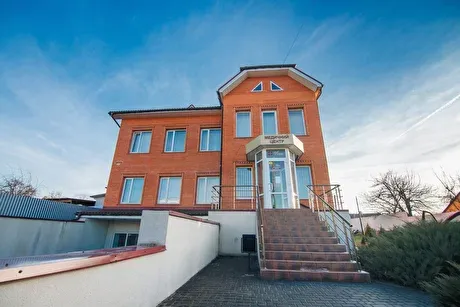
Day hospital
3 Danyla Halytskoho St, Slavuta, Khmelnytskyi Oblast
Mon–Fri 8:00–17:00
Open in Google MapsGoogle rating and reviews
Viva Clinic ratings on Google Maps and recent patient reviews. If you have visited us, please leave a review.
Polyclinic
27a Sobornosti St, Slavuta
4.443 reviews
Day hospital
3 Danyla Halytskoho St, Slavuta
4.515 reviews
Message or call us
Our administrators will help you choose a doctor and a convenient time.